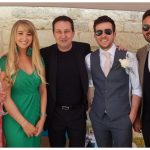
About Andy Field – Professional Magician

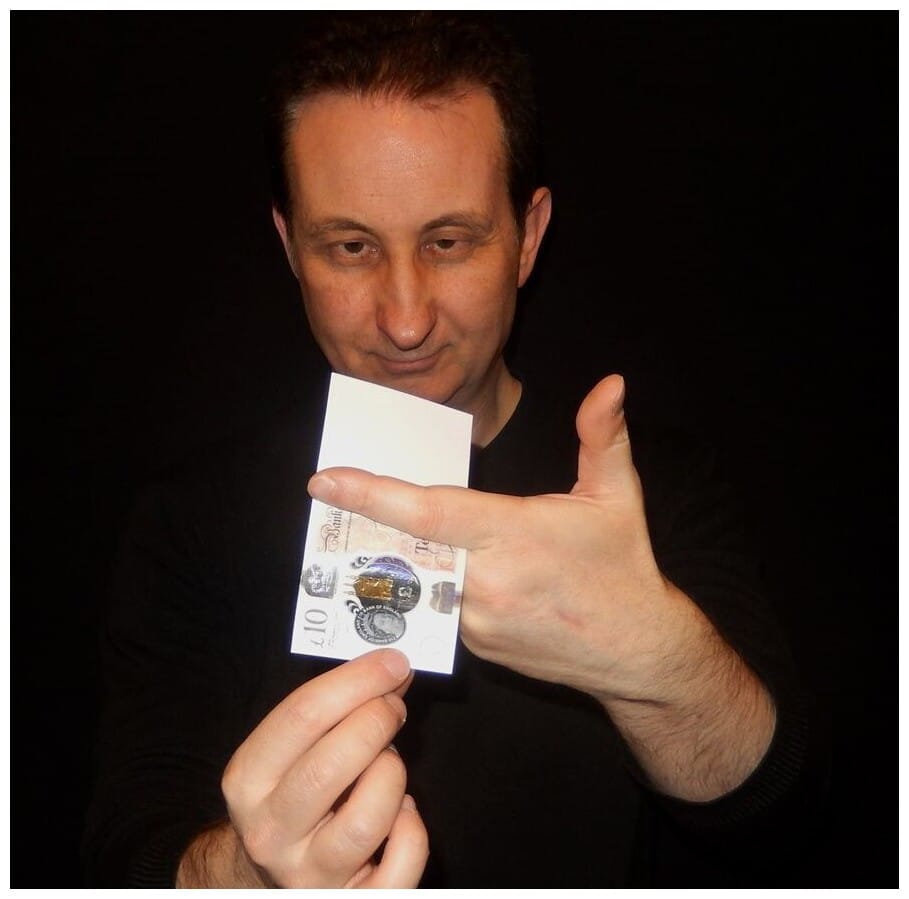
Andy Field is a professional magician, offering close up magic, sleight of hand illusions, mind reading and more, for a variety of occasions. Over the years Andy has built a strong global following,with millions of views on his YouTube channel and an array of reviews across multiple platforms. Having amassed experience as a wedding magician, party magician & close up magician, Andy is seen as one of the busiest professional magicians in the UK.
Who Is Andy Field?

Andy Field, professional close-up magician with over a quarter of a century of experience
I'm Andy Field, a professional close-up magician specialising in powerful close-up magic, sleight of hand, mind reading and interactive entertainment.
I've spent a quarter of a century performing professional magic, entertaining people at weddings, corporate events, private parties and celebrations throughout the UK.
And after all that time, I still get a ridiculous amount of enjoyment from watching somebody realise that the playing card they are holding shouldn't possibly be where it is.
That's one of the things I love about close-up magic.
There is nowhere for the trick to hide.
You're standing right there.
The spectator can see my hands. They can hold the cards. They can examine objects. They can make choices. They can even tell me exactly what they think I've done.
Sometimes they're convinced they've caught me.
Occasionally they have.
I don't like to talk about those occasions.
I've been a professional magician for a very long time, and my approach has always been that magic isn't simply about knowing tricks. It's about understanding people, presentation, timing, psychology, humour and showmanship.
That's why this page is here.
Rather than giving you another generic biography filled with phrases like "amazing magician" and "unforgettable entertainment", I want to explain who I am, how I came to perform magic professionally, what I actually specialise in, and what I've learned after a quarter of a century of doing it for real audiences.
After a quarter of a century performing professionally, I've learned that great magic depends on more than technical ability.
The three Ps of magic — practice, presentation and performance — all play an important part in turning a clever trick into an entertaining experience for an audience.
A Quarter of a Century of Professional Magic
I've been performing magic professionally for a quarter of a century.
That's a long time.
Long enough to have seen fashions come and go, venues change, technology transform the entertainment industry and audiences become increasingly familiar with magic through television, YouTube and social media.
But the fundamental reason people enjoy magic hasn't changed.
People still like to be surprised.
They still enjoy laughing.
They still want to experience something they can't immediately explain.
And they still enjoy being part of something rather than simply watching it happen from a distance.
Over the years I've performed for thousands of people in an enormous variety of situations.
Weddings are different from corporate events.
Corporate events are different from private parties.
A drinks reception is different from a wedding breakfast.
A small gathering in someone's home is different again.
You can't walk into every event with exactly the same routine, presentation and approach and expect it to work perfectly. A wedding magician, in particular, needs to understand how to structure the performance around the people, atmosphere and timings of the day.
You can't walk into every event with exactly the same routine, exactly the same presentation and exactly the same approach and expect it to work perfectly.
The magic might be excellent.
The performance still has to fit the people.
That experience is one of the reasons I put so much emphasis on showmanship in magic.
A technically difficult trick is only part of professional magic.
Knowing when to perform it, how to present it, how to involve somebody and when to move on is just as important.
I've performed at an enormous variety of events and venues across the South West, from Bristol and Bath to Gloucester, Cheltenham, Oxford and beyond.
How I Became a Magician
Like many magicians, I started with a fascination for the impossible.
There is something particularly addictive about seeing an object disappear, reappear somewhere impossible or apparently pass through a solid object.
You immediately want to know how it works.
Then you discover that learning one trick doesn't satisfy the curiosity.
You learn another.
Then another.
Before long you're buying books, practising sleight of hand and discovering that the apparently simple trick you saw performed in thirty seconds can take an absurd amount of practice to perform properly.
That's one of the great things about magic.
It has layers.
At first, you learn the secret.
Then you learn the technique.
Then you learn the presentation.
Then you discover that knowing all three doesn't necessarily mean you can perform the trick well.
Eventually you realise that the real skill is making all of those things disappear from the audience's attention.
The spectator shouldn't be thinking about the mechanics. They should be experiencing the effect.
They should be experiencing the effect.
That distinction has shaped the way I've approached magic throughout my career.
My Speciality: Close-Up Magic
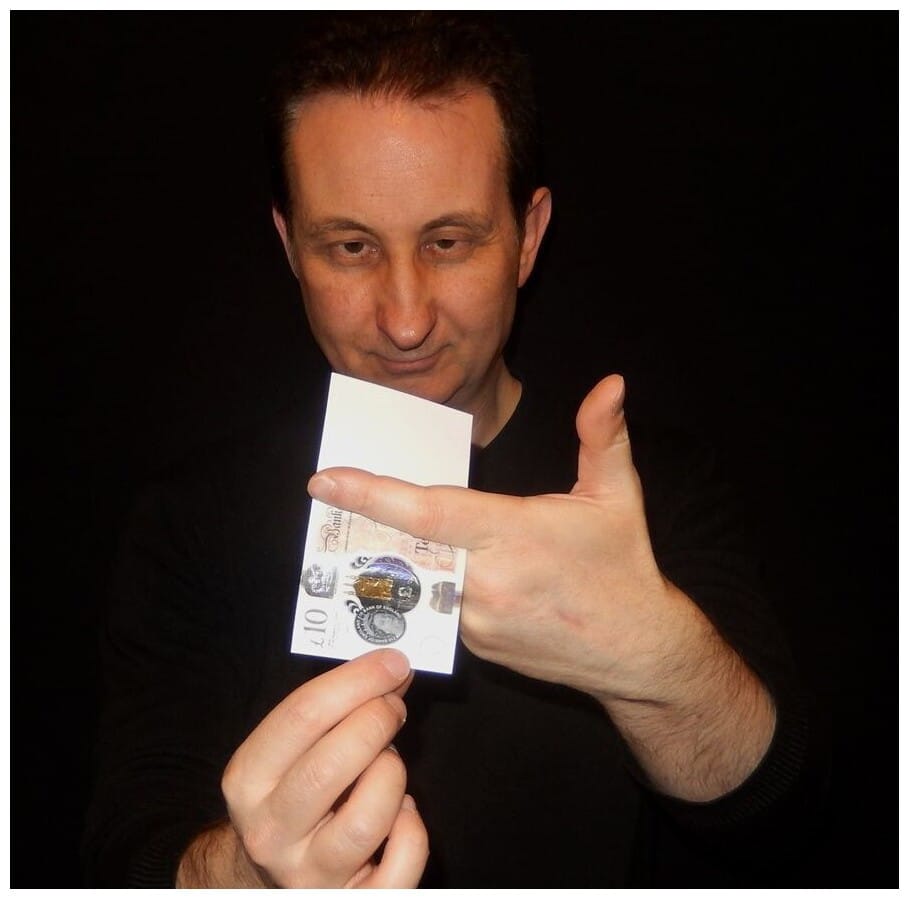
Andy Field practising a money trick as part of his close-up magic
My speciality is close-up magic.
Close-up magic is exactly what it sounds like: magic performed close to the audience, often just a few feet away and sometimes directly in their own hands.
Playing cards.
Coins.
Rings.
Borrowed objects.
Mobile phones.
Everyday items.
Things that people recognise.
That's part of the appeal.
There is no enormous stage apparatus to hide behind.
The spectator is right there.
And that makes close-up magic both challenging and incredibly rewarding.
If you'd like to understand the art in more detail, my Close-Up Magic Explained guide goes into what close-up magic actually is, why it works so well at events and what makes seeing magic at close quarters such a different experience.
Close-up magic also overlaps heavily with sleight of hand.
Sleight of hand is one of the foundations of what I do, but it isn't simply about having fast fingers.
It's about control, timing, natural movement and making difficult things look completely ordinary.
I've written a much deeper explanation in Sleight of Hand Magic Explained.
Because ultimately, the audience doesn't care how technically difficult a move was.
They care about what they experienced.
And that's where showmanship comes in.
S.A.M.S. Champion of Close-Up Magic

Andy Field performing Cups and Balls after winning the S.A.M.S. Championship of Close-Up Magic
One of the achievements I'm particularly proud of is becoming S.A.M.S. Champion of Close-Up Magic on two separate occasions.
Competition magic is interesting because it forces you to examine your performance differently.
When you're performing at a normal event, the objective is straightforward: entertain people.
In competition, every part of a performance can be examined.
Technique matters.
Timing matters.
Presentation matters.
Originality matters.
Audience management matters.
The smallest details suddenly become important.
Winning the championship twice gave me an opportunity to test my magic in a very different environment and against other serious performers.
But it also reinforced something I've learned repeatedly throughout my professional career:
Technical ability is only one part of being a good magician.
A magician can perform extremely difficult sleight of hand.
That doesn't automatically make the performance entertaining.
The challenge is turning technical skill into an experience.
That's a theme I explore extensively in my guide to How to Be a Great Showman in Magic.
My Work on BBC Hustle
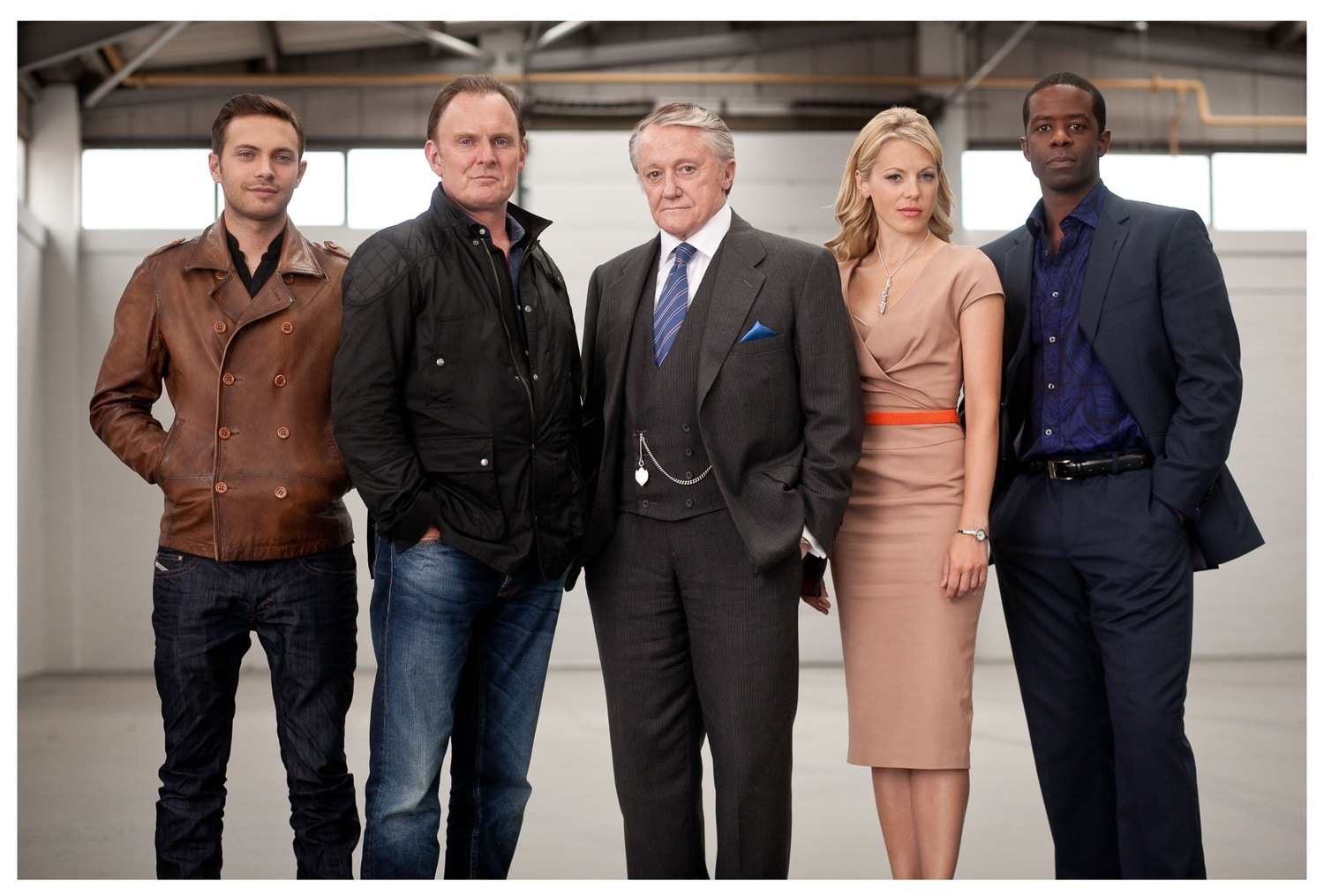
BBC Hustle, where Andy worked as a magic consultant and hand double.
I've also worked behind the scenes on the BBC television series Hustle as a magic consultant and hand double.
Working on television is very different from performing at a wedding or private party.
When you're performing close-up magic for a real audience, everything happens in the moment.
Television adds cameras, angles, retakes, continuity, scripts and production requirements.
The magic has to work for the viewer as well as the performer.
As a consultant, the job involves understanding how magic should look on camera, how a magician would realistically handle an object and how the movements should appear authentic.
As a hand double, the hands themselves become part of the performance.
That means the technical details matter.
A movement that looks natural to an audience can look completely different through a camera lens.
My involvement with Hustle is one of the professional experiences I'm particularly proud of because it allowed me to apply the technical side of magic in a completely different environment.
And yes, it's also quite a good answer when somebody asks:
"So, what have you actually done with all this magic nonsense?"
Learning From Michael Vincent
Throughout my career I've also been fortunate enough to be mentored on numerous occasions by Michael Vincent.
Michael is an exceptionally respected magician and performer, and working with someone at that level provides a different perspective on magic.
One of the most useful things about learning from experienced performers is that they don't simply show you another trick.
They can identify weaknesses in the way you think about performance.
Why are you performing that move?
Why are you standing there?
Why did you pause?
Why did you say that?
Why did you look at the spectator at that precise moment?
Those questions go far beyond learning another piece of sleight of hand.
They are questions about communication.
And communication is at the heart of professional magic.
Learning From Darwin Ortiz
I've also had the opportunity to be mentored by Darwin Ortiz.
Darwin Ortiz is particularly well known for his work on card magic, gambling demonstrations, psychology and the theory of deception.
Learning from somebody with that depth of knowledge reinforces an important lesson:
Magic isn't simply about fooling somebody.
It is about understanding why they believe what they believe.
That takes us into psychology.
People don't watch a magic trick as passive cameras.
They make assumptions.
They predict what is going to happen.
They notice certain things and completely overlook others.
They form memories of what they think they saw.
The magician can work with all of those natural processes.
I've explored that subject in Psychology in Magic: How Magicians Fool the Mind.
It's one of the reasons I find magic so fascinating even after all these years.
You're not simply manipulating objects.
You're communicating with another person's perception.
More Than 20 Million YouTube Views
Andy Field performing Cups and Balls magic in a YouTube video with over 200,000 views
My magic has also been watched by a huge online audience, with more than 20 million YouTube views.
YouTube has changed magic enormously.
In the past, a magician could perform in a room and that experience would largely stay in the room.
Now a performance can be watched by people thousands of miles away.
That's fascinating.
But online magic presents a different challenge.
When someone watches a video, they can pause it.
Rewind it.
Slow it down.
Watch the hands.
Read the comments.
Try to work out the method.
In some cases they can watch the same few seconds fifty times.
Performing for a live audience is different.
The experience happens once.
That's why I still love live close-up magic.
A real spectator isn't watching a recording.
They're inside the experience.
They've made a choice.
They're holding something.
They're standing next to you.
And when something impossible happens, there is an immediate human reaction.
You can't rewind that.
Hundreds of Google Reviews and More Than 400 Facebook Recommendations
 One of the most useful things about working professionally for so long is the feedback from the people I've actually performed for.
I've accumulated hundreds of Google reviews and more than 400 Facebook recommendations.
I value those because they're not reviews of a website.
They're reactions from people who have experienced the magic at real events.
Weddings.
Parties.
Corporate functions.
Private celebrations.
Those reviews also remind me that people aren't necessarily reviewing the technical quality of a double lift or the difficulty of a particular sleight.
They're reviewing the experience.
Was I professional?
Was I friendly?
Did I fit into the event?
Did I entertain their guests?
Did people enjoy themselves?
Those are the things that matter when you're hiring a professional magician.
My Approach to Showmanship
Andy Field using showmanship and comedy to entertain two guests with close-up magic
I've always believed that the trick isn't the show.
The trick is what happens.
The show is how you make people experience it.
That means presentation matters enormously.
Timing matters.
Humour matters.
Audience interaction matters.
But how do those elements come together to create a complete performance?
The order of the effects, the transitions between routines, the way spectators become involved and the build towards a memorable ending all play a part.
I've explored this in more detail in my guide to how magicians build a great magic performance.
Knowing when to speak matters.
Knowing when to shut up matters even more.
A magician can perform the most technically impressive trick imaginable and still lose the audience if the presentation isn't right.
A big part of effective showmanship is knowing how to guide and hold people's attention. In my guide to how to command an audience's attention, I explain how a magician can use presence, timing, body language and presentation to keep spectators engaged without making the performance feel forced.
On the other hand, a relatively simple effect can become unforgettable when it is performed with good timing, personality and interaction.
That's why I don't see showmanship as something separate from magic.
It's part of magic.
Good showmanship means understanding the people in front of you.
If they're laughing, let them laugh.
If they're fascinated, don't interrupt the moment.
If someone doesn't want to participate, don't drag them into the routine.
If somebody is particularly enthusiastic, give them something to do.
And if something unexpected happens, deal with it rather than pretending it didn't.
Real audiences aren't robots.
Thank goodness.
That would make the job considerably less interesting.
Magic for Weddings

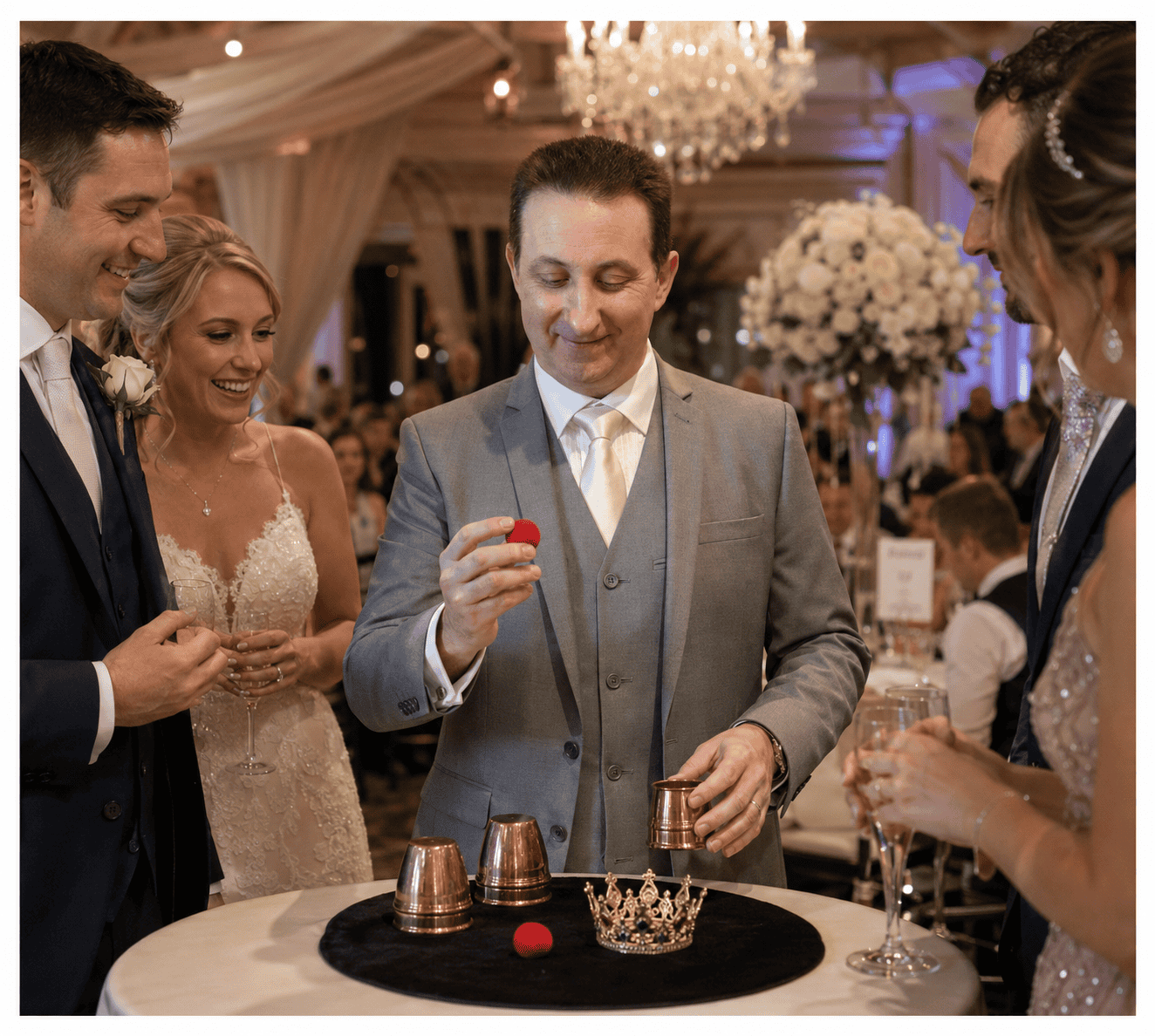
Andy Field entertaining a bride and groom with close-up magic on their wedding day
Weddings are one of the most enjoyable environments for close-up magic.
There are natural gaps throughout the day when people are waiting, chatting or moving between different parts of the celebration.
Close-up magic fits into those gaps without requiring everyone to stop what they're doing and sit down for a formal show.
I can move between groups, perform for small numbers of guests and create little moments of entertainment throughout the event.
That's particularly useful when guests don't all know each other.
A magic trick gives people something to talk about immediately.
Two strangers can be standing together one minute.
The next they're both arguing about where the card went.
That's a pretty efficient introduction.
I have extensive experience performing at weddings, and I understand that the magic should complement the day rather than take over it.
If you're looking for a magician for a particular location, the relevant local pages provide more information, including Andy Field in Bath, Bristol magician, magician in Cheltenham, magician in Gloucester, magician in Oxford, magician in Swindon, magician in Worcester and Andy Field in the Cotswolds.
Magic for Corporate Events

Andy Field entertaining three guests with close-up magic at a corporate event
Corporate events require a slightly different approach.
The magician has to understand that people are there for a reason other than watching magic.
There might be networking.
Drinks.
Food.
Speeches.
Presentations.
Awards.
Clients.
Colleagues.
VIP guests.
The entertainment therefore needs to fit around the event.
Close-up magic works particularly well because it doesn't require a stage or a formal audience.
I can move between groups and perform directly to people while the event continues around us.
The magic can also be adapted to the atmosphere.
A relaxed company dinner requires a different approach from a large corporate reception.
The important thing is understanding the environment rather than simply arriving with a bag of tricks and announcing:
"Right, everybody. Stop talking."
That generally doesn't go down brilliantly.
Magic for Private Parties

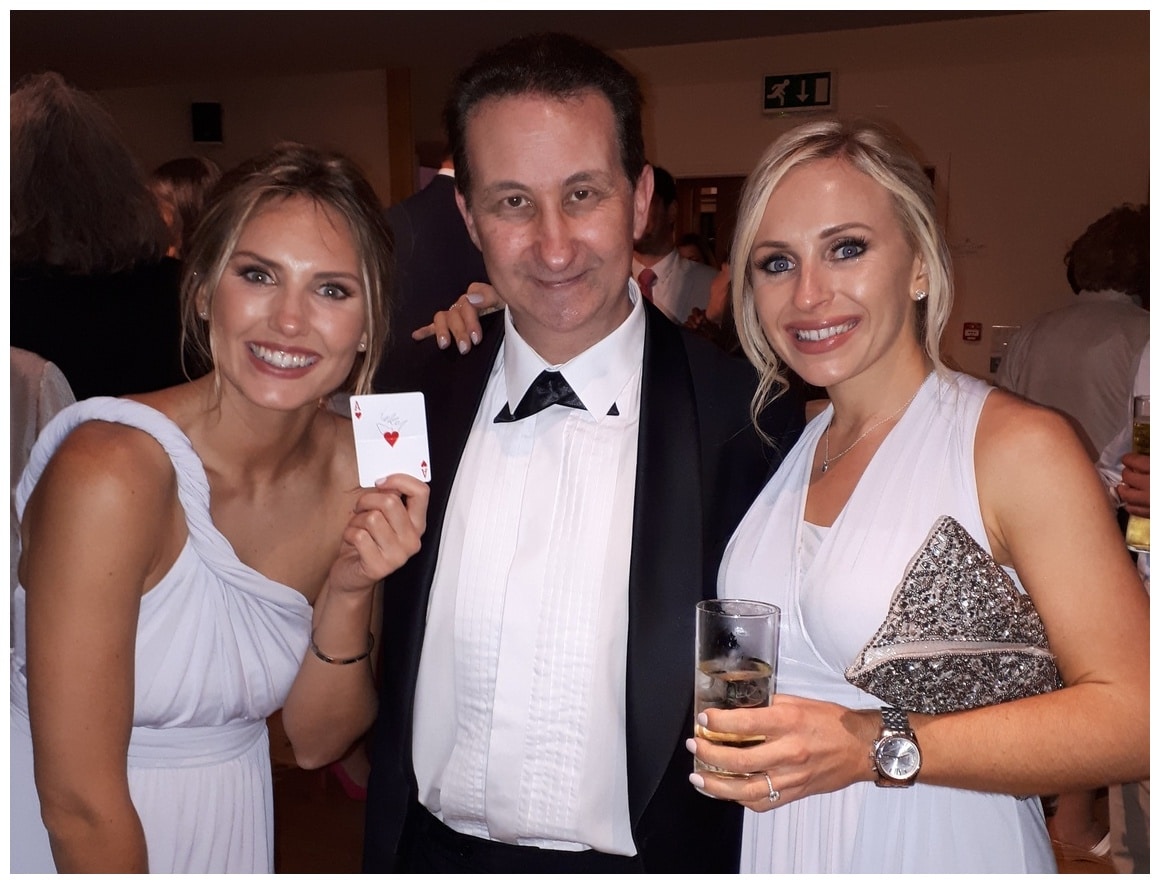
Andy Field entertaining two guests with close-up magic at a private party
Private parties are another environment where close-up magic works extremely well.
Birthday parties, anniversaries, engagement parties, Christmas celebrations and other private events all benefit from entertainment that gets people interacting.
A magician can also help bring different groups together.
Perhaps people don't know each other particularly well.
Perhaps family members haven't seen one another for years.
Perhaps half the guests are standing in the kitchen and the other half are hiding in the garden.
Magic gives everyone something to share.
And because the performance happens in small groups, it can feel much more personal than watching a conventional stage performance.
My Approach to Spectators

Andy Field performing close-up magic for guests at a private party, combining audience interaction, showmanship and comedy.
One of the biggest lessons I've learned over a quarter of a century is that the spectator is not an accessory to the magic.
They're the most important person in it.
If someone chooses a card, their choice matters.
If they hold an object, they should feel involved.
If they make a decision, I don't want them to feel as though they've simply been instructed to press the correct button.
I want them to feel that they are part of the experience.
Audience participation is a big part of creating that experience. In my guide to audience participation in magic, I explain how involving spectators can make magic more engaging while keeping the experience enjoyable and natural.
That also means respecting people.
Not everyone wants to participate.
Some people are happy to watch.
Some want to get involved immediately.
Some want to challenge the magician.
Some are slightly nervous about being the centre of attention.
A good professional needs to recognise those differences.
The objective isn't to make somebody uncomfortable.
The objective is to make them enjoy the experience.
And if somebody says:
"I don't want to do it."
That's fine.
No dramatic music.
No emotional blackmail.
No:
"But everyone else is doing it."
We'll find somebody else.
What Types of Magic Do I Perform?
My work covers a range of close-up magic styles.
Card Magic
 Playing cards are one of the great tools of magic.
They're familiar, portable and capable of creating an enormous range of effects.
Cards can vanish, change, appear in impossible locations and apparently become impossible to control.
But good card magic isn't simply about complicated moves.
It's about presentation.
Coin Magic

Coins are another favourite. I studied a lot of coin manipulation with a good friend in the magic world who was based in Coventry. They taught me that coins handle very differently from playing cards.
They're ordinary objects that people carry every day.
That makes them particularly effective.
When something impossible happens with a borrowed or ordinary coin, there is very little for the audience to blame.
The coin doesn't look suspicious.
The magician has to be.
Unfortunately for me, I'm usually standing there smiling.
Sleight of Hand
 Sleight of hand is at the heart of much of my work.
It includes the secret manipulation of objects in ways that appear natural to the spectator.
You can learn more about the subject in my Sleight of Hand Magic Explained guide.
Mind Reading and Mentalism
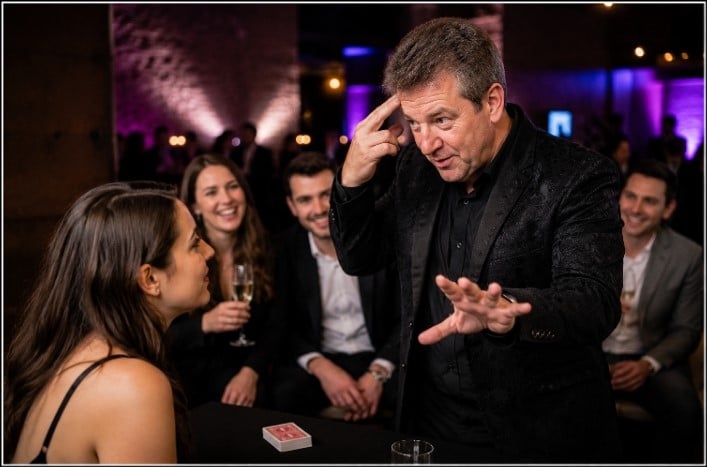 I also perform mind-reading style effects and psychological magic.
These routines often involve choices, predictions, thoughts and apparently impossible knowledge.
Again, the psychology behind them is fascinating.
I've written more about the psychology, techniques and performance behind mind reading magic in my detailed guide.
The Cups and Balls
 The Cups and Balls is one of the classic routines in magic and combines many of the things I enjoy about performing.
Sleight of hand.
Misdirection.
Timing.
Comedy.
Audience participation.
And a rather ridiculous ending involving objects that probably shouldn't fit underneath the cups.
I've written an entire guide to The Cups and Balls Explained if you'd like to explore the routine in more detail.
Where I Work
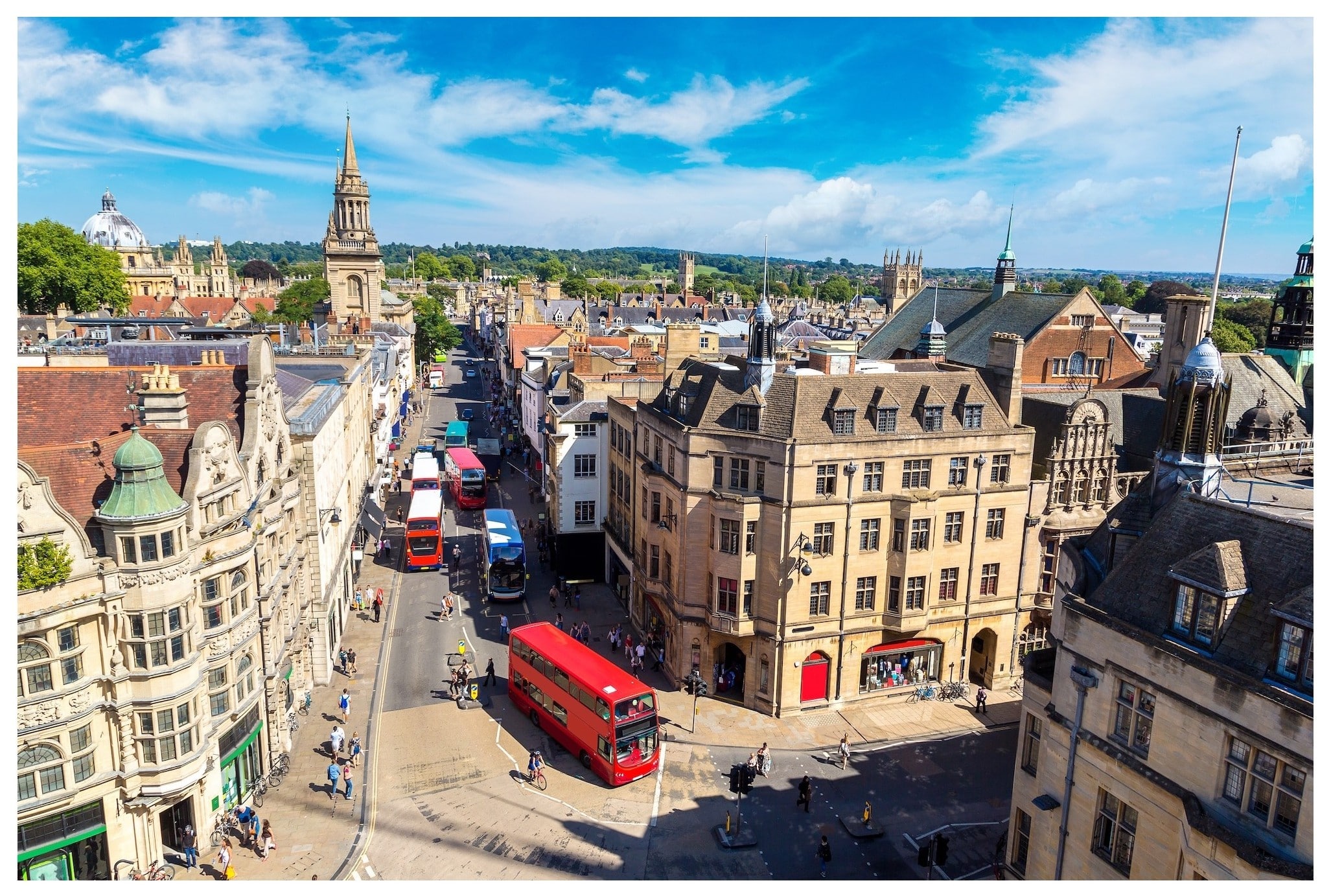
Panoramic aerial view of Bath
I'm based just outside Bristol and perform throughout the South West and surrounding areas.
This includes Bristol, Bath, Gloucester, Cheltenham, Swindon, Oxford, Worcester and the Cotswolds.
I also perform at weddings, parties and corporate events further afield, including as a professional close-up magician in Coventry.
I've performed at venues and events across a wide geographical area, and close-up magic is particularly suited to travelling because I don't need a huge amount of equipment or a stage.
I bring the magic with me.
That's one of the reasons I can perform at such a variety of venues.
Hotels.
Wedding venues.
Restaurants.
Private homes.
Corporate venues.
Party spaces.
And occasionally places where somebody says:
"Can you perform here?"
while pointing at a space approximately the size of a broom cupboard.
Usually the answer is yes.
Why I Don't Perform Children's Magic
One thing that's important to make clear is that I specialise in magic for adults and events rather than children's magic.
That's not a criticism of children's entertainers.
It's simply a specialisation.
Performing magic for children is a very different discipline.
It requires a different performance style, different material, different pacing and a different approach to audience management.
My speciality is close-up magic for adults, weddings, parties, corporate events and private functions.
I enjoy performing for people who appreciate sleight of hand, psychology, humour and the interaction that comes with close-up magic.
I'd rather be honest about what I do than claim to be the right magician for absolutely everyone.
I'm not.
And neither is any other magician.
My Philosophy on Professional Close-Up Magic
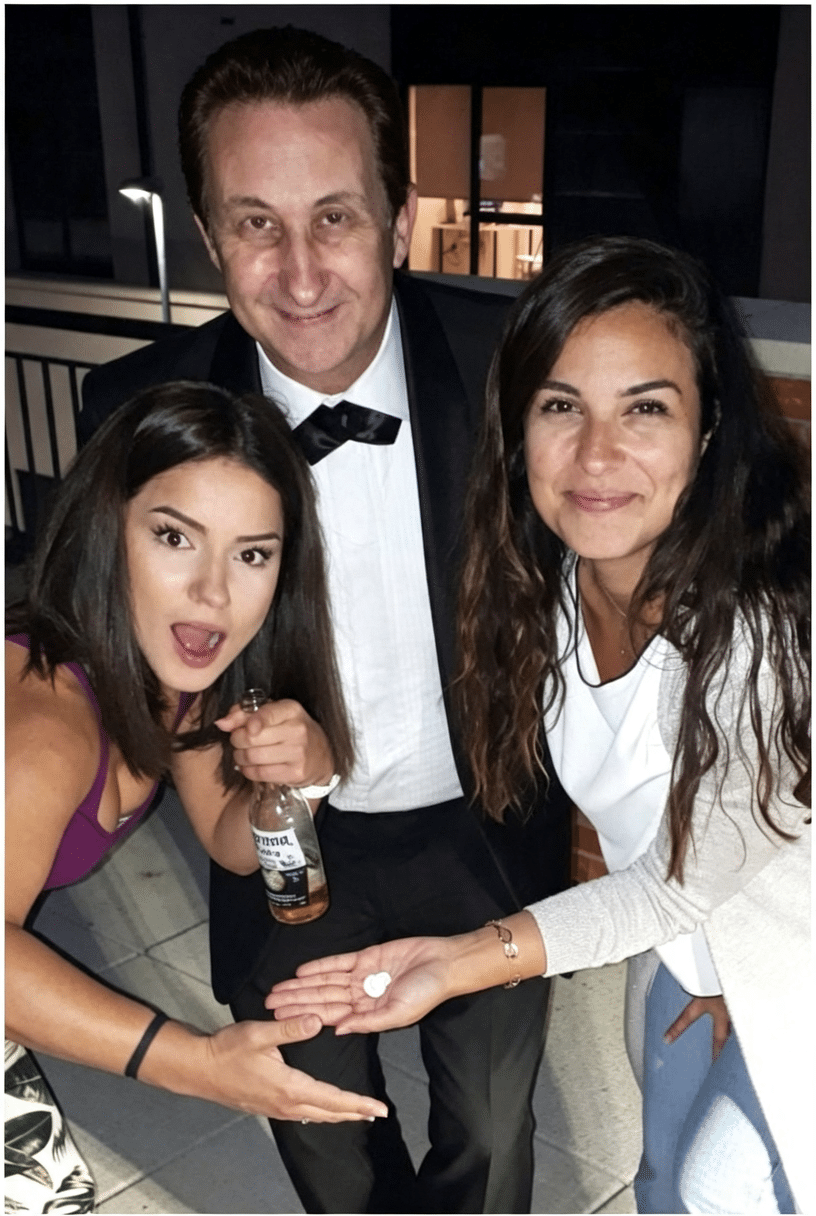
Andy Field bringing showmanship, humour and fun to his close-up magic performance
After a quarter of a century, I've developed a fairly simple philosophy.
Magic should entertain people.
That sounds obvious.
It isn't always.
It's possible to become obsessed with technique.
Magicians love technique.
We can spend hours discussing tiny details that the average spectator wouldn't even notice.
That's part of the fun of being a magician.
But professional performance is different.
The audience doesn't owe us anything.
They've invited us into their event.
Our job is to add something to it.
That's why I've written about the different ways a magician can add value to an event.
That means being professional.
Being reliable.
Reading the room.
Respecting the guests.
Performing strong material.
Keeping things moving.
And knowing when to leave.
The final point is particularly important.
A magician should never feel like the person who has trapped you at your own party.
If the group has enjoyed the magic, let them enjoy it.
Leave them wanting another trick rather than wondering whether there is an escape route.
The Importance of Misdirection and Psychology

Understanding psychology helps a magician shape attention, expectation and the audience's experience.
Two of the subjects I find particularly fascinating are misdirection and psychology.
Misdirection isn't simply telling somebody to look somewhere else.
It's about understanding attention.
What people notice.
What they ignore.
What they expect.
And what they remember.
I've written much more about this in How Misdirection Works in Magic.
Psychology takes that even further.
A magician can use expectation, suggestion, choice and natural human behaviour to influence the way an audience experiences an effect.
That doesn't mean magicians can read every thought in somebody's head.
If we could, we'd probably spend less time performing at weddings and more time winning the lottery.
But understanding human behaviour is an enormously useful part of professional magic.
What I've Learned After a Quarter of a Century
If I had to reduce a quarter of a century of professional magic to a few lessons, they'd be these.
Technical skill matters.
You need to know your material.
If you don't have confidence in the mechanics, the audience will eventually notice.
But technical skill isn't enough.
A technically brilliant trick can still be boring.
Presentation matters.
People matter more than tricks.
The spectator is the experience.
Timing matters.
Sometimes the most important thing a magician can do is wait.
Don't force people.
Participation should feel natural.
Don't oversell.
If you tell somebody something is going to be incredible seventeen times, they'd better be prepared for the second coming.
Learn to adapt.
Real audiences don't behave like practice partners.
Keep learning.
Even after decades, there is always something new to discover.
And enjoy it.
If the magician isn't enjoying the performance, why should the audience?
Frequently Asked Questions About Andy Field
How long have you been a professional magician?
I've been performing professional magic for a quarter of a century.
What type of magician are you?
I'm a professional close-up magician specialising in close-up magic, sleight of hand, mind reading and interactive entertainment for adults and events.
Are you a two-time S.A.M.S. Champion?
Yes. I've been S.A.M.S. Champion of Close-Up Magic twice.
Have you worked on BBC Hustle?
Yes. I worked as a magic consultant and hand double on BBC Hustle.
Have you worked with Michael Vincent?
Yes. I've been mentored on numerous occasions by Michael Vincent.
Have you learned from Darwin Ortiz?
Yes. I've also had the opportunity to be mentored by Darwin Ortiz on many occasions.
How many people have watched your magic online?
My YouTube performances have received more than 20 million views.
How many reviews do you have?
I've received hundreds of Google reviews and more than 400 Facebook recommendations.
Do you perform at weddings?
Yes. Weddings are one of the main types of event where I perform close-up magic.
Do you perform at corporate events?
Yes. I regularly perform close-up magic at corporate events, receptions, dinners and functions.
Do you perform at private parties?
Yes. I perform at birthdays, anniversaries, engagement parties, Christmas parties and other private celebrations.
Do you perform children's magic?
No. I specialise in adult close-up magic and event entertainment rather than children's magic.
Where are you based?
I'm based just outside Bristol and perform throughout Bristol, Bath, Gloucestershire, Wiltshire, Oxfordshire, Worcestershire, the Cotswolds and surrounding areas. This has nothing to do with my pricing.
What makes your magic different?
My approach combines strong sleight of hand with showmanship, humour, psychology and audience interaction.
The objective isn't simply to perform a trick.
It's to create a memorable experience for the people watching.
Do spectators take part?
Often, yes.
Close-up magic works particularly well because spectators can make choices, hold objects and become directly involved in the magic.
But participation is never forced.
What sort of objects do you use?
I perform with playing cards, coins, rings, borrowed objects, everyday items and other small objects that work naturally in a close-up environment.
What is the most important thing you've learned about magic?
Probably this:
The trick isn't the show.
The trick is only one part of the experience.
The real skill is turning that trick into something people remember.
Explore More About Andy Field and Magic
If you'd like to explore the subjects behind my professional approach to magic, these are some of the articles I'd recommend starting with:
Close-Up Magic Explained
A detailed look at what close-up magic is, how it works and why it is particularly effective at live events.
Sleight of Hand Magic Explained
An explanation of the skill behind apparently impossible manipulation of cards, coins and other objects.
How Misdirection Works in Magic
A deeper look at attention, perception and how magicians influence where an audience focuses.
Psychology in Magic: How Magicians Fool the Mind
An exploration of expectation, attention, suggestion and the psychology behind magical deception.
The Cups and Balls Explained
A look at one of the classic routines in magic and why it has survived for generations.
How to Be a Great Showman in Magic
My detailed guide to turning technical magic into an engaging performance through timing, personality, audience interaction and showmanship.
Why I Still Love Performing Magic
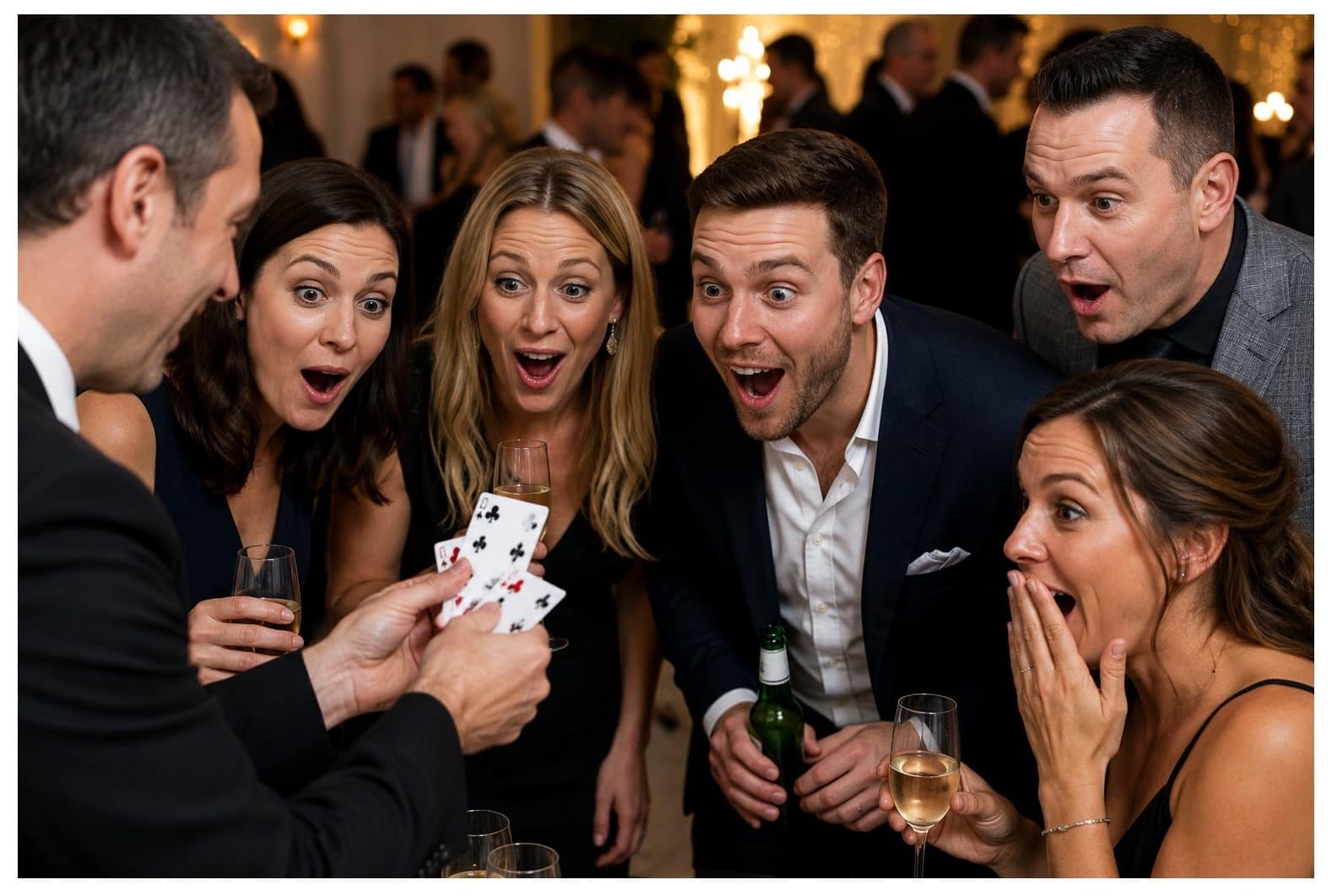 After a quarter of a century, you might reasonably ask whether magic ever becomes boring.
It doesn't.
At least not when it's working.
Every audience is different.
Every event has a different atmosphere.
Every spectator reacts differently.
Someone will always make an unexpected choice.
Someone will always say something you weren't expecting.
And occasionally somebody will look you directly in the eye and announce:
"I know exactly how you did that."
Usually, they don't.
But I admire the confidence.
That's what keeps professional close-up magic interesting.
The techniques may have been practised thousands of times.
The routines may have been performed hundreds or thousands of times.
But the person standing in front of you has never experienced their version of it before.
That's the important part.
Magic isn't really about fooling everyone in exactly the same way.
It's about creating a moment that belongs to the people experiencing it.
A wedding guest might remember a card appearing in their hand.
A corporate guest might remember a borrowed ring somehow ending up somewhere impossible.
Someone at a birthday party might remember being convinced they'd caught me — right before everything went completely wrong.
Those are the moments I enjoy.
Not because they're technically impressive.
Because they're human.
Final Thoughts
 I'm fortunate to have spent a quarter of a century doing something I genuinely enjoy.
I've competed in magic.
I've won the S.A.M.S. Championship of Close-Up Magic twice.
I've worked with Michael Vincent and Darwin Ortiz.
I've worked as a magic consultant and hand double on BBC Hustle.
My performances have received more than 20 million YouTube views.
I've received hundreds of Google reviews and more than 400 Facebook recommendations.
But ultimately, those things are only useful if they translate into something meaningful for an audience.
The real test of a magician isn't how many techniques they know.
It isn't how many books they've read.
It isn't how complicated their favourite trick is.
It's what happens when they stand in front of another person and perform.
Does that person enjoy themselves?
Do they become involved?
Do they laugh?
Do they wonder?
Do they walk away talking about what just happened?
That's what I'm interested in.
Powerful close-up magic with showmanship.
That's been at the heart of my work for a quarter of a century.
And fortunately, after all this time, I still haven't worked out how to get bored of it.
Book Andy Field
If you're looking for a professional close-up magician for a wedding, corporate event, party or private celebration, I'd be happy to hear about what you're planning.
Tell me about the event, the venue, the date and what you'd like the entertainment to achieve.
I'll tell you honestly whether I think close-up magic would work for you.
Because after a quarter of a century, I've learned that the best bookings aren't about squeezing magic into an event.
They're about making the magic fit the event.
Andy Field Magician Service Areas
I regularly provide professional close-up magic for weddings, parties, corporate events and special occasions across the South West and surrounding areas. You can find more information about my magician services in the following locations:
- Bristol Magician
- Gloucester Magician
- Cheltenham Magician
- Swindon Magician
- Somerset Magician
- Magician Oxford
- Magician Bath
- Magician Cotswolds
- Magician Worcester
- Magician Coventry
Book Magician Andy Field
I'm fortunate that I don't have to rely on magic to pay the bills. This means I don't need to charge inflated Saturday-night fees. I can concentrate on what I really enjoy — performing powerful, entertaining magic — while keeping my prices competitive.