Clarity When Presenting Magic: Mystery Without Confusion

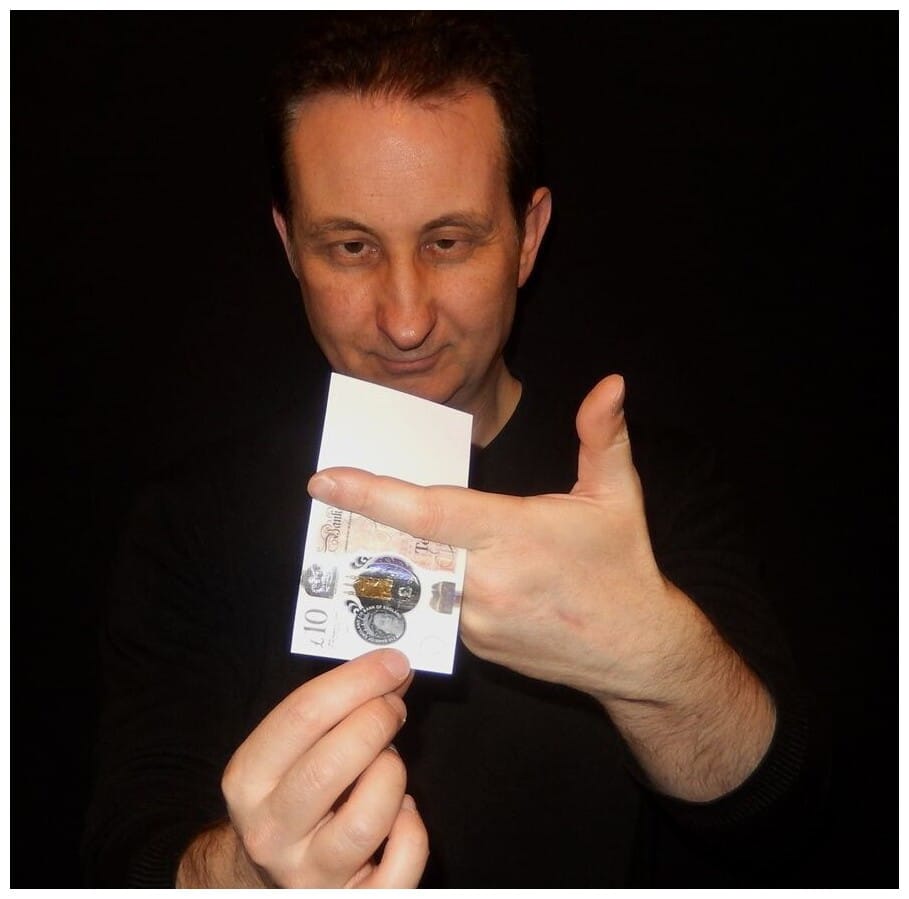
Andy Field is a professional magician with more than a quarter of a century of experience performing close up magic at weddings, parties, corporate events and private celebrations. He has performed at more than 1,000 weddings and is a two-time S.A.M.S. Champion of Close-Up Magic with more than 20,000,000 views on his YouTube and an array of Google reviews.
Clarity When Presenting Magic
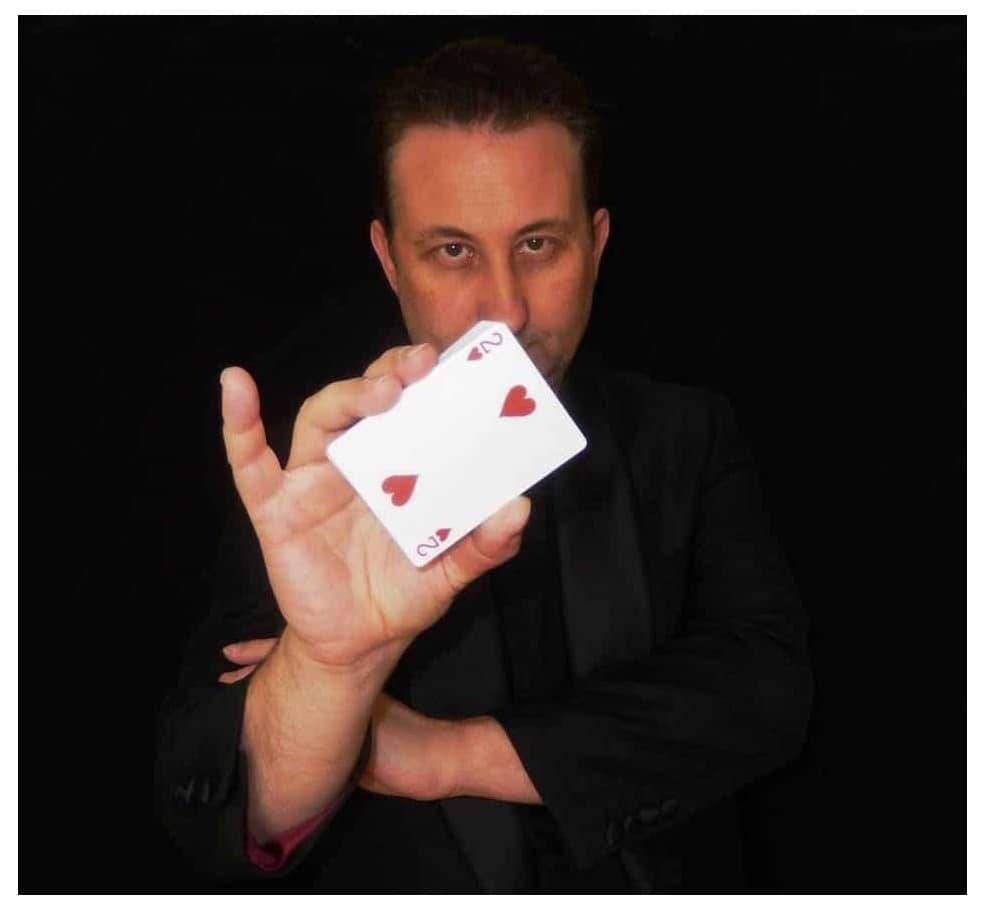
Andy Field, professional magician with more than 25 years of experience performing close-up magic.
There is a big difference between mystery and confusion.
A good magician should leave an audience completely baffled by how something happened.
They should not leave them wondering what actually happened.
That might sound like a small distinction, but after more than a quarter of a century performing magic professionally, I think it is one of the most important principles in presenting magic.
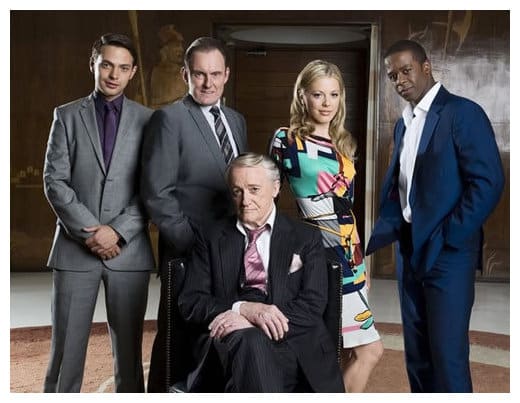
I have performed at more than 1,000 weddings and events, twice won the S.A.M.S. Championship of Close-Up Magic, and worked as a magic consultant and hand double for the BBC series Hustle.
I've also had the privilege of learning from respected magic mentors including Michael Vincent and Darwin Ortiz.
Over the years, I've performed for thousands of people in very different environments.
Weddings.
Private parties.
Corporate events.
Restaurants.
Parties where everybody is paying attention.
Parties where half the guests are talking over you.
And events where you have about thirty seconds to grab somebody's attention before they wander off to find another glass of wine.
One thing remains the same.
The audience should understand the effect.
They don't need to understand the method.
In fact, they absolutely shouldn't.
The perfect reaction is:
“I know exactly what I saw. I just haven't got a clue how you did it.”
That's mystery.
If the spectator is instead thinking:
“Hang on... what was I supposed to be watching?”
that's confusion.
And confusion isn't the same thing as being fooled.
Mystery without confusion
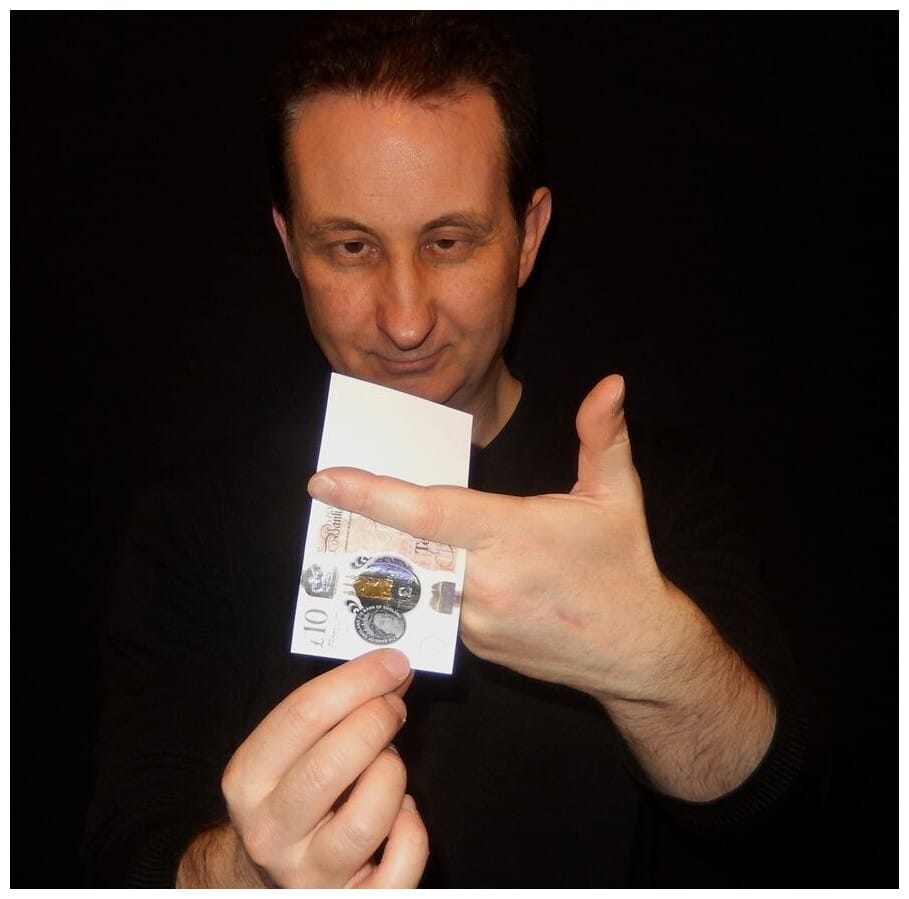
Clear presentation allows the audience to experience the mystery without confusion.
Magic should create questions.
Where did the card go?
How did the coin disappear?
How did my signed card get there?
How could he possibly know what I was thinking?
How did the object travel from here to there?
Those are good questions.
The audience understands the situation and cannot explain the result.
That's exactly what you want.
The magician creates a clear set of circumstances and then breaks the rules.
The audience sees the impossible thing happen.
What they don't see is the method that made it possible.
That's the sweet spot.
Clear effect. Hidden method.
A magician who understands this can make relatively simple magic incredibly powerful.
A magician who doesn't can perform an extremely clever trick and still leave the audience wondering what the trick was supposed to be.
The audience shouldn't have to solve the trick
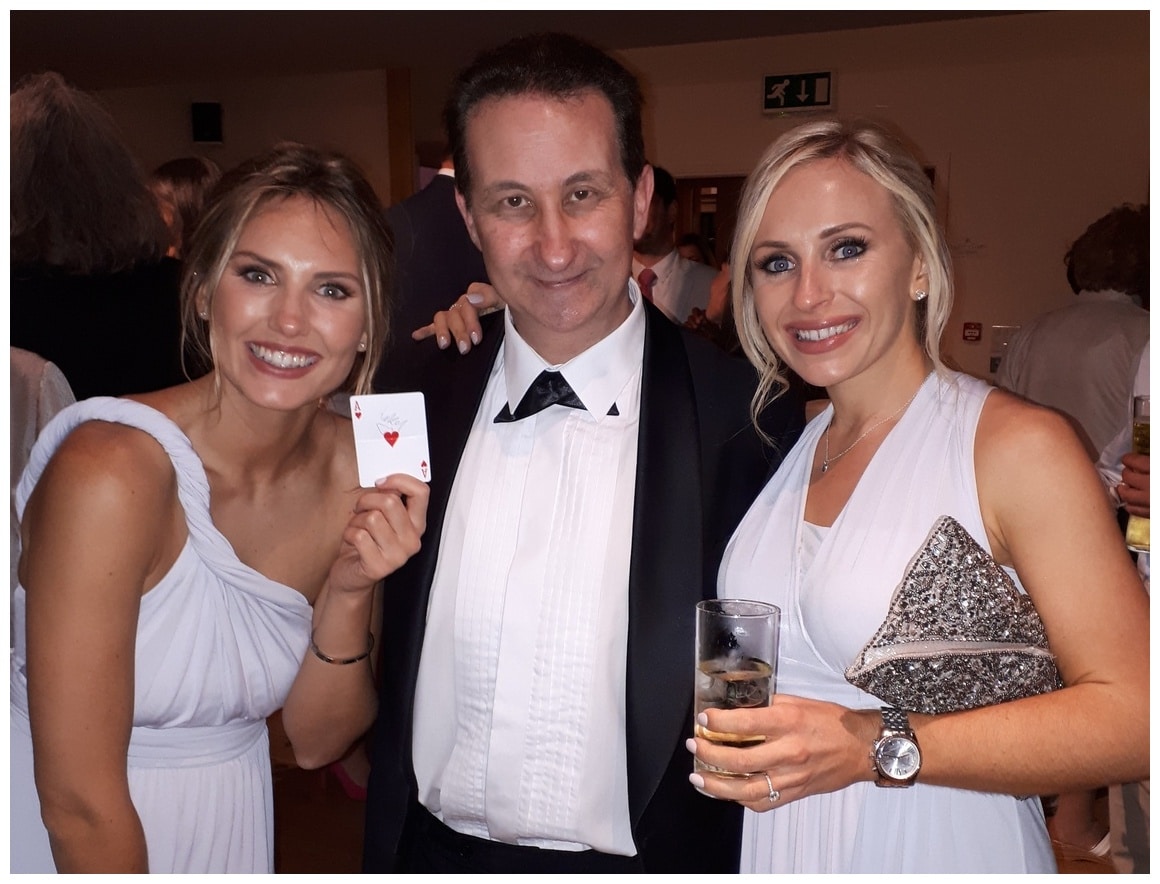
Great magic lets the audience experience the mystery without having to work out how the trick is done.
One of the biggest mistakes a magician can make is treating the audience as though they're taking an examination.
They shouldn't have to remember six instructions.
They shouldn't have to remember which card went where five minutes ago.
They shouldn't have to work out why you've suddenly introduced another prop.
They shouldn't have to reconstruct the sequence of events while you're still performing.
They should be experiencing the magic.
This is particularly important with close-up magic explained.
When you're standing a few feet away from somebody, the magic is incredibly personal.
The spectator may be holding the object.
They may have chosen the card.
They may have shuffled the deck.
They may have signed the object.
That makes the magic stronger.
But it also means the conditions need to be clear.
If the audience doesn't understand the conditions, they can't fully appreciate how impossible the result is.
The magician knows too much
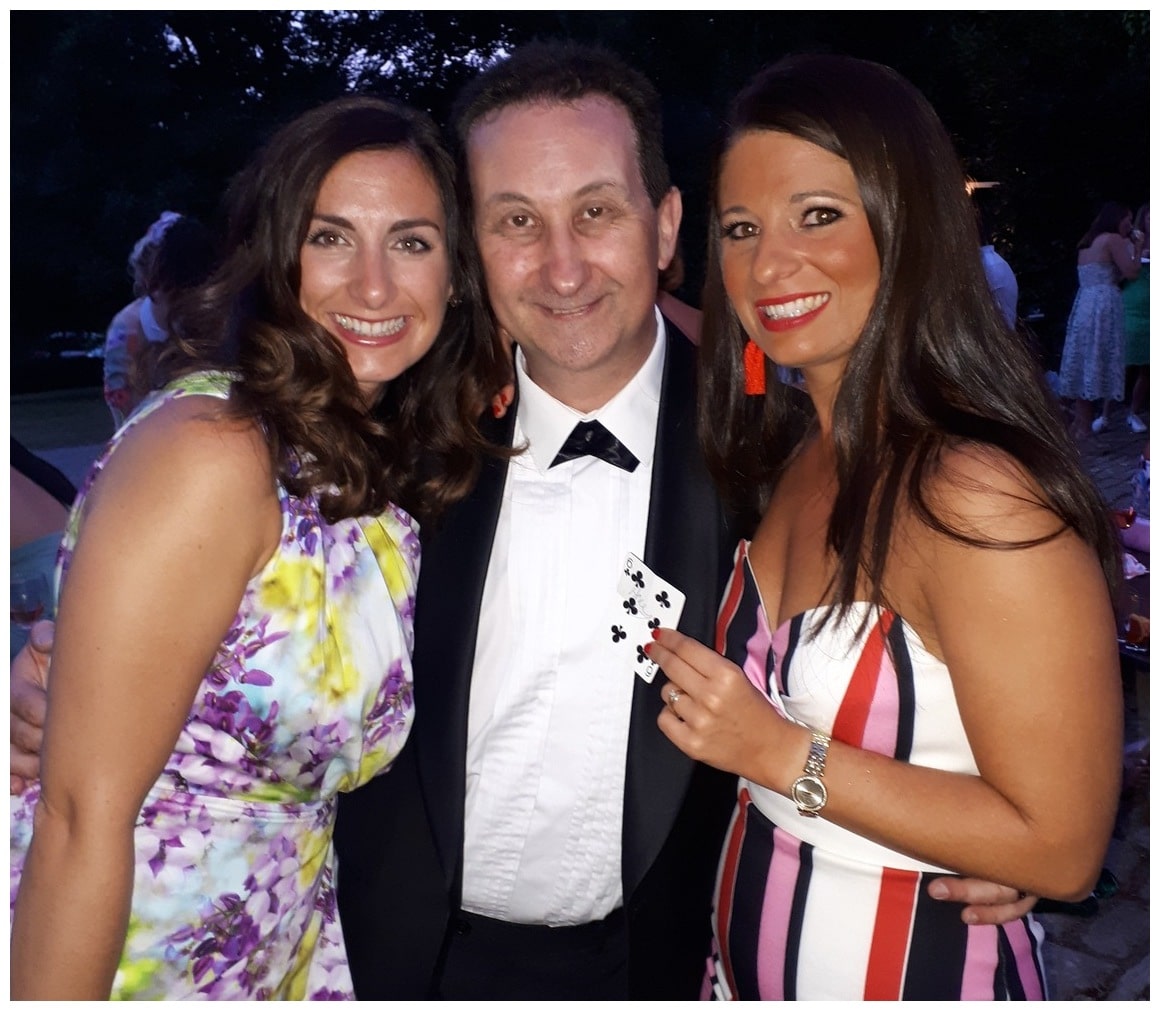
The magician knows the secret, but the audience only needs to experience the mystery.
Magicians have an unfair advantage.
We know the secret.
We know what's going to happen.
We know which actions matter.
We know which actions are there to disguise something else.
We've probably rehearsed the routine dozens or hundreds of times.
The spectator hasn't.
They're seeing it for the first time.
This is where experience matters.
You have to learn to look at your own magic from the spectator's point of view.
That's one of the reasons I put so much emphasis on showmanship in magic.
Showmanship isn't simply about being funny or confident.
It's about understanding the audience's experience.
You need to know what they are supposed to understand at each point.
You need to know where their attention should be.
You need to know what information matters.
And you need to know when to stop talking and let the magic speak for itself.
Establish the conditions

Clear conditions help the audience understand exactly what should be possible before the magic happens.
Before you can create a strong magical moment, the audience needs to understand the conditions.
Take a simple card trick.
You choose a card.
You remember it.
You put it back.
The card is lost in the deck.
Then something impossible happens.
That's easy to understand.
There is a beginning.
There is a problem.
There is a conclusion.
The audience knows what they're watching.
Now imagine that instead of simply choosing a card, I give you three cards, ask you to remember different things, move cards around, introduce another packet, tell a story, make several jokes and perform a series of unexplained actions.
Eventually, I reveal a card.
It might still be technically impressive.
But what was the audience supposed to be following?
That's where presentation can get in the way of magic.
The conditions make the miracle stronger
Clear conditions make the impossible result more powerful and memorable.
The clearer the conditions, the stronger the impossibility.
Imagine I place a coin on the table.
I cover it with my hand.
When I lift my hand, the coin has gone.
That's a perfectly understandable effect.
Now imagine I hand the coin to you.
You examine it.
You put it into your own hand.
You close your fingers around it.
That separation is important. When the objects involved in an effect remain visibly apart, the audience has fewer obvious explanations for how the magic could have happened.
This is one of the most powerful aspects of magic performed in spectators' hands, where the experience becomes intensely personal because the spectator is directly involved in the impossible event.
I don't touch your hand.
You open your fingers.
The coin has vanished.
The second version is potentially much stronger because the conditions are stronger.
You had the coin.
You closed your hand.
I didn't touch it.
And yet it disappeared.
The audience doesn't need to understand the method.
They need to understand why the result shouldn't have been possible.
That is the difference.
Mystery becomes stronger when the effect is simple
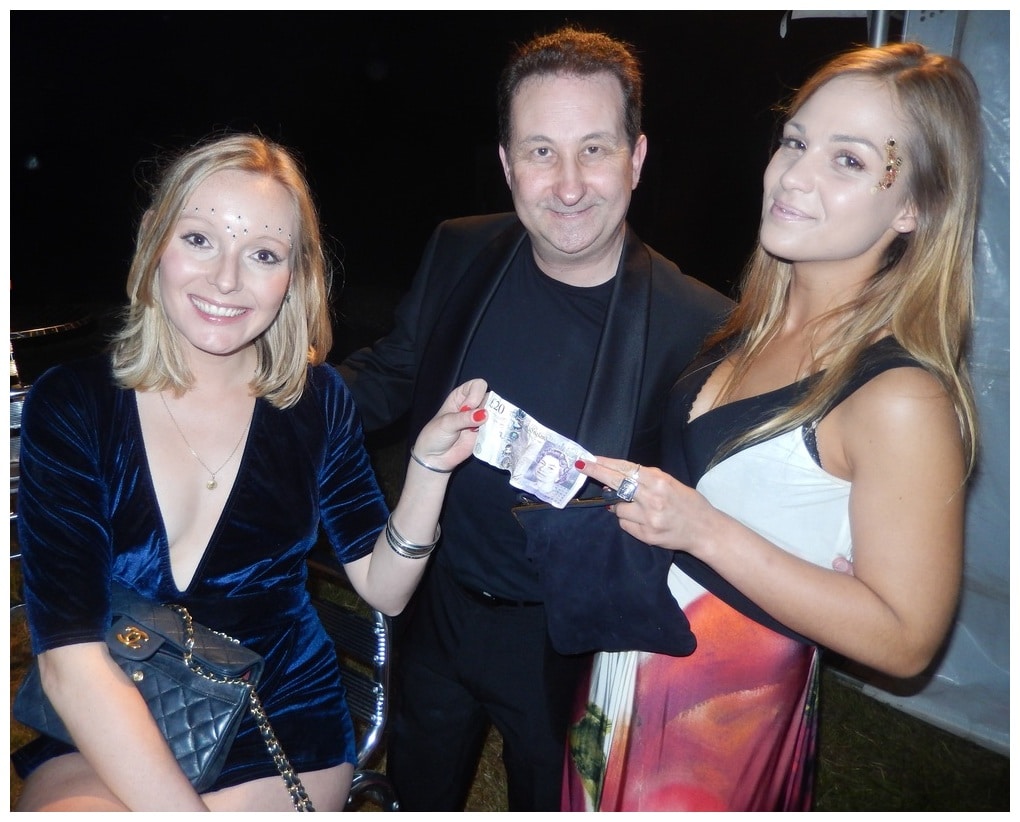
A simple, clearly presented effect can make the mystery even more powerful.
There is sometimes a temptation among magicians to make routines more complicated because complexity can feel clever.
But complicated doesn't automatically mean powerful.
In fact, some of the strongest magic can be explained in a single sentence.
“I signed a card, put it into the deck and somehow it ended up inside his wallet.”
That's clear.
The audience understands the effect immediately.
The method might involve considerable technical skill.
But the audience doesn't need a complicated explanation.
They need a simple impossibility.
This is one reason sleight of hand explained is such an interesting subject.
The technical side of magic can be incredibly sophisticated.
But the audience should ideally experience the finished result as something wonderfully simple.
The magician does the complicated work.
The audience gets the miracle.
Don't perform the method
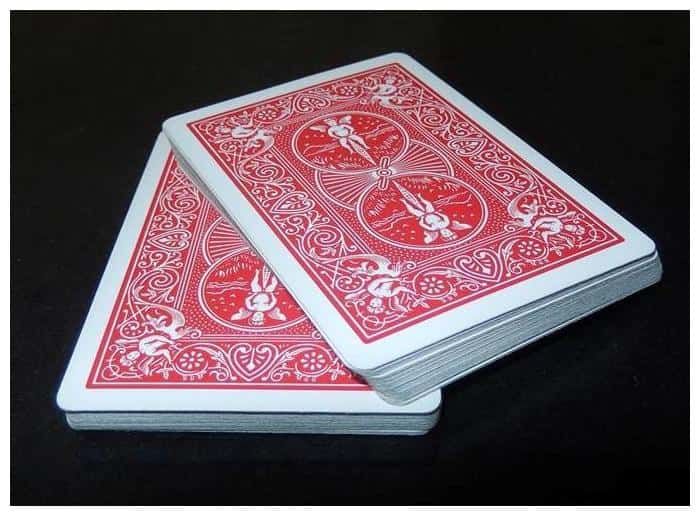
The audience should experience the magic without seeing the secret method behind it.
This is a trap that technical magicians can fall into.
You spend years learning a difficult sleight.
You become very good at it.
You start thinking about the move while you're performing.
You become proud of the technique.
But the audience doesn't care how difficult the move was.
They care about what happened.
The sleight exists to create the effect.
It isn't the effect.
A magician can perform a technically brilliant move and receive a fairly weak reaction if the audience doesn't understand why the result matters.
Conversely, a simple technique can create an enormous reaction if the conditions and presentation are strong.
That's why I always come back to the same question:
What does the audience think just happened?
Misdirection should hide the secret, not the miracle
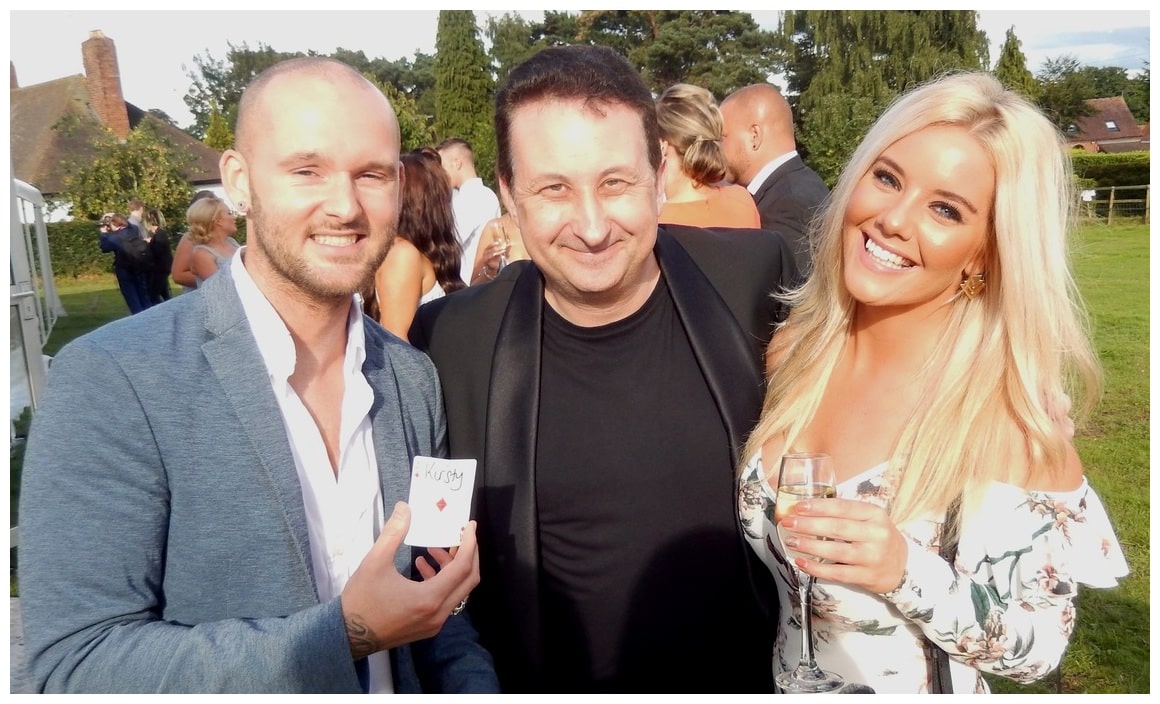
Good misdirection hides the method while allowing the audience to experience the magic clearly.
This is where misdirection in magic becomes important.
Misdirection is often misunderstood.
It isn't about deliberately confusing the audience.
It is about controlling attention.
If I need you to look at one thing while something secret happens somewhere else, that's misdirection.
But once the secret action has happened, the audience should still understand the effect.
If I make your signed card vanish, you should know that your card vanished.
You shouldn't be wondering whether I was actually doing something else with another card that you weren't supposed to notice.
The secret should disappear.
The effect should become clearer.
That's good misdirection.
Give the audience a question
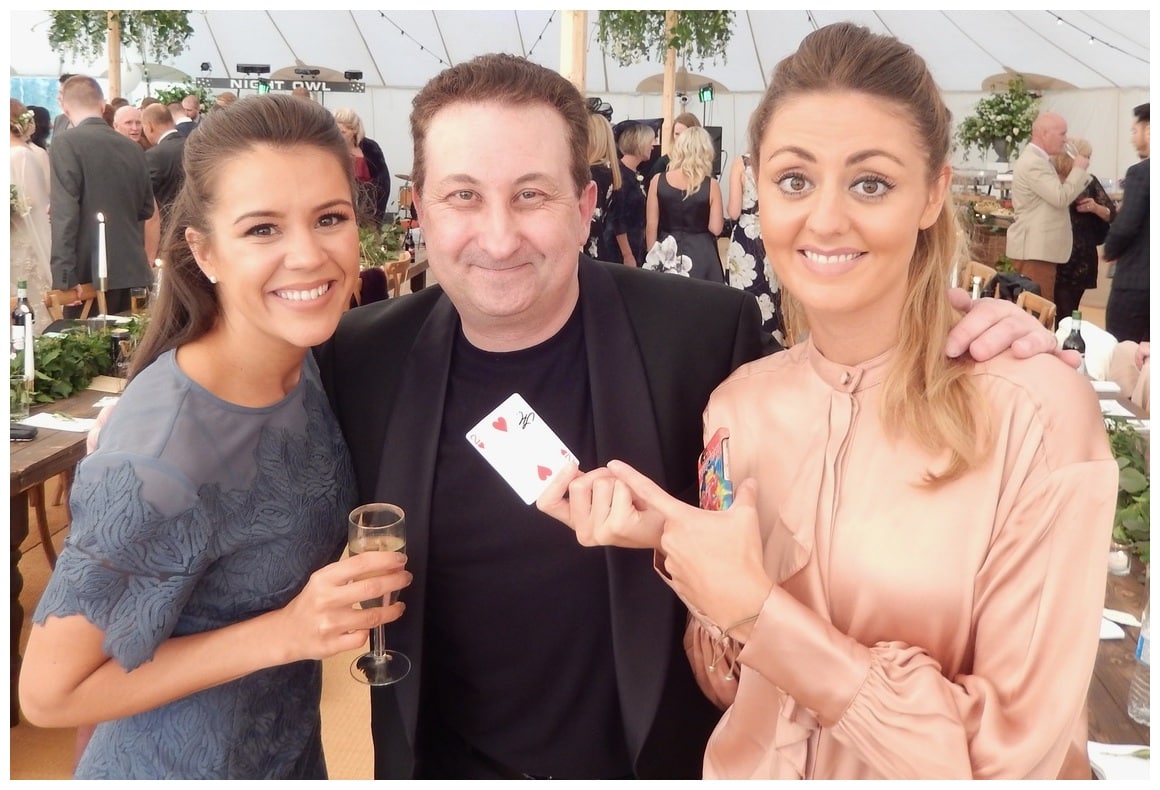 A strong magic routine often revolves around a simple question.
Where is the card?
Which hand contains the coin?
Can the magician know what I'm thinking?
Can the signed object possibly be inside that bottle?
Can the magician really find the card after the deck has been shuffled?
The audience doesn't necessarily need you to explain the question in a formal way.
But they need to understand it.
Once they understand the question, the magic can create tension.
Then comes the impossible answer.
That's a very clean structure.
Question.
Anticipation.
Impossible result.
Reaction.
The climax needs to be obvious
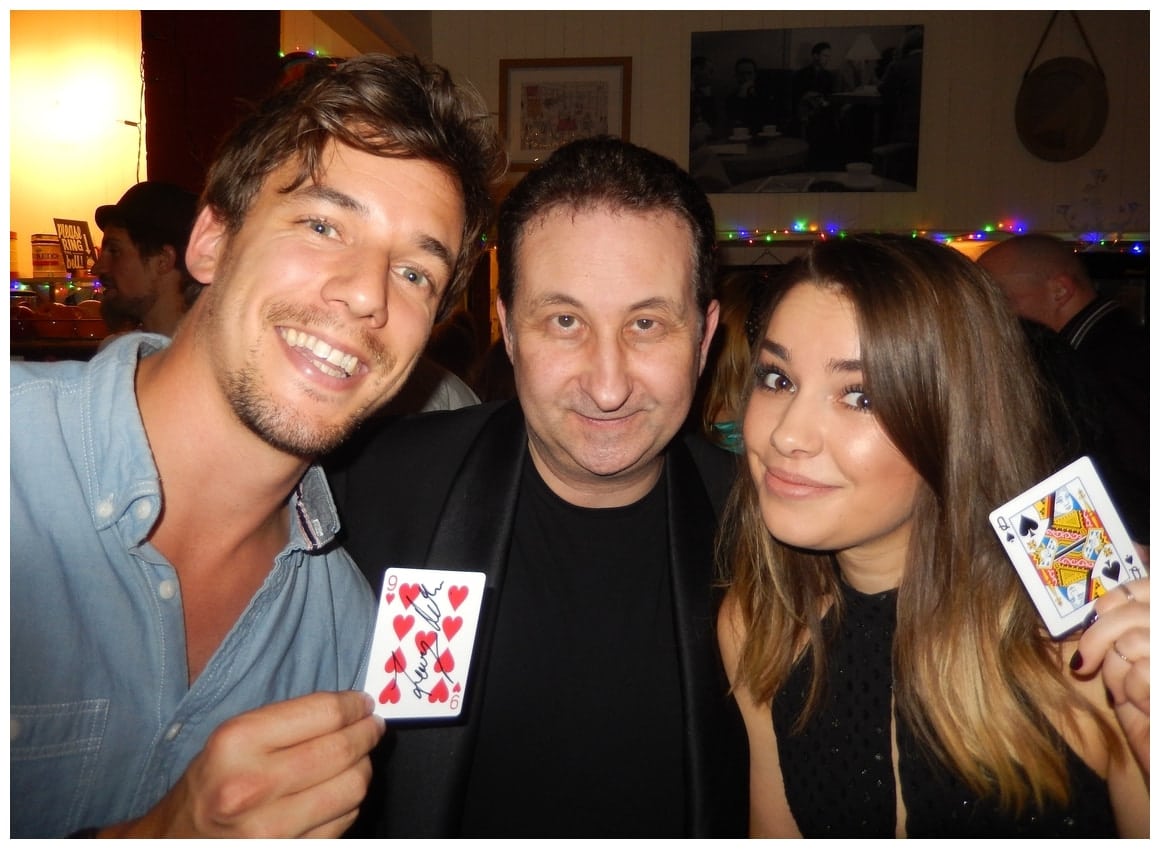
The audience should clearly recognise the impossible moment when the magic reaches its climax.
I've seen magicians work incredibly hard to create a magical moment and then almost throw it away by rushing past the ending.
Something impossible happens.
The audience reacts.
And the magician immediately starts talking about the next phase.
Why?
Let the moment breathe.
If the spectator's signed card has just appeared somewhere impossible, give them time to see it.
Let them pick it up.
Let them look at their signature.
Let them show the other people.
Let them react.
The climax is not simply the moment when the method has finished.
It is the moment when the audience realises what has happened.
That distinction is crucial.
Don't talk over the miracle

The strongest magical moments need space to register. Talking immediately after the climax can weaken the impact.
Sometimes the best thing a magician can say after a miracle is nothing.
You don't need to tell the audience that something amazing has happened.
They know.
You don't need to say:
“Wasn't that impossible?”
It was.
Let them react.
Silence can be incredibly powerful.
A pause gives the audience time to process the impossibility.
A good performer knows when words help and when words get in the way.
This is part of presentation.
It is part of timing.
And it is part of what I mean by showmanship.
Your words should make the effect clearer

The right words help the audience understand exactly what has happened without revealing how the magic was done.
That doesn't mean you should stop talking during a magic routine.
Words can be extremely useful.
But the words need to serve the magic.
Compare:
“Watch this.”
with:
“You put the card back yourself.”
The second line establishes a condition.
Or:
“You hold the coin. Don't let me touch your hand.”
Again, the conditions are clear.
Or:
“That's your signature.”
Now the audience understands why the object matters.
Good presentation isn't about saying more.
It's about saying the right thing.
Comedy should support the magic
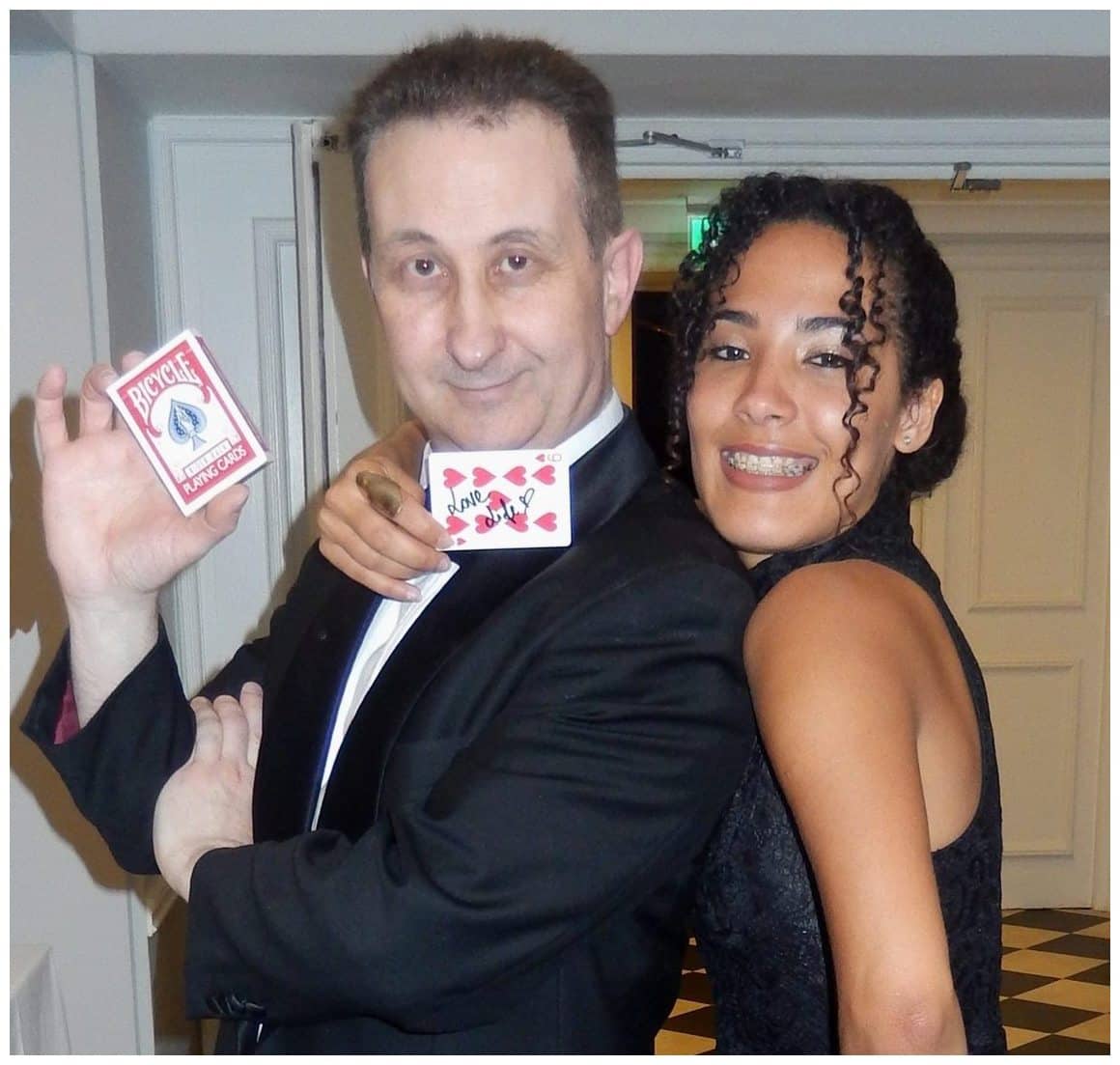
Good comedy adds to the magic without distracting the audience from the effect or weakening the mystery.
Comedy and magic work brilliantly together.
I enjoy using humour in my performances.
But comedy shouldn't make the magical effect unclear.
If the audience laughs so hard that they miss the important moment, you've got a problem.
The magician shouldn't become more important than the magic.
The joke should enhance the experience.
It shouldn't bury the miracle.
This is another reason showmanship in magic matters.
Showmanship is understanding the balance.
When should you make them laugh?
When should you build suspense?
When should you slow down?
When should you shut up?
When should you let the audience react?
Those decisions can make the difference between a trick that is technically good and a performance that people remember.
Spectator involvement needs a purpose

Involving spectators gives them a genuine role in the magic and makes the experience more personal and memorable.
I love involving spectators.
It makes magic personal.
But there needs to be a reason for what they're doing.
If somebody signs a card, their signature should matter.
If somebody shuffles a deck, the shuffle should matter.
If somebody makes a choice, the choice should matter.
If somebody holds an object, that object should become important.
Don't make the spectator perform meaningless tasks simply to make the trick look complicated.
The audience should understand why their participation matters.
That makes them feel involved rather than used as an extra pair of hands.
Psychology can strengthen clarity
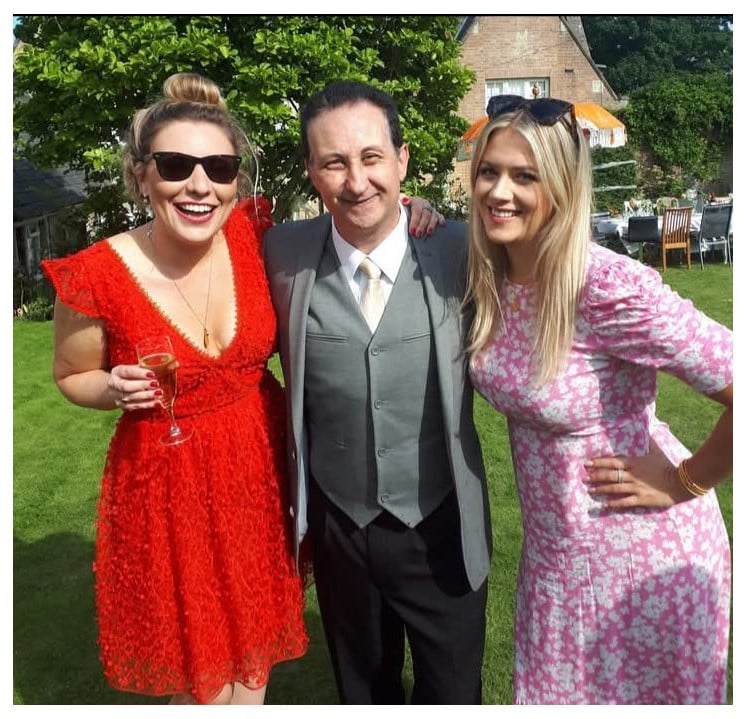 A good magician is constantly thinking about attention, expectation and behaviour.
That's one reason psychology in magic is such an important part of understanding performance.
People don't simply see objects.
They interpret what they see.
They form expectations.
They notice some things and ignore others.
They remember some details and forget others.
A magician can work with those natural human tendencies.
But again, psychology shouldn't create confusion.
The spectator should understand the choice they made.
They should understand the result.
They simply shouldn't understand how you apparently knew what they were going to do.
The Cups and Balls demonstrates the principle beautifully
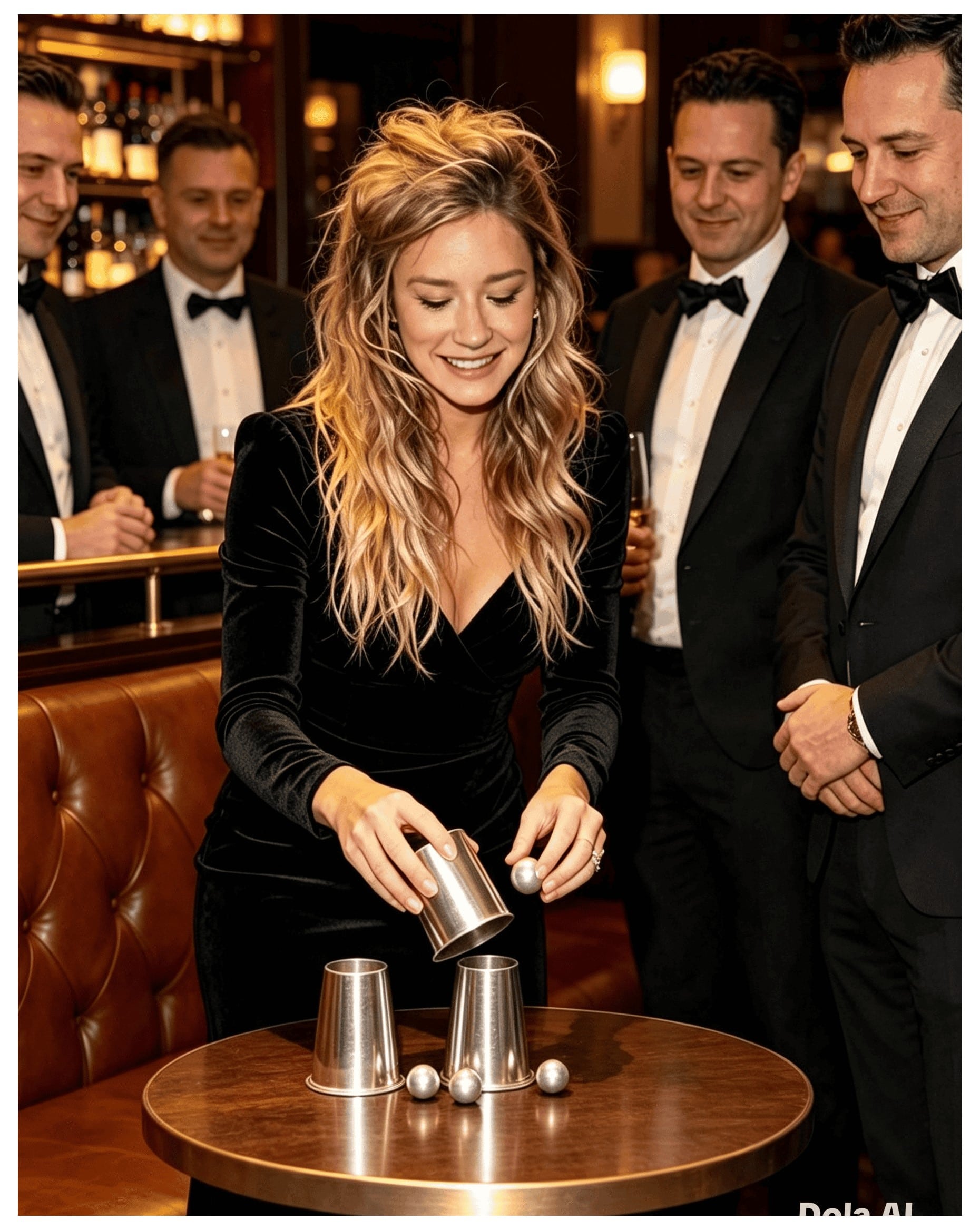
Holly performs the classic Cups and Balls routine, demonstrating how clear presentation helps the audience follow the magic.
The Cups and Balls is one of the classic examples of clarity creating mystery.
The audience understands where the balls are supposed to be.
They see them apparently vanish.
They see them appear somewhere else.
The plot itself is remarkably simple.
The methods can be anything but simple.
That is part of the beauty of the routine.
The audience doesn't need to understand the mechanics.
They understand the impossible events.
And because they understand the events, they can appreciate just how impossible they appear.
Three Card Monte relies on clarity

Holly performs Three Card Monte
The same principle can be seen in Three Card Monte.
The premise is simple.
Follow the card.
It shouldn't be difficult.
The spectator thinks they know what they're watching.
Then they keep getting it wrong.
The magic works because the conditions appear clear.
If the spectator didn't understand what they were supposed to follow, the effect wouldn't have the same impact.
Clarity creates the game.
The mystery comes from the fact that the rules appear to stop working.
The audience should be able to retell the trick
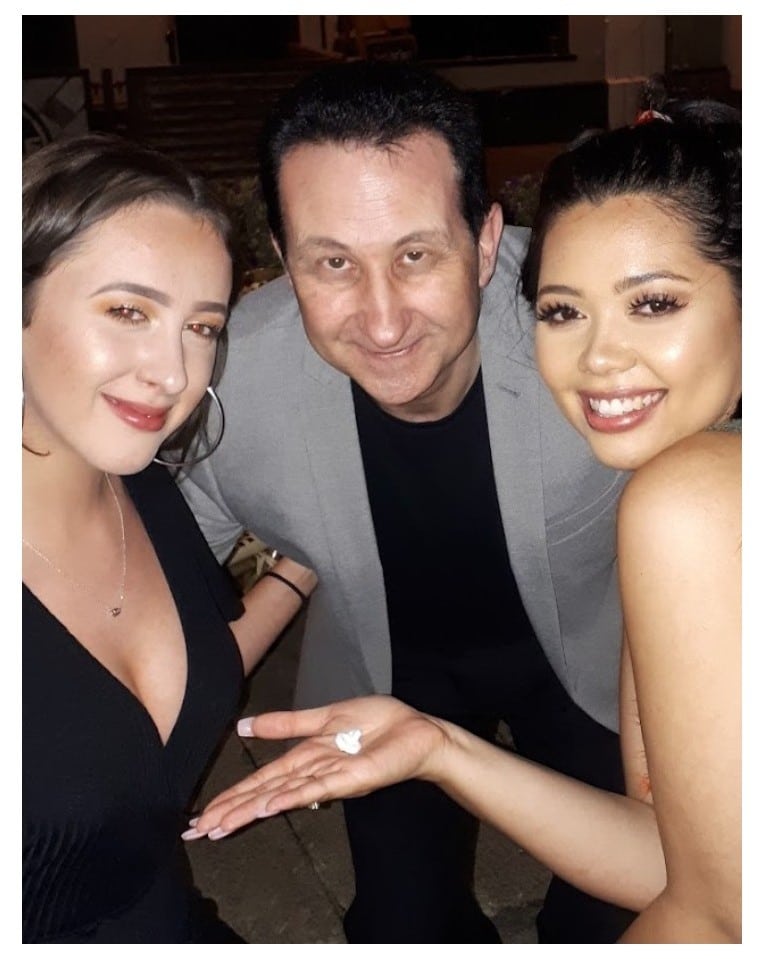
Two Polo mints visibly link together, creating a clear and memorable magical effect in the spectator’s hands.
Here's one of my favourite tests for a magic routine.
Imagine the spectator goes home that evening.
They meet somebody who wasn't there.
They say:
“You'll never believe what happened.”
Can they explain it?
They might say:
“I picked a card. I put it back in the deck. He shuffled the cards. Then somehow my signed card ended up inside his wallet.”
Brilliant.
They understand the effect.
They just can't explain the method.
That's exactly where you want them.
Now imagine they say:
“There were some cards... then he did something... then I held something... then there was another card... I think something disappeared...”
That's a warning sign.
The spectator may have enjoyed the experience.
But the magical effect hasn't stayed clear in their memory.
The audience shouldn't feel stupid
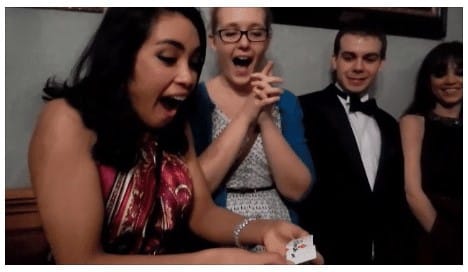
Good magic makes the audience feel involved and entertained, never confused, embarrassed or made to feel foolish.
This is another important reason to avoid confusing presentations.
If the audience doesn't understand the effect, they can sometimes feel as though they missed something.
They might think:
“Was I supposed to see that?”
Or:
“Did I miss the important bit?”
That's not what you want.
The spectator should feel involved.
They should feel that they saw everything.
They should feel that the impossible happened right in front of them.
They should not feel as though the magician has deliberately made the routine so complicated that they couldn't follow it.
A professional performer makes the audience feel clever enough to experience the magic.
Even when they are completely fooled.
Clarity matters at weddings
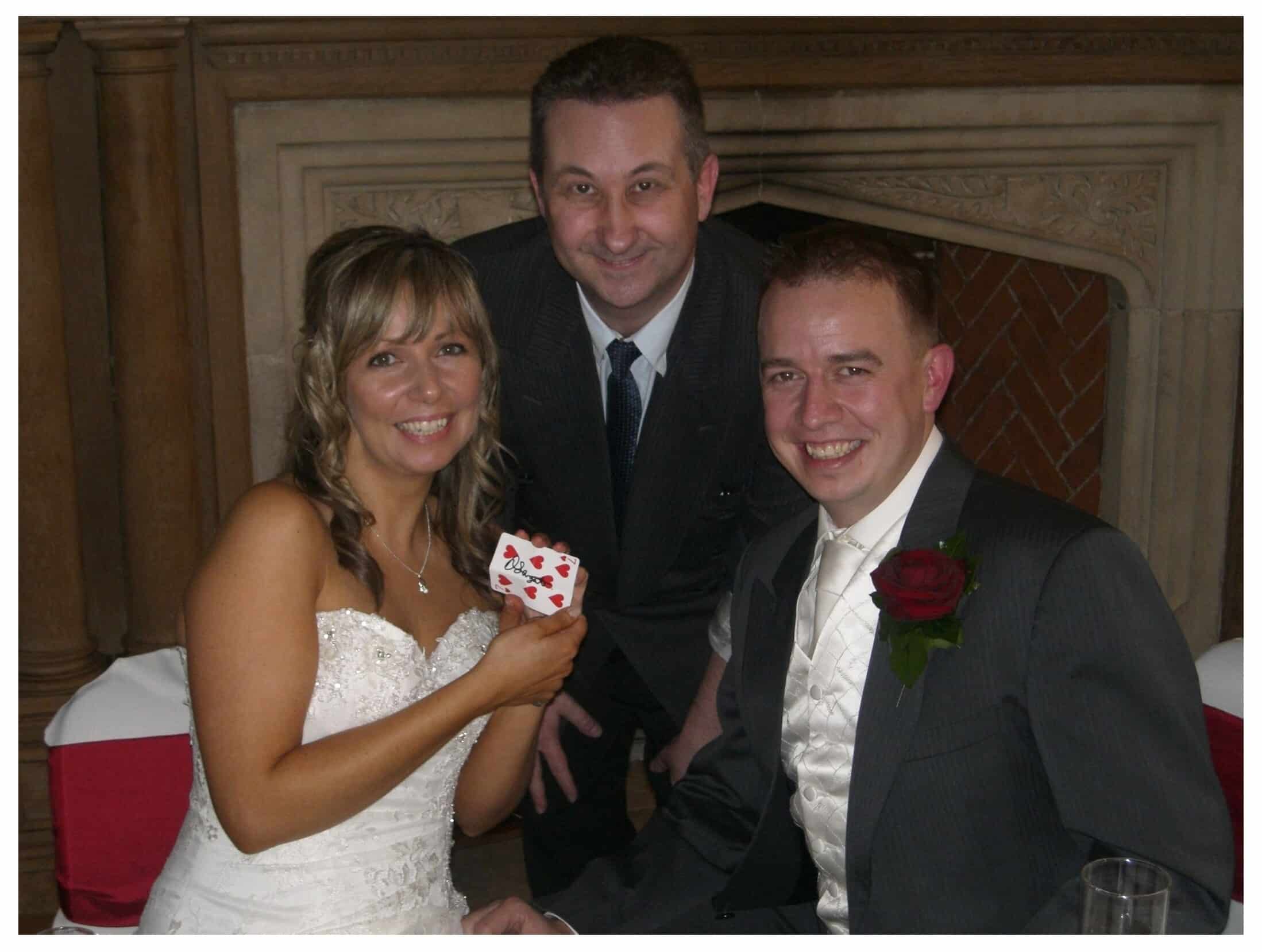
At weddings, clear magic allows guests to enjoy the mystery without confusion while keeping the focus on the celebration.
This becomes especially important when performing at weddings.
A wedding is not a magic convention.
People are there to celebrate.
They're talking.
They're meeting relatives.
They're eating.
They're having photographs taken.
They're catching up with friends they haven't seen for years.
The magician is entering that environment.
The performance needs to fit.
That is why understanding the best time for a wedding magician to perform is important.
You need to understand what is happening around you.
Sometimes guests have plenty of time to concentrate.
Sometimes you have only a few moments.
Sometimes a group is highly engaged.
Sometimes people are distracted.
Good magic adapts.
The magic should enhance the occasion
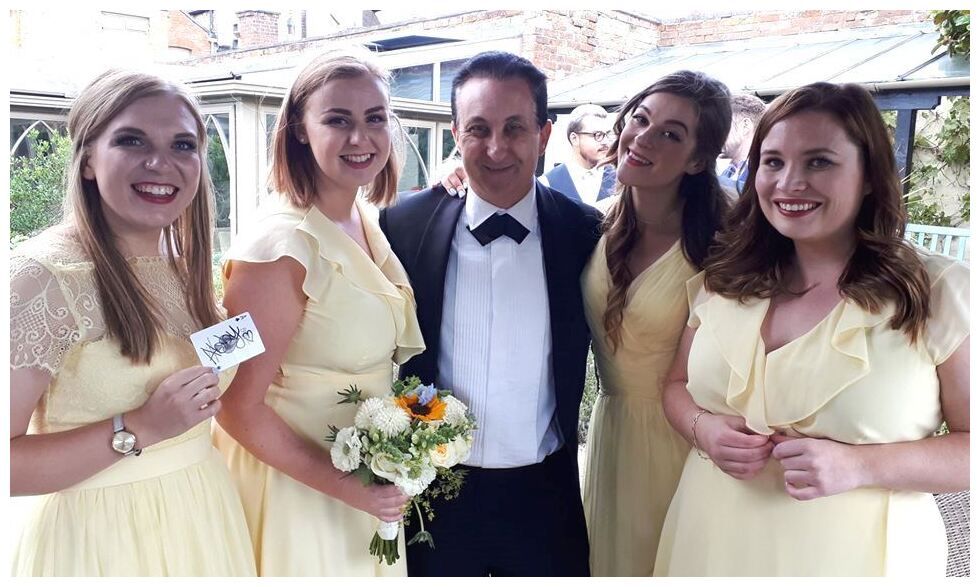
Great wedding magic adds to the celebration, giving guests memorable moments without taking attention away from the occasion.
I don't believe the magician should become the event.
At a wedding, the bride and groom are the stars.
At a corporate event, the client and the occasion matter more than the magician.
At a birthday party, the person being celebrated should remain at the centre.
My job is to add something to the occasion.
That's also why choosing the right performer matters.
My article What Type of Magician Should I Hire? looks at some of the differences between different styles of magician and the type of performance that may suit an event.
The right magician isn't simply somebody who knows lots of tricks.
They need to understand people.
They need to understand events.
They need to understand timing.
And they need to understand how to communicate an effect.
The same principle applies across different locations
The location may change, but the principle of clear presentation doesn't.
When I'm performing as a magician in Bristol, I might be working around a busy wedding reception, a corporate event or a private party.
The audience still needs to understand what has just happened.
The same applies when I'm performing as a magician in Gloucester.
A good effect shouldn't require the audience to concentrate on a complicated sequence of instructions before they can appreciate it.
When performing as a magician in Cheltenham, the setting might be very different from another event, but the fundamentals remain the same.
The magic needs to communicate.
The audience needs to understand the effect.
The method needs to remain hidden.
The same is true when performing as a magician in Swindon.
People haven't come to study a magic trick.
They've come to enjoy an event.
So the magic needs to work within that environment.
Performing as a magician in Oxford brings exactly the same principle.
The audience doesn't need to remember every movement.
They need to understand the important conditions.
They need to recognise the impossible result.
I've also performed magic around Bath, and once again the setting doesn't change the fundamental rule.
The presentation needs to be clear.
The mystery needs to remain intact.
And whether I'm performing as a magician in Worcester or somewhere else, I still want the same reaction.
“I know exactly what happened. I just haven't got a clue how you did it.”
That's what I'm looking for.
Don't add information the audience doesn't need
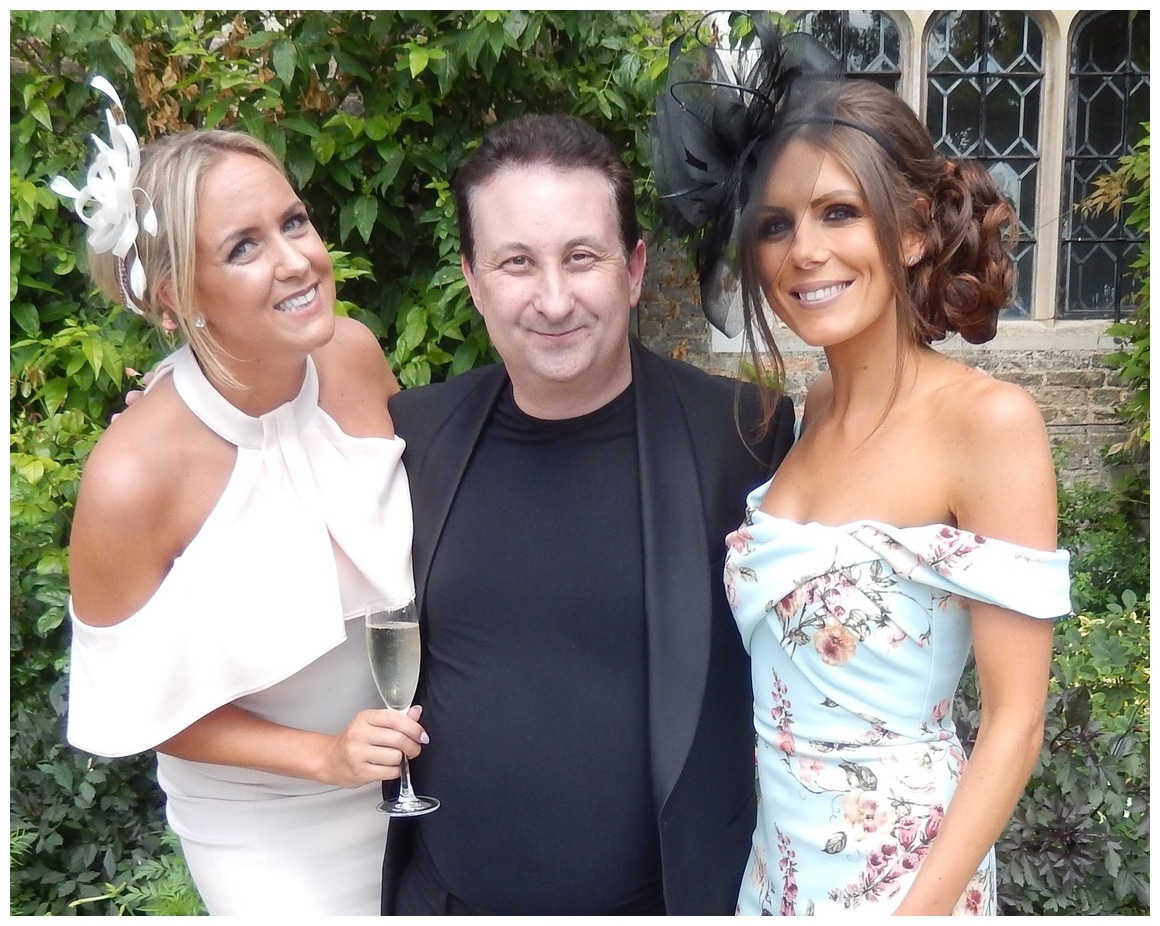 One of the easiest ways to improve a magic routine is to remove things.
Remove a sentence.
Remove an unnecessary phase.
Remove a prop.
Remove an instruction.
Remove a joke.
Remove a movement.
Then see whether the magic becomes clearer.
It often does.
Magicians can become attached to things because we've spent time developing them.
But the audience doesn't know what we've removed.
They only experience what remains.
If something isn't helping the audience understand the effect, why is it there?
That's a question worth asking.
A trick can be technically difficult and emotionally simple
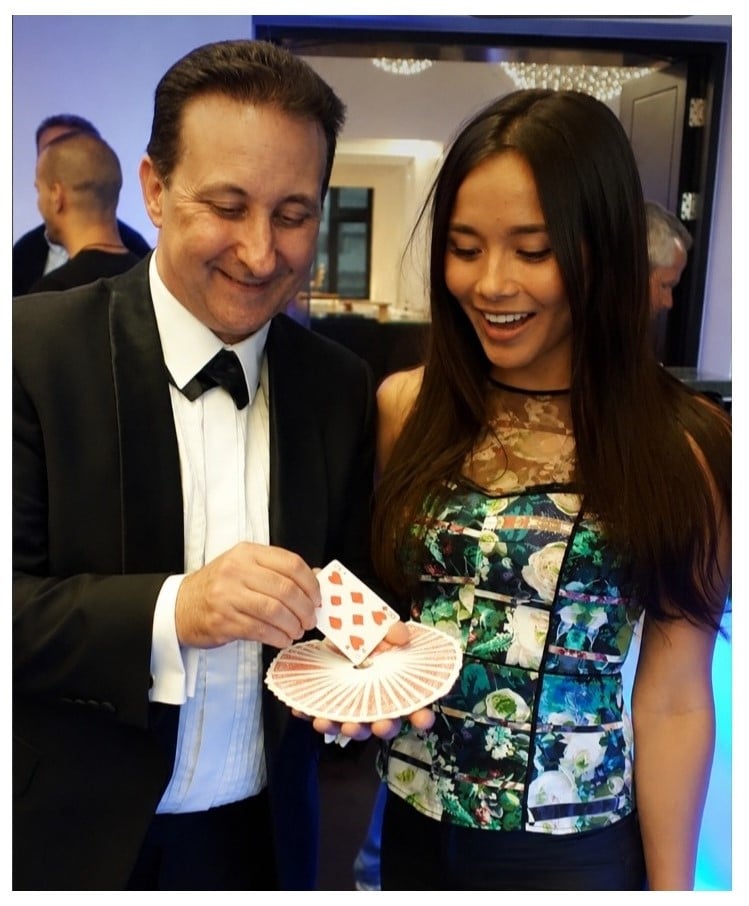
 There is nothing wrong with difficult magic.
I love sleight of hand.
I enjoy the technical side of the craft.
But technical difficulty and audience complexity are two completely different things.
A routine can be extremely difficult for the magician and incredibly simple for the spectator.
That's often ideal.
The magician deals with the difficulty.
The audience experiences the miracle.
They don't need to know how many hours went into learning the technique.
They just need to see the impossible thing happen.
Test your presentation on someone who doesn't know the method
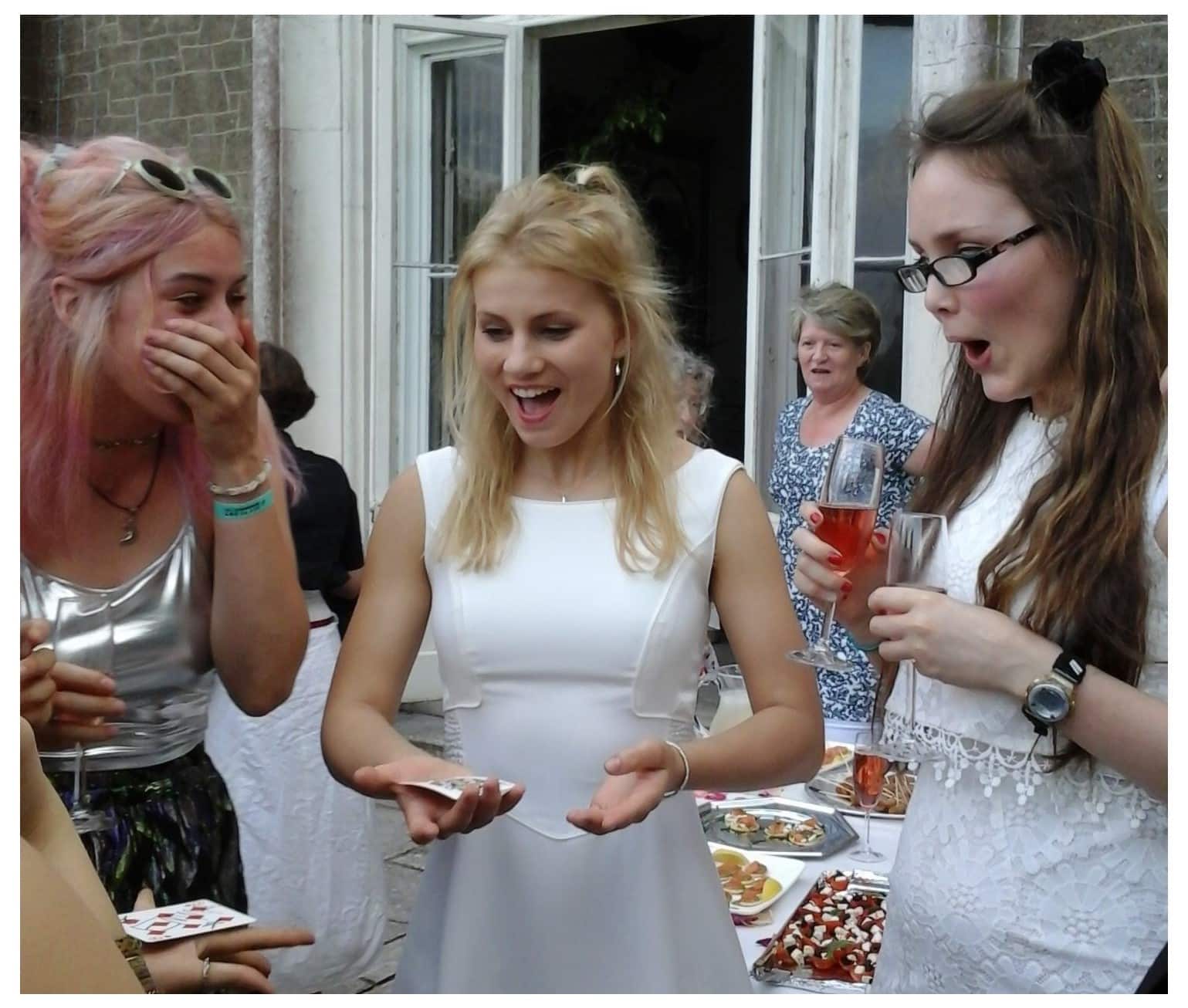
 If you're a magician working on a routine, try this.
Perform it for somebody who doesn't know the secret.
Then don't ask:
“Did you like it?”
Ask:
“What just happened?”
And listen carefully.
Don't immediately correct them.
Don't tell them what they were supposed to see.
Listen.
If they describe the effect exactly as you intended, that's a very good sign.
If they describe something completely different, you've learned something useful.
Your intention isn't necessarily what the audience experienced.
The audience's experience is what matters.
Clarity doesn't mean revealing the secret

Clear magic lets the audience understand exactly what happened while keeping the secret method completely hidden.
This point is worth making absolutely clear.
When I talk about clarity, I am not saying that the magician should explain the trick.
Quite the opposite.
The secret should remain hidden.
The audience doesn't need to know the method.
They don't need to know which sleight was used.
They don't need to know where the secret move happened.
They don't need to know what technique made the miracle possible.
They need to understand the effect.
That is all.
Clear effect. Secret method.
That's the balance.
The clearer the effect, the stronger the impossibility
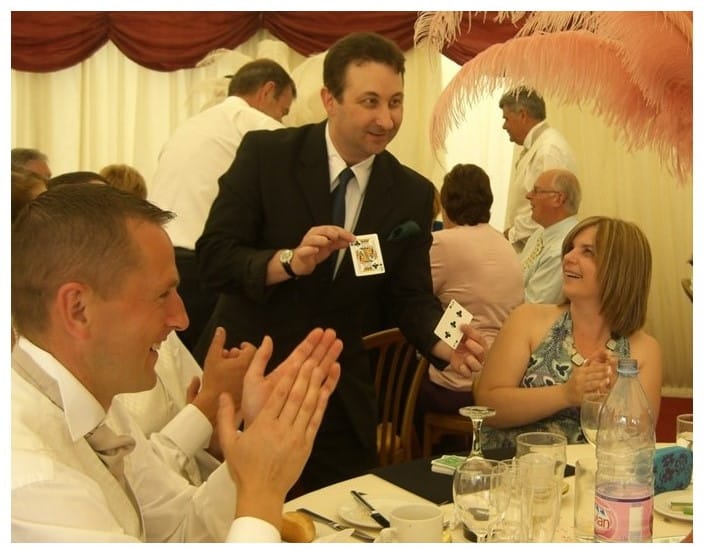
A clean, uncluttered effect gives the audience fewer explanations to consider, making the impossibility feel stronger.
This is perhaps the most important point of the entire article.
You might think that making a trick clearer would make it less mysterious.
It actually does the opposite.
If the audience knows exactly what happened, they also know exactly what shouldn't have happened.
That makes the impossible result stronger.
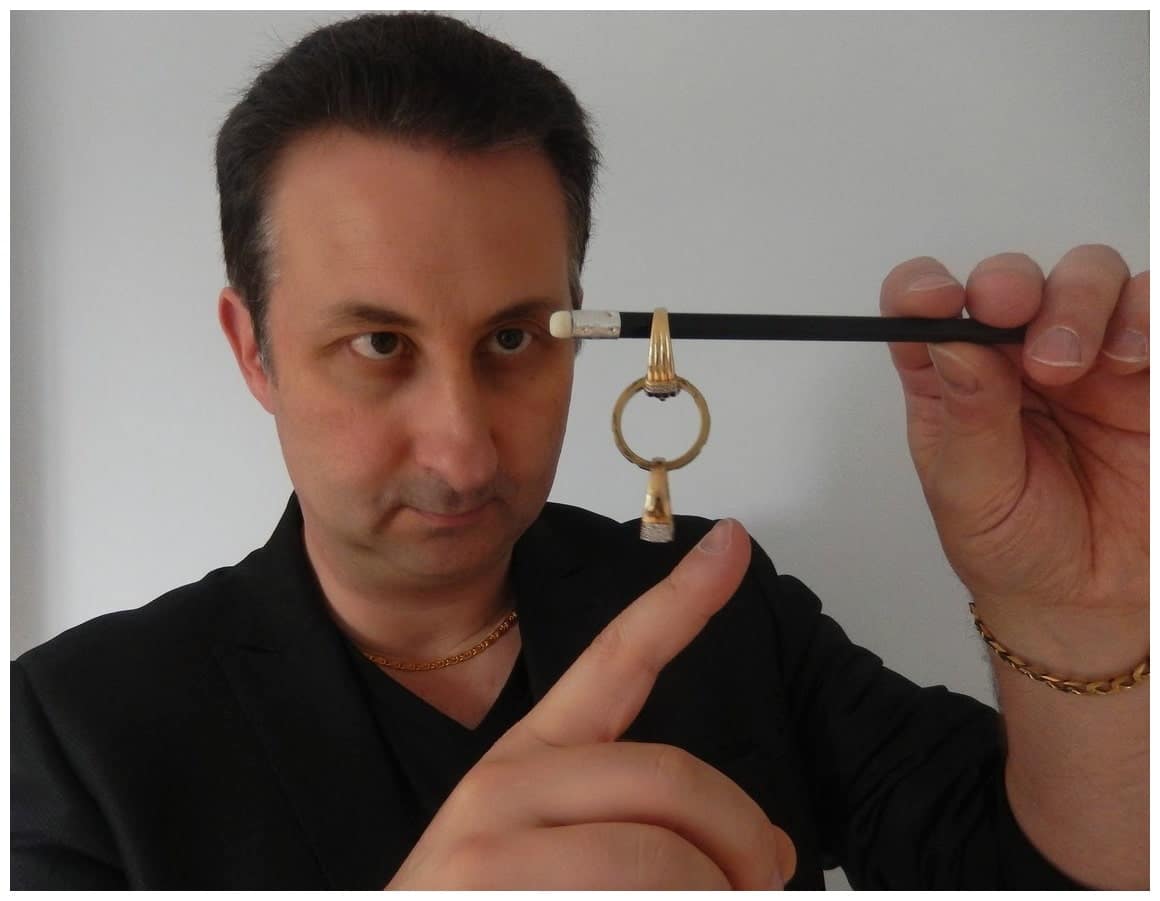
Imagine I borrow your ring.
You hold it.
You watch me.
It disappears.
You know exactly what happened.
That's powerful.
Now imagine the presentation was so complicated that you're not entirely sure whether the ring disappeared, changed, moved or was secretly exchanged.
The method might still be hidden.
But the miracle isn't as clean.
The clearer the effect, the more powerful the mystery.
My final test for presenting magic
 When I'm thinking about a magic routine, I can reduce the whole principle to two questions.
At the end of the trick, does the audience know exactly what happened?
If the answer is no, I need to look at the presentation.
Then:
Do they know how it happened?
If the answer is no, that's good.
That's where I want them.
They know what happened.
They know it shouldn't have happened.
And they have absolutely no idea how it happened.
That's mystery without confusion.
Magic should leave a clean memory
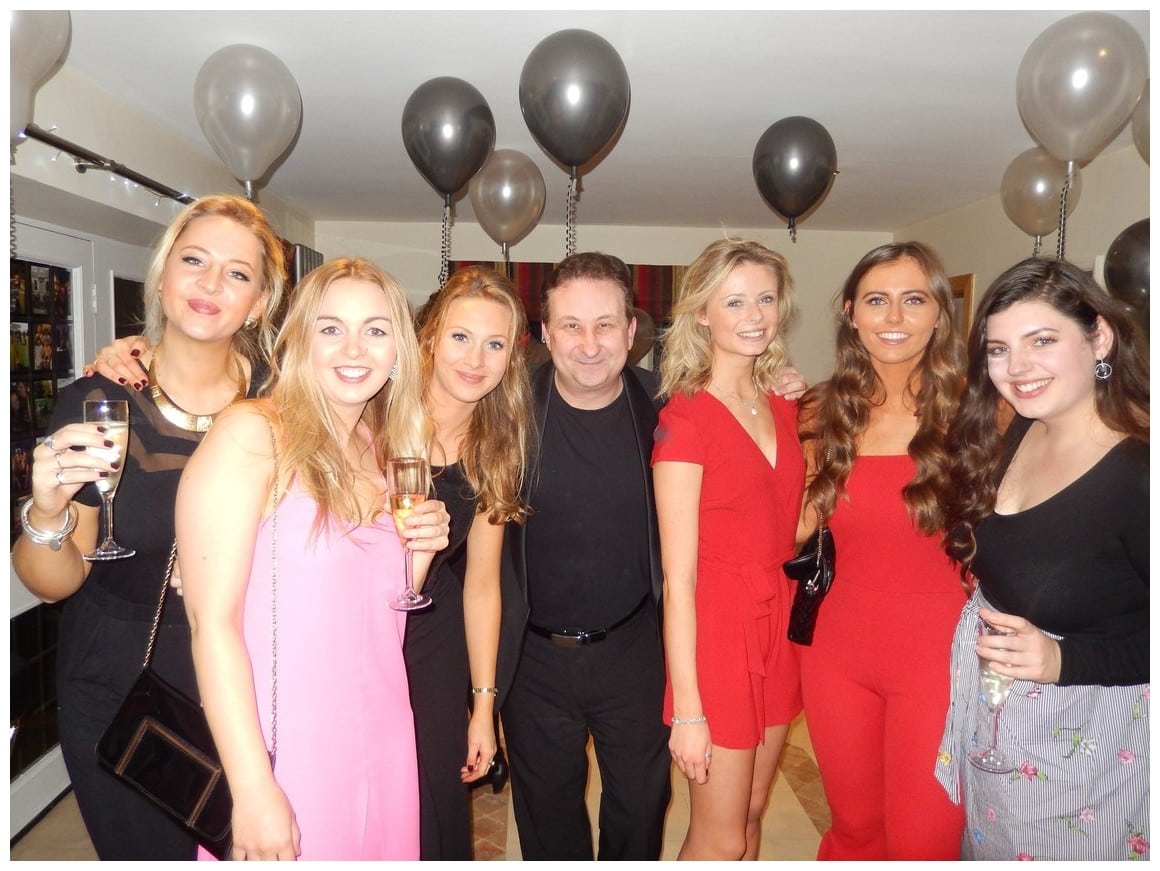 The best magic doesn't simply create a reaction in the moment.
It leaves a memory.
Later that evening, the spectator should be able to tell somebody what happened.
The next day, they should still remember it.
Years later, they might still remember the impossible moment.
That's particularly important at weddings.
A guest might remember the magician.
But more importantly, they remember what happened to them.
“He borrowed my ring and it ended up inside...”
“I signed the card and then...”
“I was holding the coin myself and...”
Those are the stories people tell.
And the clearer the original effect was, the better the story becomes.
Final thoughts
 After more than 25 years performing magic, I've become increasingly convinced that the strongest magic isn't necessarily the trick with the most complicated method.
It is often the trick with the clearest effect.
The audience shouldn't have to work out what the magician was trying to show them.
They shouldn't finish the trick wondering whether they missed something.
They shouldn't be confused about the plot.
They should know exactly what happened.
A card was there.
Now it isn't.
A coin was in their hand.
Now it has vanished.
They chose a card.
It appeared somewhere impossible.
They signed an object.
It travelled somewhere it couldn't possibly have travelled.
The effect is clear.
The method is mysterious.
That is the balance I look for whenever I perform.
Because the goal of magic isn't to confuse people.
The goal is to make them wonder.
And there is a world of difference between the two.
Mystery without confusion.
That's where the real magic begins.
Andy Field Magician Service Areas
I regularly provide close up magic for weddings, parties, corporate events and special occasions across the South West and surrounding areas. You can find out more about my magic services in the following locations:
- Bristol Magician
- Gloucester Magician
- Cheltenham Magician
- Swindon Magician
- Somerset Magician
- Magician Oxford
- Magician Bath
- Magician Worcester
- Magician Cotswolds