
The Disadvantages of Copying Another Magician

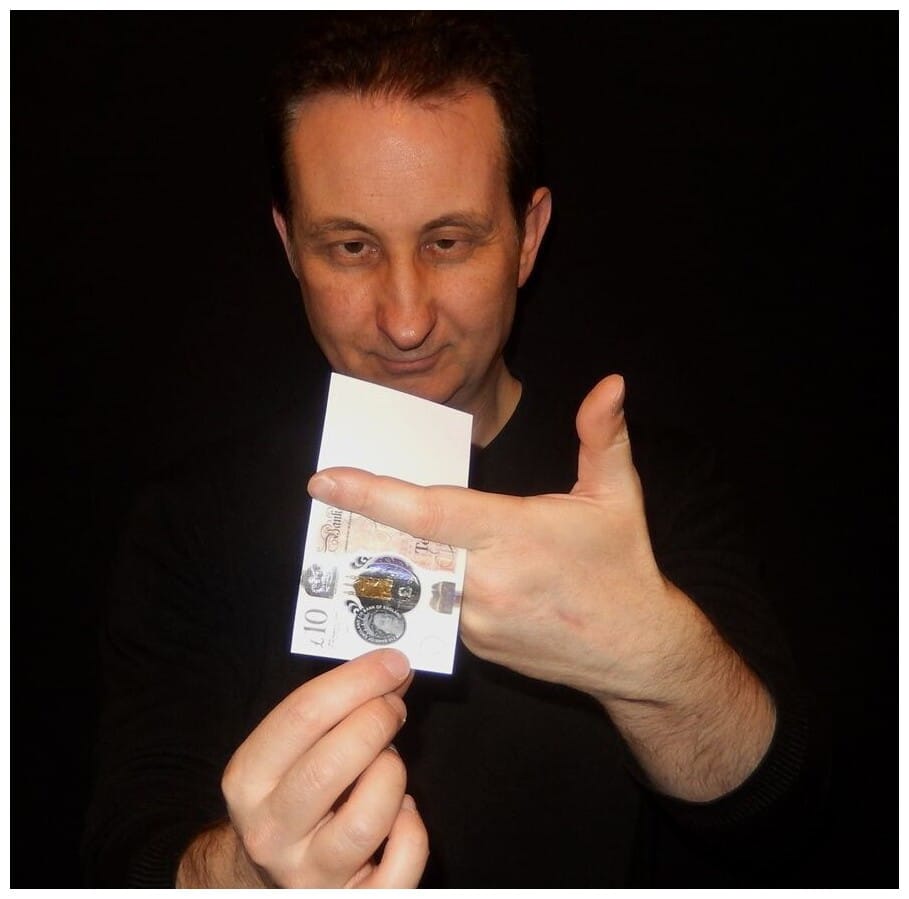
Andy Field is a professional close-up magician with more than a quarter of a century of experience performing close up magic at weddings, parties, corporate events and private celebrations. He has performed at more than 1,000 weddings and is a two-time S.A.M.S. Champion of Close-Up Magic with more than 20,000,000 views on his YouTube and an array of Google reviews.
Copying Another Magician
Magic is an art that has always been built on learning, experimentation and inspiration. Every magician starts somewhere, and most of us spend years studying the work of performers we admire.
We watch their presentations, examine their techniques and try to understand what makes their magic so entertaining.
I've spent more than 25 years performing professionally, entertaining audiences at weddings, private parties and corporate events.
During that time, I've learnt a great deal from studying other magicians, including respected performers such as Michael Vincent and Darwin Ortiz. Their knowledge and experience have helped shape my understanding of magic, misdirection and performance.
However, there is an important distinction between learning from another magician and copying everything they do.
Learning helps you develop. Copying can prevent you from developing at all.
A magician might perform an incredible card trick, deliver a brilliant line or handle an audience in a way that makes the whole performance look effortless. It's natural to want to recreate that experience.
The problem begins when you attempt to reproduce someone else's personality, presentation and performing style without understanding why it works for them in the first place.
Magic is not simply about knowing how a trick works. It's about how you communicate with an audience, how you build anticipation, how you handle unexpected moments and, ultimately, how you make people feel.
A performer must learn to adapt their own style to different audiences, whether working as a magician in Oxford or performing elsewhere.
If you want to become a better magician, learning from others is essential. Becoming a copy of another performer, however, can create problems that are difficult to overcome.
1. You Lose Your Own Personality
One of the biggest disadvantages of copying another magician is that you risk losing the very thing that could make you interesting: your own personality.
Every performer has a different way of communicating. Some magicians are naturally theatrical, while others are quieter and more understated. Some enjoy telling stories, others rely on quick wit, and some are at their best when they allow the magic itself to do most of the talking.
There isn't one correct personality for a magician.
The trouble starts when someone watches a successful performer and decides that they must behave in exactly the same way to achieve similar results.
Perhaps they adopt the same facial expressions, imitate the same pauses or use the same jokes. They might even copy the way the other magician holds a deck of cards or looks at a spectator before revealing a prediction.
At first, this can feel like a useful shortcut. After all, the original performer has already demonstrated that the approach can work.
But what works for one person doesn't automatically work for another.
Imagine a naturally reserved magician trying to imitate an extremely confident, outspoken performer. The jokes might be funny, but the delivery could feel forced. The audience might sense that something isn't quite right, even if they can't explain exactly what it is.
The problem isn't that the magician lacks ability. It's that the performance doesn't feel authentic.
Your personality is part of your magic. It influences how people respond to you, how comfortable they feel around you and whether they enjoy spending time with you.
Rather than trying to become somebody else, work out which aspects of your own character make you an engaging performer. You might be naturally funny, observant, charming, mischievous or wonderfully understated.
Build on those qualities.
You don't need to imitate another magician's personality when you can develop your own.
Developing an individual approach is important for any magician in Bath, just as it is for performers in other locations.
2. What Works for One Magician Might Not Work for You

Every magician has their own performing style, personality and approach to magic.
A successful performance is rarely the result of a single trick or clever line. It usually comes from a combination of timing, experience, personality, technique and an understanding of the audience.
When you copy another performer, you often reproduce the visible elements without appreciating everything that makes them effective.
Take a joke, for example.
A magician you've admired might deliver a particular line and receive a huge laugh. You learn the line, practise it in front of a mirror and introduce it into your own act.
Then you perform it at a wedding and receive nothing more than a polite smile.
Why?
The original magician might have built a relationship with the audience before delivering the joke. Their expression, timing and tone might be perfectly suited to it. Perhaps the line works because it contrasts with their otherwise serious manner.
Remove those elements and the joke might lose its impact.
The same applies to the presentation of a trick.
A performer might make a simple effect extraordinary through the way they build suspense. Another magician could perform exactly the same trick, using precisely the same words, and produce a completely different reaction.
A distinctive performance helps a magician in Worcester build a recognisable identity rather than simply imitating somebody else's act.
This is why studying successful performers requires more than memorising their routines.
Ask yourself what is actually making the performance work.
Is it the structure of the routine? The timing? The relationship with the audience? The clarity of the effect? Understanding misdirection in magic can also help you recognise how a performer guides attention and creates a powerful magical moment.
Once you understand the underlying principles, you can adapt them to your own style.
That is far more valuable than copying the finished product.
3. Your Performances Become Predictable

What works for one magician might not work for another.
Audiences appreciate originality, even when they don't consciously think about it.
They enjoy discovering something unexpected, being surprised by a revelation and experiencing a moment they haven't seen coming.
When magicians repeatedly copy established routines, presentations and jokes, their performances can start to feel familiar before the magic has even happened.
This is particularly important in an age when people can watch thousands of magic performances online.
The same principle applies to a magician in Coventry, where an individual style can help a performer stand out.
A spectator might have seen a particular trick on television, encountered it on social media or watched another magician perform it at a previous event. If your presentation is almost identical, you have given that spectator very little reason to experience the effect as something fresh.
Of course, magicians cannot invent every method, plot or principle from scratch. Many important ideas in magic have existed for generations, and performers regularly study established techniques.
The issue isn't using a familiar principle. It's failing to bring anything personal or interesting to it.
Two magicians can perform the same classic effect and create entirely different experiences.
One might emphasise humour. Another might build a dramatic atmosphere. A third might involve the spectator in a way that makes the revelation feel remarkably personal.
The underlying method might be similar, but the experience is different.
Developing your own presentation gives audiences a reason to remember your performance rather than simply remembering the trick.
And being remembered for the right reasons is a considerable advantage for any professional magician.
4. You Stop Developing Your Own Creative Thinking
Magic isn't just about knowing the secret. It's about how you sell the impossible.
If a routine has already been tested by a successful performer, it can seem sensible to reproduce it rather than risk developing something that might not work.
There is nothing wrong with learning established routines, particularly when you're starting out. Studying proven material can teach you about structure, technique, audience management and the construction of magical effects.
However, if copying becomes your default approach, you may never properly develop your own creative instincts.
Instead of asking, "How could I make this more interesting?", you begin asking, "How did that magician do it?"
Instead of experimenting with different presentations, you reproduce the one you've already seen.
Instead of discovering what suits your personality, you rely on somebody else's decisions.
For a magician in Leamington Spa, the way a trick is presented can be just as important as the method behind it.
Over time, this can make you dependent on external inspiration.
Creative thinking improves through practice. You need to experiment, make mistakes, reconsider your choices and discover what works for you.
Perhaps you find a new way to introduce a familiar effect. Maybe you discover that a different sequence makes the revelation clearer. You might find that allowing a spectator to make a particular decision creates a much stronger moment.
These discoveries don't always come from inventing an entirely new trick. Often, they come from thinking carefully about how an existing effect can become a better performance.
Give yourself permission to experiment.
You won't improve every routine you touch, and not every idea will survive its first performance. That's part of the process.
The important thing is that you're developing the ability to make your own decisions rather than relying entirely on someone else's.
5. You Can Develop Bad Habits by Copying the Wrong Things
Copying another magician might seem like a shortcut to success, but it can teach you habits that are difficult to break.
When you admire another magician, it's easy to assume that everything they do is worth copying.
That assumption can be a mistake.
Even excellent performers have individual habits, preferences and approaches that may not suit every situation. Something that appears effective in a filmed performance might not translate well to a live audience.
For example, a magician might use a particular handling technique because it suits their hands, their experience or the conditions in which they normally perform. Attempting to reproduce it without understanding its purpose could make your own handling less natural.
The same is true of audience management.
A magician in Leicester can learn from other performers while still developing an approach that feels natural and individual.
One performer might enjoy an assertive style of interaction. Another might achieve better results by being relaxed and conversational.
Neither approach is automatically superior. The right choice depends on the performer, the audience and the circumstances.
Copying without understanding can also lead to unnecessary movements, awkward pauses or presentations that make an effect harder to follow.
This is why technical study matters.
When learning a move or routine, try to understand not only what the performer is doing but also why they are doing it.
What purpose does the action serve? Does it make the effect clearer? Does it direct attention? Does it establish a reason for handling an object in a particular way?
If you understand the reasoning, you can decide whether the same approach makes sense for you.
A technique should serve the performance. It shouldn't be included simply because another magician uses it.
Developing a sound understanding of sleight of hand helps you appreciate the purpose behind a technique rather than simply copying another magician's movements.
6. Copying Can Damage Your Professional Reputation
In magic, your reputation takes years to build but can be undermined by copying another performer's material, mannerisms or presentation.
Professional magicians work in a relatively small world. Performers attend conventions, watch one another's work, exchange ideas and develop relationships with other people in the industry.
In that environment, originality and professional courtesy matter.
There is a difference between learning a standard technique, performing a classic effect and taking another magician's distinctive presentation as though it were your own.
The latter can create serious problems.
Imagine spending years developing a routine, refining its structure, writing its presentation and discovering the details that make it successful.
You then see another performer reproducing your distinctive material almost word for word, including the same jokes and unusual sequences.
You would probably have questions.
The issue isn't simply whether the underlying trick is old or new. It's whether someone has made a genuine effort to develop their own performance or has relied heavily on another person's creative work.
Magic has a long history of shared methods and established effects, and questions of ownership can be complicated. Not every similarity indicates copying, and many routines naturally share common elements.
Nevertheless, deliberately reproducing another performer's distinctive material without permission or appropriate acknowledgement can damage professional relationships.
It can also affect how other magicians view your work.
A reputation for originality takes time to build. A reputation for copying can be difficult to shake.
If you're inspired by a routine, study the principles that make it effective. Look for ways to develop your own presentation. Where permission or credit is appropriate, deal with that professionally.
Respect for other performers is part of being a good member of the magic community.
7. You Become Less Adaptable in Live Performance
 One of the biggest differences between practising magic and performing professionally is that real audiences don't always behave as expected.
A spectator might interrupt you with a question. Someone might misunderstand an instruction. A joke might fall flat. A card could be dropped, or an unexpected reaction might take the routine in a completely different direction.
These moments are not necessarily disasters. Sometimes they become the most memorable parts of an event.
However, dealing with them requires more than remembering a sequence of actions and lines.
You need to understand your routine well enough to make decisions in the moment.
A magician who has copied every detail of another person's performance may struggle when something unexpected happens. They might know exactly what the original performer would say next but have no idea how to respond naturally to the situation in front of them.
A performer who understands the structure and purpose of their routine has greater freedom.
They know which moments are essential, which actions can be adjusted and how to maintain the audience's interest if something changes.
This is especially important when performing close-up magic at weddings and corporate events, where every group of spectators brings a different dynamic.
Some audiences are naturally enthusiastic. Others take a little longer to warm up. Some enjoy banter, while others prefer to watch the magic unfold without much conversation.
A professional needs to recognise those differences.
The aim isn't to deliver an identical performance regardless of the circumstances. It's to create an enjoyable experience for the people in front of you.
That requires judgement, flexibility and confidence in your own abilities.
You develop those qualities by understanding what you're performing, not merely by copying somebody else's routine.
Understanding the psychology behind magic can help you appreciate how spectators think, react and engage with a performance.
8. You May End Up Competing on the Wrong Things
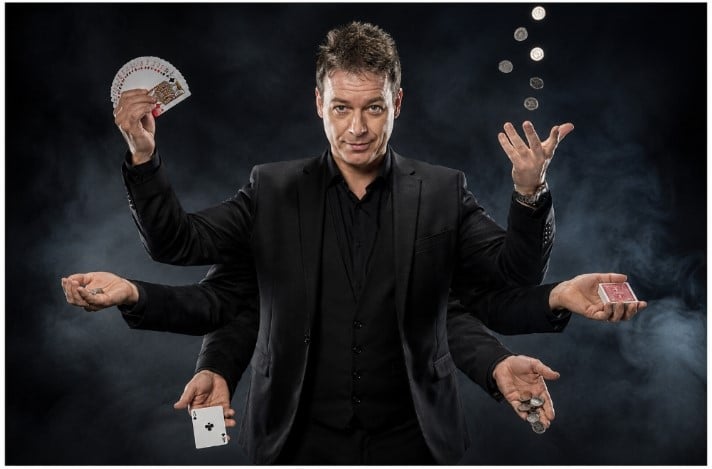
The real value in studying another magician isn't copying their tricks, catchphrases or mannerisms.
When a magician copies another performer, they can become preoccupied with matching that person's tricks, jokes, props or presentation.
The thinking becomes, "If I can do what they do, I'll be just as successful."
Unfortunately, professional success rarely works that simply.
Clients don't book a magician solely because they perform a particular card trick. They're choosing someone to entertain their guests, contribute to an event and interact comfortably with people they may have never met before.
As explained in close-up magic, the experience involves much more than the trick itself; communication, presentation and audience interaction all contribute to its success.
Technical ability matters, but so do communication, reliability, confidence, personality and professionalism.
A magician who concentrates exclusively on reproducing another performer's material can overlook these wider skills.
For instance, learning a complicated sleight might be satisfying, but it won't automatically make you better at approaching a group of strangers at a wedding.
Similarly, memorising a clever presentation won't help much if you struggle to read the room or recognise when an audience would prefer a quieter approach.
Developing as a professional means looking at the complete experience.
How do you introduce yourself? Do spectators feel comfortable participating? Can you make the magic clear without overexplaining it? Do you know when to build excitement and when to let a moment breathe?
These are important questions.
The most effective performers understand that the trick is only one part of the experience.
Rather than trying to compete by becoming a copy of another magician, concentrate on becoming a more complete performer in your own right.
9. You Can Mistake Imitation for Progress

Copying another magician can feel like progress because you're learning new tricks and borrowing proven routines.
There is another danger worth considering: copying someone else's performance can create the illusion that you're improving when you may simply be becoming better at imitation.
You learn a routine, practise the handling, memorise the words and eventually reproduce the performance with considerable accuracy.
That is progress of a kind. Your technique and memory may have improved.
But ask yourself a more important question: have you developed your understanding of magic?
Can you explain why the routine is structured in that particular way? Can you identify which elements make it entertaining? Can you adapt it to suit a different audience? Can you recognise when the presentation isn't working and make a sensible adjustment?
These abilities matter because they allow you to grow beyond the material you're studying.
A performer who understands the principles behind a routine can apply those lessons to other effects. They can recognise useful ideas, experiment with different approaches and make informed decisions about their own work.
Someone who has memorised only the surface details has fewer options.
This doesn't mean you should avoid learning complete routines from respected teachers. Detailed instruction can be enormously valuable, particularly when it explains the reasoning behind the performance.
The key is to move beyond reproduction.
Study the routine. Understand it. Practise it. Then consider what it teaches you about constructing a strong magical experience.
That is when learning begins to turn into genuine development.
10. Learning from Great Magicians Is Still Essential
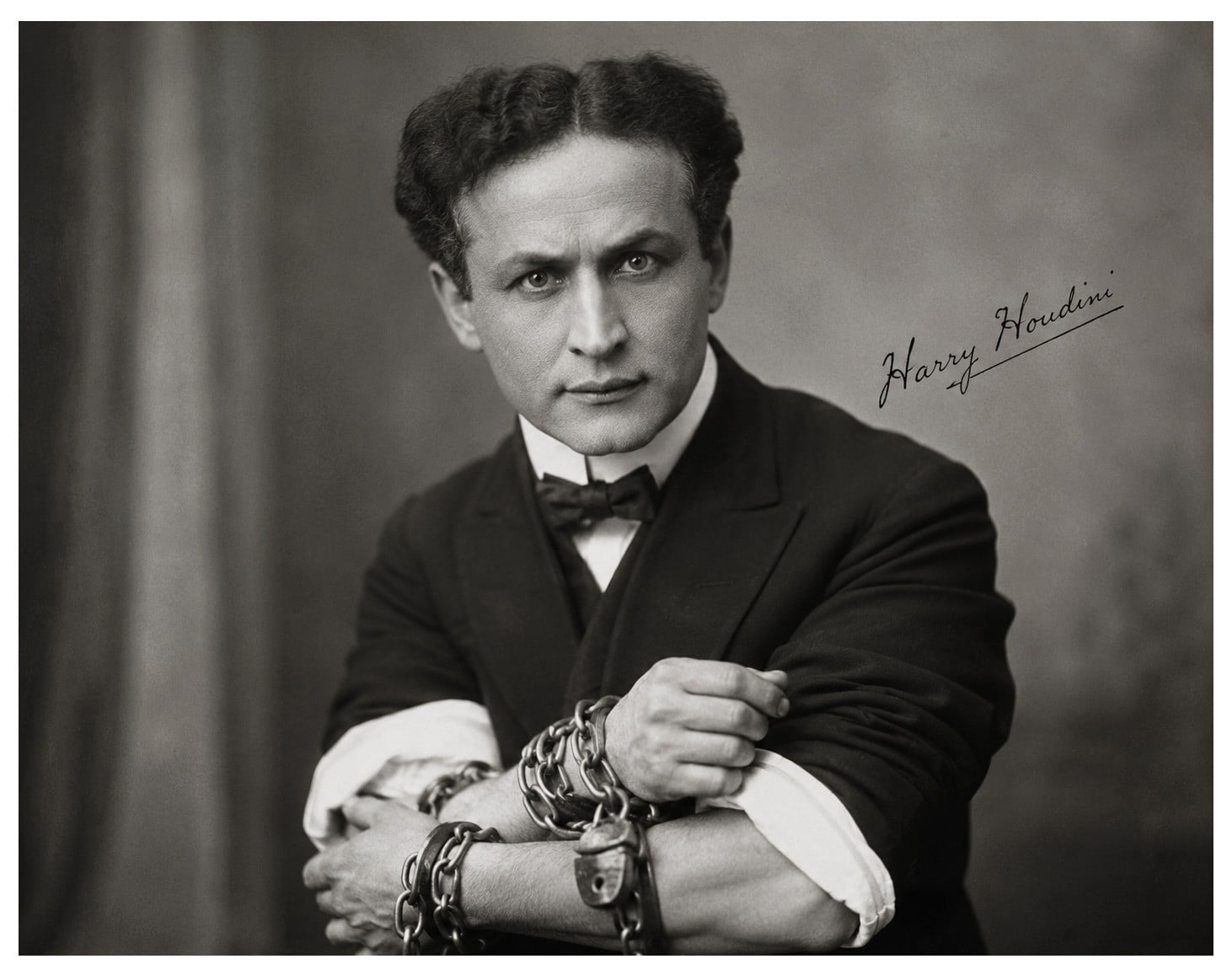 After all this discussion about copying, it's worth making one thing clear: I'm not suggesting that magicians should stop studying other performers.
Quite the opposite.
Some of the best lessons you can learn come from watching people who have spent decades refining their craft.
Experienced magicians can teach you about technique, timing, clarity, misdirection, audience management and the many small decisions that separate a competent trick from a memorable performance.
Books, lectures, instructional videos and live performances can all help you develop a deeper understanding of the art.
I've learnt from studying respected performers myself. There is enormous value in examining how skilled magicians approach a problem and why certain methods or presentations are effective.
The important thing is to approach that learning with curiosity rather than a desire to imitate everything you see.
When you watch a magician perform an excellent routine, ask yourself what you can learn from it.
Perhaps the handling is economical. Maybe the audience management is particularly good. The performer might establish a clear premise before the effect begins, or use a subtle pause to increase anticipation.
These are lessons you can apply to your own work.
You don't have to adopt the performer's entire personality, presentation or routine to benefit from their experience.
Think of it as studying the work of a skilled musician. You can learn about rhythm, phrasing and technique without attempting to sound exactly like someone else for the rest of your life.
The same principle applies to magic.
Learn from the people you admire, but make the knowledge your own.
11. How to Develop Your Own Style as a Magician
Developing an individual style doesn't happen overnight. It takes time, performance experience and a willingness to examine your own work honestly.
Fortunately, there are practical ways to start.
Study the principles, not just the presentation
When you watch another magician, look beneath the surface.
Identify the techniques, structure and decisions that make the routine effective. Consider how those principles might apply to a performance that suits your own personality.
Experiment with different approaches
Try presenting an effect in more than one way. You might discover that a simpler introduction works better, that a little humour improves the interaction or that allowing the spectator more time creates a stronger reaction.
Don't assume the first version you learn must be the final version you perform.
Record and review your performances
Watching yourself can reveal habits you might not notice while performing.
You may discover that you speak too quickly, use unnecessary movements or miss opportunities to respond to spectators. You might also identify moments that feel natural and entertaining.
Use that information to improve.
Pay attention to your audiences
Audience reactions are useful feedback, although one response never tells the whole story.
Notice when people become engaged, when their attention drifts and which moments generate genuine interest. Consider how the audience, setting and presentation influence those reactions.
Learning how magicians command attention can help you develop a stronger connection with spectators without relying on another performer's personality or presentation.
Build on your natural strengths
If you're naturally funny, learn to use humour effectively. If you're observant, develop your ability to respond to people. If you prefer a quieter style, explore how to create impact without constantly talking.
You don't need to become a different person to become a better magician.
Accept that development takes time
Your style will change as you gain experience. Material that suits you now might not suit you in five years, and you'll probably discover new approaches as you continue learning.
That's perfectly normal.
The aim isn't to find one fixed identity and never change it. It's to develop a recognisable approach that grows naturally with you.
12. The Difference Between Inspiration and Copying

There's a big difference between learning from another magician and becoming their imitation.
Ultimately, the distinction comes down to what you do with the things you learn.
Inspiration encourages you to think. Copying encourages you to reproduce.
Inspiration leads you to ask questions, experiment and explore possibilities. Copying can leave you dependent on another person's answers.
There is nothing wrong with being influenced by a magician you admire. In fact, it would be surprising if years of studying magic didn't influence your approach to performing.
The challenge is to use that influence constructively.
You might borrow a principle of audience management, learn a new technique or discover a better way to structure an effect. You then combine that knowledge with your own experience, judgement and personality.
Gradually, your performances become a reflection of what you've learnt and how you've chosen to apply it.
That is very different from attempting to reproduce another person's work without adding anything of your own.
The strongest performers aren't necessarily those who invent everything themselves. They're often the ones who understand the art deeply enough to make thoughtful choices about what they perform and how they present it.
They recognise the value of tradition without being trapped by it.
They appreciate the work of others without needing to become those people.
And they understand that a successful performance is not just about showing an audience something impossible. It's about creating an experience that feels natural, entertaining and memorable.
Final Thoughts: Learn from Others, but Be Yourself
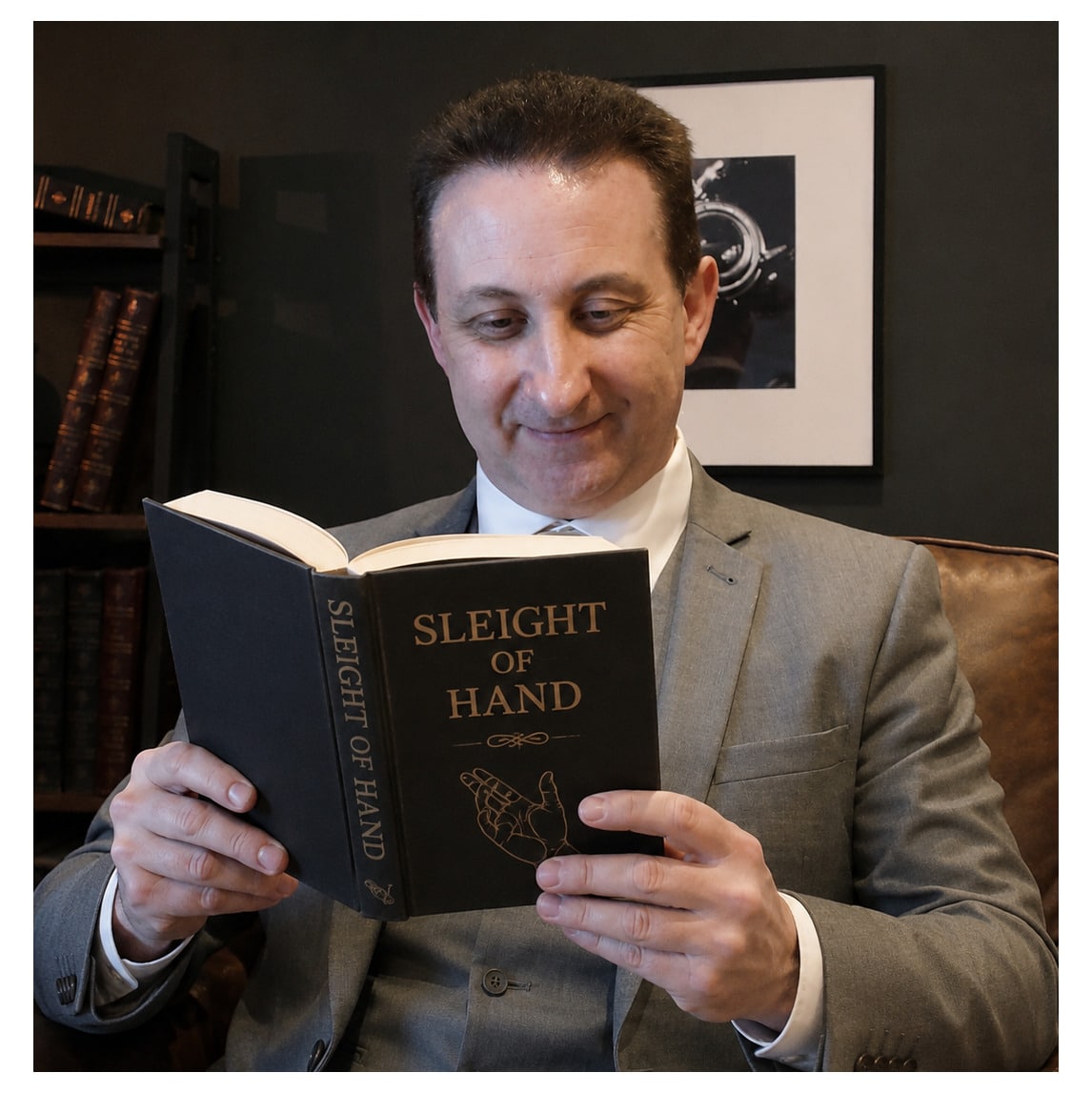 Magic is a wonderful art because there is always something new to learn.
You can spend a lifetime studying techniques, discovering new principles and watching talented performers, and still find yourself surprised by an idea you haven't encountered before.
That is part of its appeal.
But learning should help you become a better version of yourself, not a less convincing version of somebody else.
Study the greats. Respect the people who have contributed to the art. Learn the techniques, understand the principles and appreciate the thought that goes into a successful performance.
Then take what you've learnt and put it to work in your own way.
Develop your timing. Improve your communication. Refine your routines. Learn how to read an audience and respond to the unexpected. Build a style that reflects your personality rather than someone else's.
After more than 25 years of performing magic professionally, I believe that technical ability is only one part of what makes a magician effective. The way you communicate, your understanding of people and the personality you bring to a performance all contribute to the experience.
You can learn an enormous amount from another magician without copying their act.
In fact, the more you understand about magic, the more opportunities you have to develop your own approach.
Don't spend your career trying to become the magician you admire. Learn from them, respect their work, and use that knowledge to become the magician only you can be.
Andy Field Magician Service Areas
I regularly provide close up magic for weddings, parties, corporate events and special occasions across the South West and surrounding areas. You can find out more about my magic services in the following locations:
Magician Bristol Magician Gloucester Magician Cheltenham Magician Swindon Magician Somerset Magician Cotswolds
Magician Oxford Magician Bath Magician Worcester Magician Coventry Magician Leamington Spa Magician Leicester
Explore More About Magic
Sleight of Hand Explained Psychology in Magic Explained Misdirection in Magic Explained Cups and Balls Close-up Magic Explained

