How to Be a Great Showman in Magic

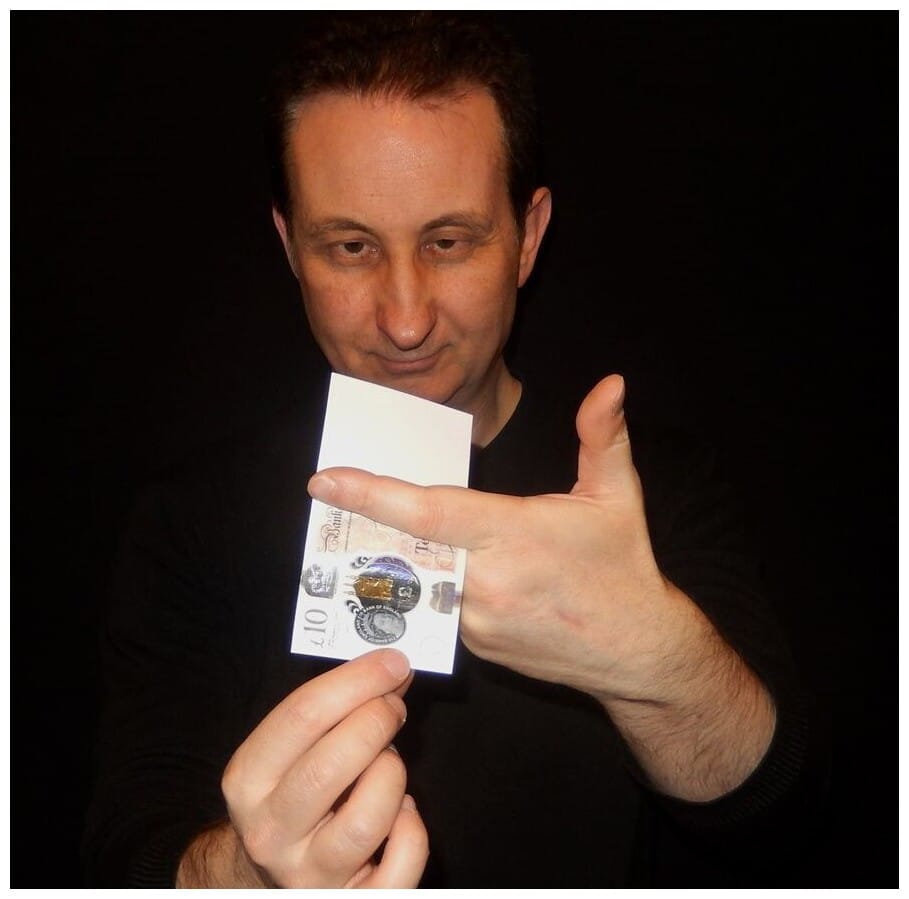
Andy Field is a professional magician, offering close up magic, sleight of hand illusions, mind reading and more, for a variety of occasions. Over the years Andy has millions of views on his YouTube channel and an array of reviews across multiple platforms. Having amassed experience as a wedding magician, party magician & close up magician, Andy is seen as one of the busiest professional magicians in the UK.
What Makes a Great Magician a Great Showman?
Andy Field studying the principles of magic, performance and showmanship.
A great magician doesn't simply know how to perform magic tricks.
They know how to entertain people.
That distinction is incredibly important.
You can spend years learning difficult sleight of hand, memorising complicated routines and practising techniques until your fingers ache. You can become exceptionally good at manipulating cards, coins, balls and other objects.
But technical ability alone doesn't necessarily make somebody a great magician.
Magic is a performance.
And performance is about people.
The best magicians understand how to create anticipation, how to make an audience laugh, how to build suspense, how to involve spectators and, most importantly, how to make people feel something.
That is showmanship.
I've been performing professional magic for a quarter of a century, and one of the biggest lessons I've learned is that audiences don't remember every technical detail of a trick.
They remember how the experience made them feel.
They remember the impossible thing that happened in their own hands.
They remember laughing with their friends.
They remember the moment when they were absolutely certain they knew what was happening — and then discovered they hadn't got a clue.
That's what great showmanship can do.
I'm Andy Field, a professional close-up magician specialising in sleight of hand, close-up magic, mind reading and interactive entertainment for weddings, parties, corporate events and private occasions.
I've been fortunate enough to perform for thousands of people, receive hundreds of Google reviews and 400+ Facebook recommendations, achieve more than 20 million YouTube views, become a two-time S.A.M.S. Champion of Close-Up Magic, and work as a magic consultant and hand double for the BBC series Hustle.
But none of those things replace the most important part of performing magic:
Standing in front of a real person and entertaining them.
So what actually makes somebody a great showman?
Let's look at it properly.
1. Understand That the Trick Isn't the Show
This is probably the most important lesson.
The trick is not the show. The trick is the vehicle.
A playing card appearing somewhere impossible is a trick.
A spectator choosing a card, believing it has been lost in the deck, watching the magician make a few apparently casual movements and then discovering that their signed card has somehow appeared somewhere impossible is an experience.
You want them thinking: ‘How did my card get there?
Those are two very different things.
The technical method may be identical.
The performance isn't.
This is why two magicians can perform exactly the same routine and receive completely different reactions.
One magician demonstrates the mechanics.
The other magician creates a story.
The other magician creates anticipation.
The other magician involves the spectator.
The other magician makes the audience care about what happens next.
That magician is performing.
And that is the beginning of showmanship.
2. Learn Your Magic Properly
Showmanship doesn't mean technical ability isn't important.
It is.
You cannot become a great performer if you're constantly worrying about whether you're going to drop the cards.
A magician needs to know their material extremely well.
That means practising until the mechanics become reliable enough that you can concentrate on the audience rather than the technique.
This is particularly important with sleight of hand.
Sleight of hand isn't simply about having fast fingers.
It's about control, timing, coordination, natural movement and making difficult actions look completely ordinary.
I've written a much more detailed guide to Sleight of Hand Magic Explained if you'd like to explore that side of magic in greater depth.
The paradox is that the better the magician becomes technically, the less the audience should notice the technique.
That's the whole point.
You don't want people thinking:
"That was a very impressive double lift."
You want them thinking:
"How did my card get there?"
The technique disappears.
The experience remains.
3. Make Difficult Things Look Easy
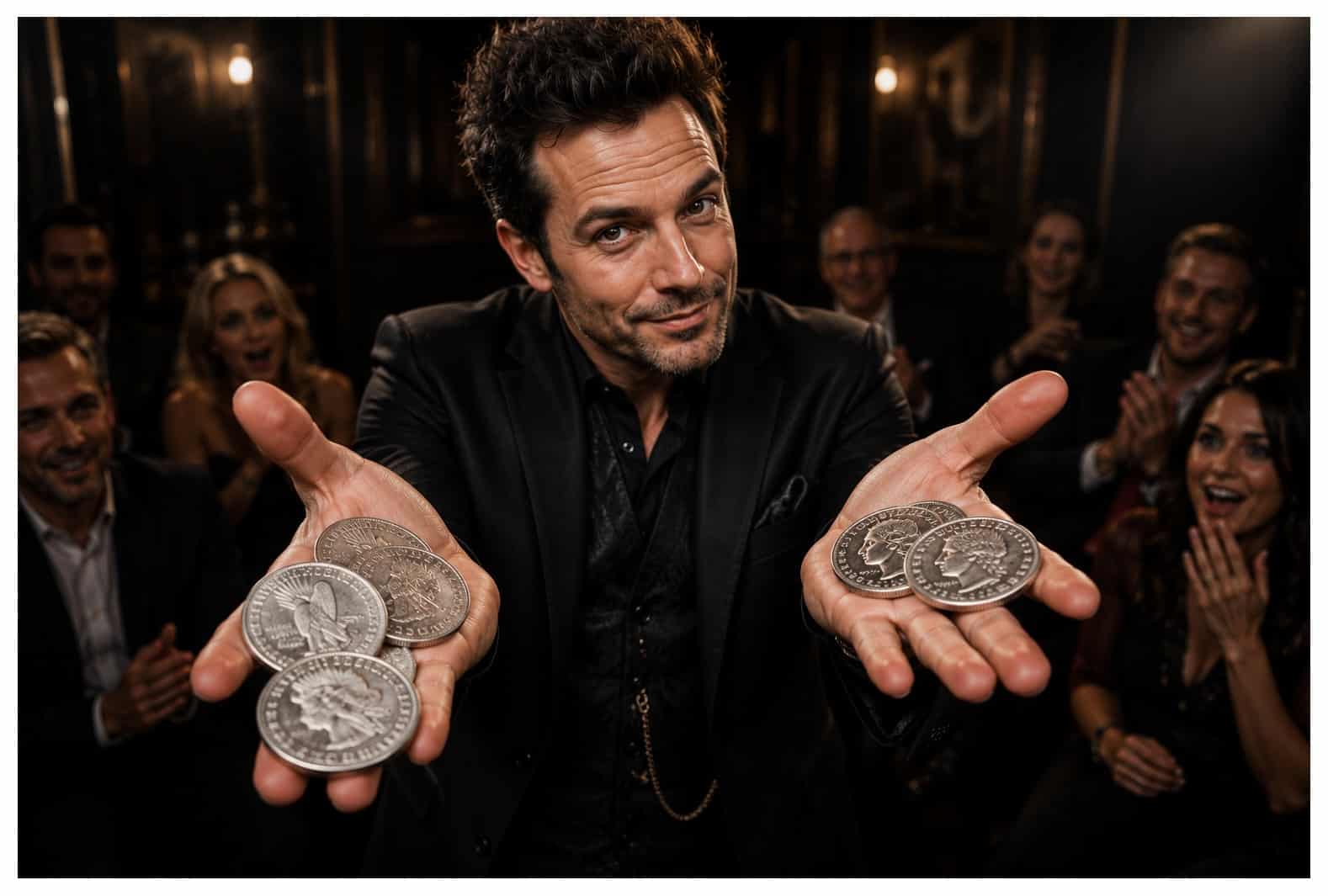
Coin magic combines technical skill, timing and presentation to create an engaging performance.
One of the characteristics of an experienced magician is apparent effortlessness.
That doesn't mean the magic is easy.
Quite the opposite.
A professional may have spent hundreds of hours practising a move that takes less than a second.
The audience doesn't need to know that.
In fact, they shouldn't.
Imagine watching someone juggle ten balls.
You see the result.
You don't necessarily think about the thousands of failed catches that happened during practice.
Magic is similar.
The audience sees the finished performance.
They don't see the hours of repetition behind it.
That's why confidence matters.
A magician who looks nervous, rushed or uncertain can accidentally draw attention to the mechanics.
A magician who appears completely comfortable allows the audience to concentrate on the impossible event itself.
That's showmanship.
4. Understand Timing
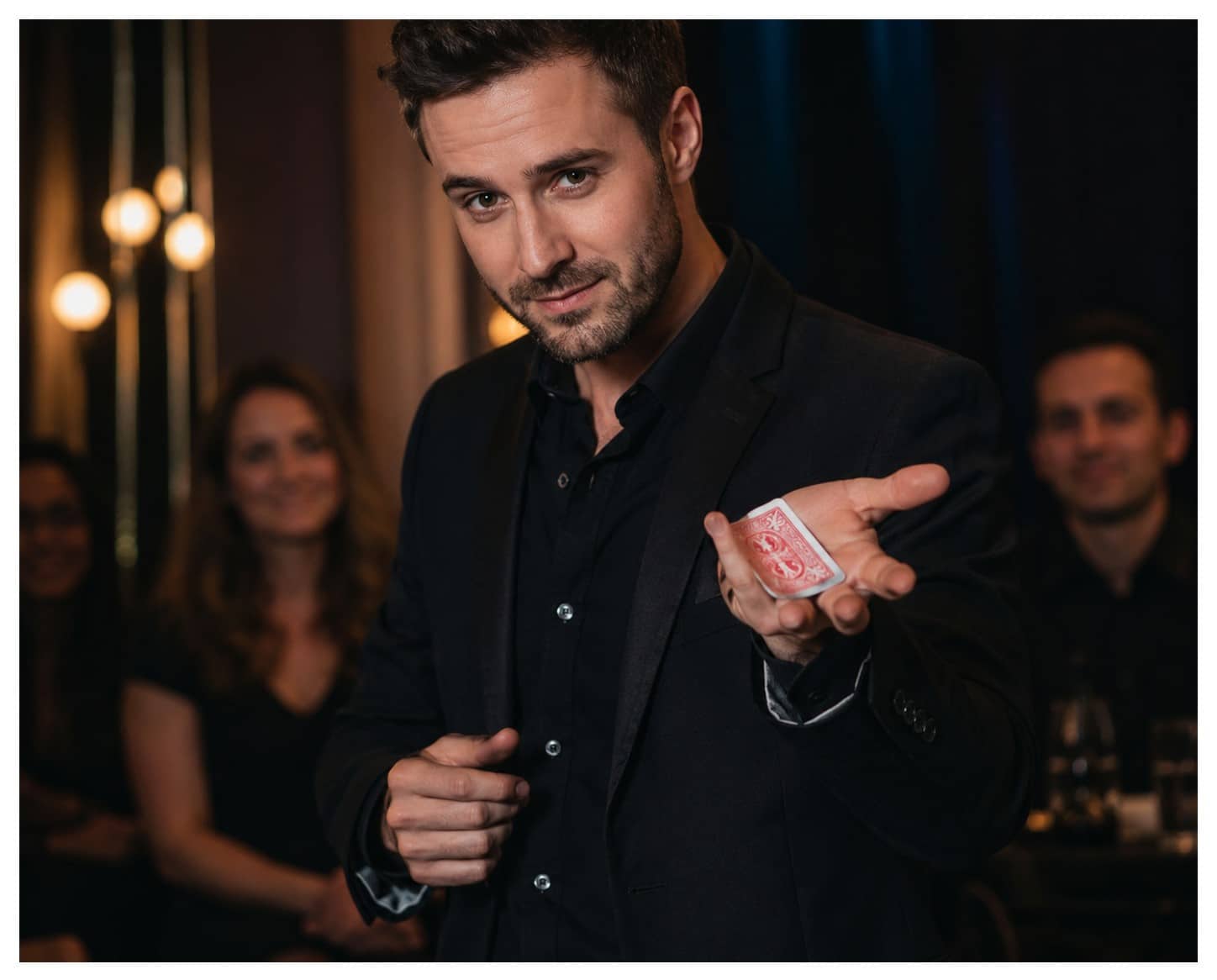
Good timing helps a magician build anticipation, control attention and make a magic performance more entertaining.
Timing is one of the least appreciated skills in magic.
It is also one of the most important.
A magician needs to know when to speak.
When to pause.
When to move.
When to let the audience laugh.
When to allow a moment of silence.
And when to deliver the magical climax.
Imagine telling a joke.
The words might be exactly right.
But tell the punchline too quickly and it doesn't work.
Pause for too long and the energy disappears.
Magic works in much the same way.
A revelation that happens too quickly may be forgotten.
A revelation that is delayed at exactly the right moment can become much more powerful.
Good timing also means responding to the audience.
If somebody laughs, you don't necessarily need to talk over them.
Let them laugh.
If somebody is genuinely astonished, give them a moment.
If somebody asks a question, don't blindly continue with a rehearsed script.
Live performance is not a conveyor belt.
People aren't predictable.
That's one of the reasons real-world experience matters so much.
That is particularly important at weddings, where the magician has to work around speeches, photographs, food, drinks and constantly changing groups of guests.
I've written more about the structure of a wedding magician act, including how timing, audience interaction and the flow of the performance can shape the experience.
5. Learn to Read an Audience
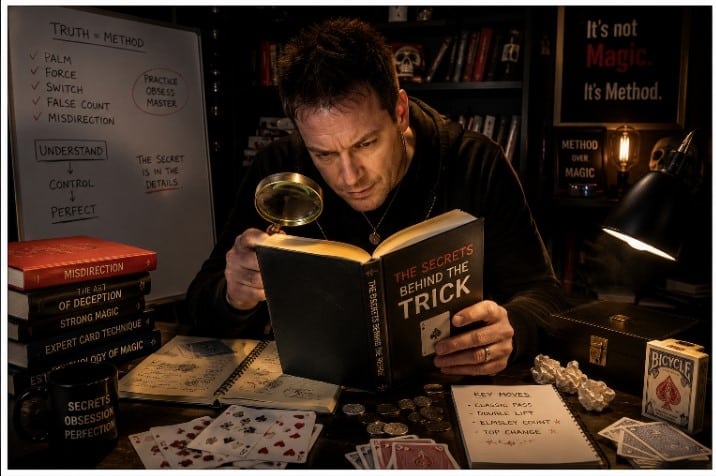
Knowledge and experience combined
A great showman doesn't perform exactly the same way for everybody.
Every audience is different.
At a wedding, there may be people who have known each other for decades sitting alongside relatives meeting for the first time.
At a corporate event, you might have senior executives standing next to people who have never met before.
At a birthday party, you might have one person desperate to be involved and another who would rather hide behind their drink.
The magician has to recognise those differences.
Who wants to participate?
Who is nervous?
Who is enthusiastic?
Who is already having a great time?
Who needs bringing into the group?
Who should be left alone?
That's audience management.
And it is a genuine performance skill.
You can know every trick in the book and still struggle if you don't understand people.
This becomes particularly important when performing at weddings, parties and corporate events around Cheltenham, where different groups of guests can have completely different expectations.
I've written more about my experience as a magician in Cheltenham.
6. Don't Force People to Participate
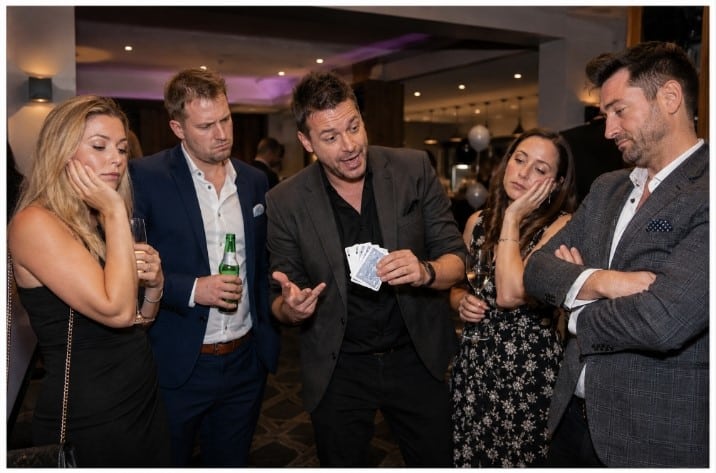
Great showmanship means making audience participation enjoyable without pressuring anyone to take part.
This is particularly important with close-up magic.
Not everybody wants to be the centre of attention.
A good showman recognises that.
If somebody looks uncomfortable, embarrassing them isn't good entertainment.
The magician's job is to make people feel comfortable.
Sometimes the best participant is the person who is already enthusiastic.
Sometimes someone who initially seems reluctant becomes the star of the performance once they realise they're going to have fun.
The trick is to invite rather than force.
That's a subtle distinction.
Good audience participation should feel like part of the experience.
It shouldn't feel like an interrogation.
7. Make the Spectator the Star
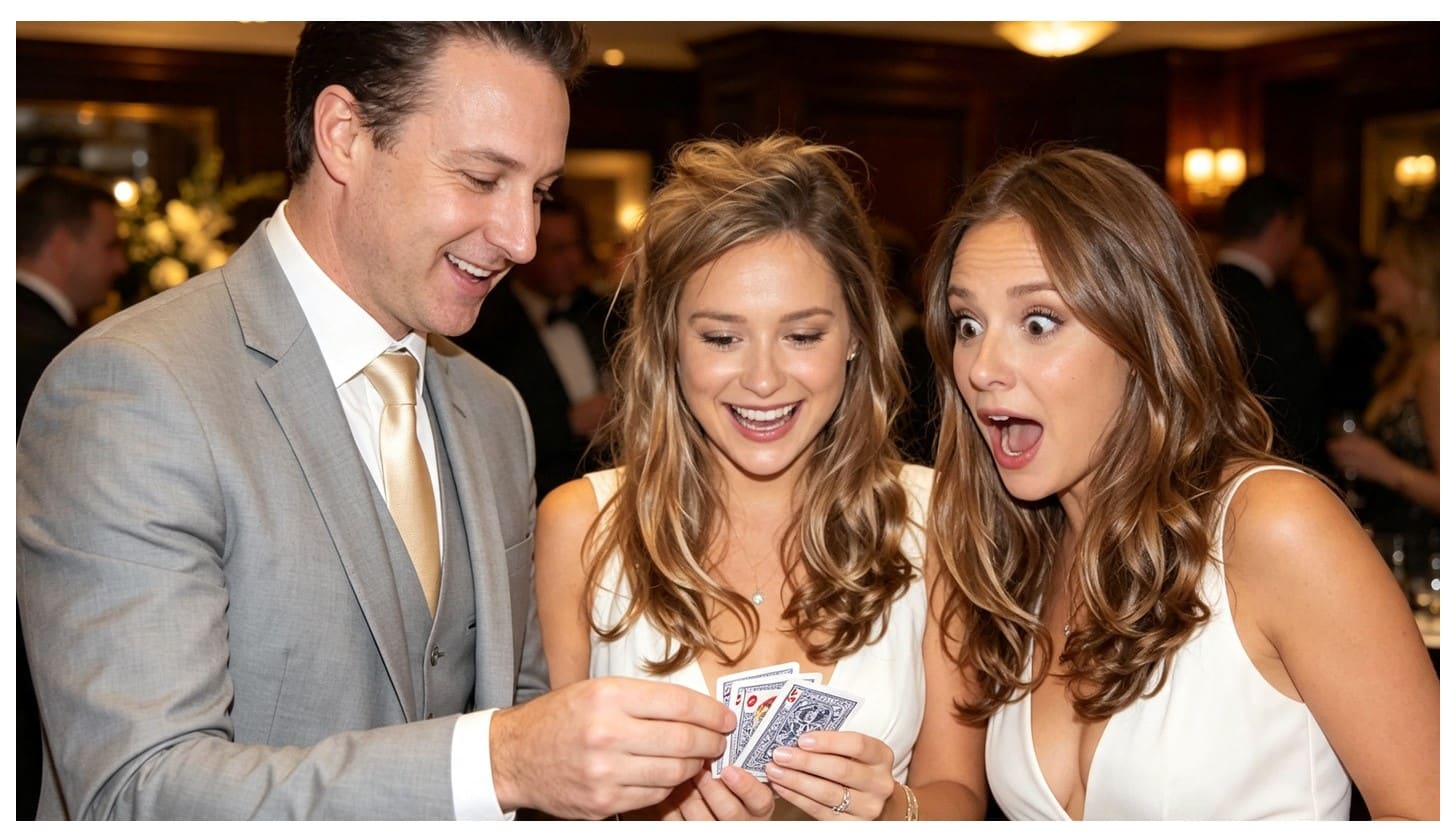
Great magic makes the spectator feel involved, important and at the centre of the experience.
This is one of the biggest differences between performing at people and performing for people.
The magician can be impressive.
But the spectator should feel important.
If someone chooses a card, it's their card.
If they hold a coin, it's their coin.
If they make a decision, it's their decision.
If their signed object appears somewhere impossible, they are the person who experienced that impossibility.
That creates a much stronger memory than simply watching a magician demonstrate something.
This is particularly important in close-up magic.
Close-up magic is personal because the audience is right there.
My Close-Up Magic Explained guide explores this in much more detail, including why close-up magic works so well at weddings, parties and corporate events.
The best close-up performances don't make spectators feel like spectators.
They make them feel like participants.
Audience participation is an important part of this process. In my guide to audience participation in magic, I explain how involving spectators can make a performance more engaging, entertaining and memorable.
Some of the strongest moments in close-up magic happen when the spectator isn't simply watching the trick, but becomes directly involved in the impossibility itself.
That's one of the ideas behind magic in spectators' hands, where the magic feels personal because the spectator experiences it at close quarters.
8. Understand Misdirection
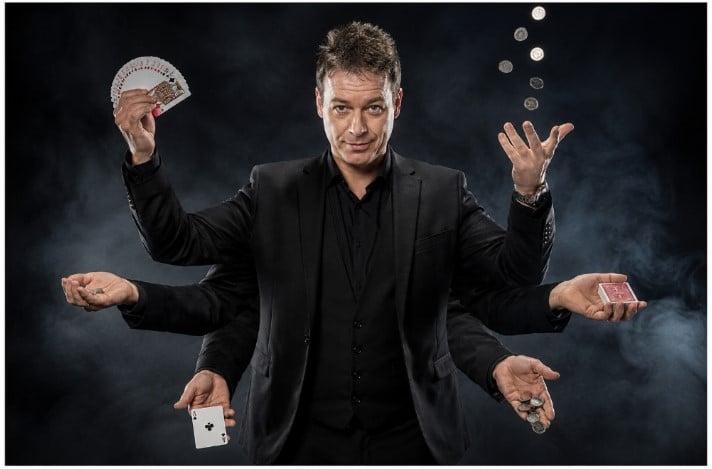
Understanding misdirection helps a magician control attention and create stronger moments of magic.
Misdirection is one of the most misunderstood parts of magic.
People often imagine a magician distracting someone by waving one hand while secretly doing something with the other.
That's a very basic description.
Real misdirection can be much more subtle.
It can involve:
- Attention
- Eye contact
- Language
- Timing
- Gesture
- Expectations
- Body language
- Questions
- Humour
- Movement
- The structure of the routine
The magician doesn't necessarily need to make somebody look away.
They can make something else seem more important.
The ability to direct attention is an important part of effective showmanship. Understanding how to command an audience's attention helps a magician guide spectators towards the moments that matter, build anticipation and make a performance more engaging. It's not about demanding attention, but earning it through confidence, timing and presentation.
That's a much more interesting idea.
If you're watching my hands while I perform a secret action, you might think you've eliminated the possibility of misdirection.
But you're still making decisions about what you're paying attention to.
I've written an entire guide to How Misdirection Works in Magic because the subject deserves much more than a paragraph.
The fascinating thing is that good misdirection can work while the audience believes they're watching everything.
That's one of the great paradoxes of magic.
9. Understand Psychology

Understanding psychology helps a magician shape attention, expectation and the audience's experience.
Showmanship and psychology are closely connected.
A magician is constantly dealing with human expectations.
If I tell you something is about to happen, you begin anticipating it.
If I establish a pattern, you begin learning that pattern.
If I repeat an action, you begin assuming it will happen again.
And that gives the magician opportunities.
The audience isn't being stupid.
Their brain is doing exactly what brains normally do.
It's making predictions.
It's filtering information.
It's deciding what's important.
Magic can use those completely normal processes to create an extraordinary experience.
That's why I've also written Psychology in Magic: How Magicians Fool the Mind.
Understanding psychology doesn't mean becoming some sinister mind-control expert.
Thankfully.
It means understanding attention, expectation, perception and the way people experience a performance.
Those same principles are particularly important in mind reading, where the performer uses psychology, observation and audience interaction to create the impression of impossible insight.
10. Use Humour Properly
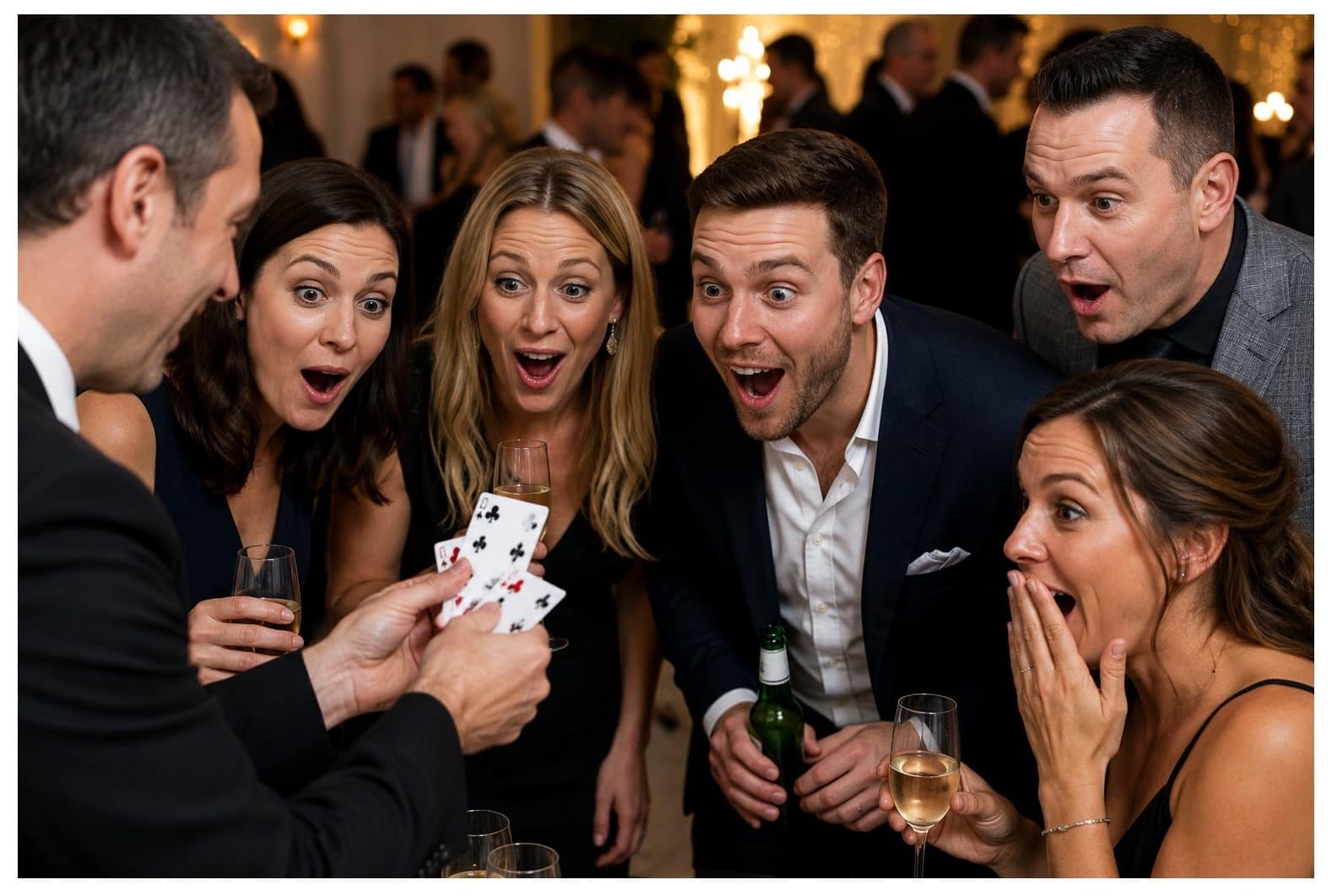
Well-timed humour can make a magic performance more relaxed, engaging and memorable.
Being funny is not the same as telling jokes.
That's an important distinction.
A magician doesn't need a stand-up comedy routine.
Sometimes humour comes from the situation.
Sometimes it's a throwaway comment.
Sometimes it's a reaction to what a spectator says.
Sometimes it's simply allowing an absurd situation to breathe.
The best humour often feels spontaneous.
That's why a good performer needs to be able to improvise.
If someone says something funny, acknowledge it.
If something unexpected happens, don't panic.
Use it.
If somebody confidently announces that they know exactly how the trick works, there's usually no need to argue.
You can have some fun with them.
After all, they're probably wrong.
And if they are right?
Move quickly.
Very quickly.
11. Learn the Art of the Pause
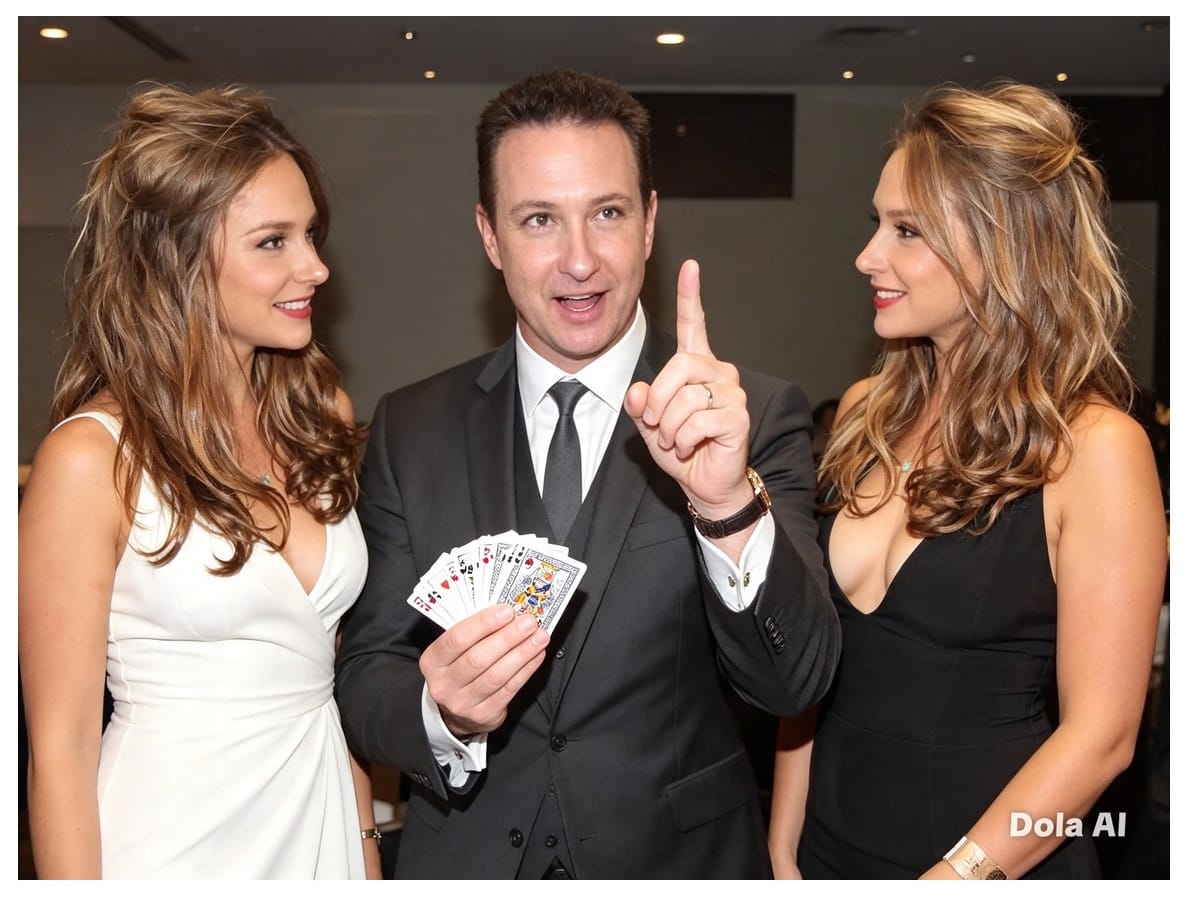
A well-timed pause can build anticipation and give a magical moment greater impact.
Silence can be powerful.
Magicians sometimes feel the need to fill every second with words.
They don't.
A pause can create anticipation.
Imagine a spectator has chosen a card.
You look at them.
You slowly turn over the top card.
It's not theirs.
You pause.
You look at them again.
Then you reveal their signed card somewhere impossible.
That pause creates a tiny piece of theatre.
Without it, the same revelation might feel rushed.
Showmanship isn't about constantly adding things.
Sometimes it's about knowing what not to add.
12. Tell a Story
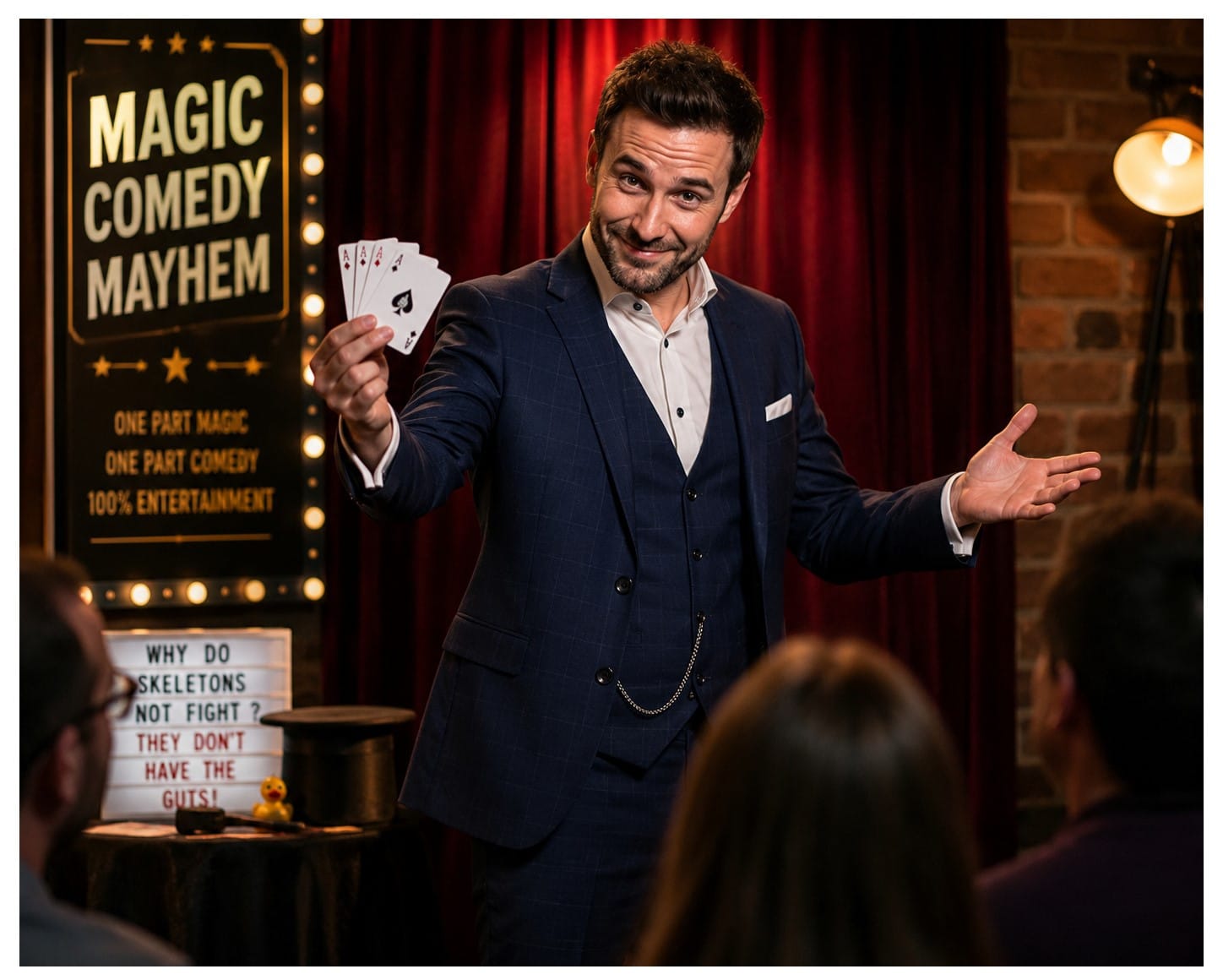
Storytelling gives a magic performance context, emotion and a reason for the audience to care about what happens next.
A great magic routine has structure.
It has a beginning.
Something happens.
The audience develops expectations.
Those expectations are challenged.
The impossibility grows.
And eventually there is a climax.
That's storytelling.
You don't necessarily need a long narrative.
Even a short routine can have a beginning, middle and end.
This is particularly obvious with classic routines such as the Cups and Balls.
Three cups.
A few balls.
A magician.
Simple.
Yet the routine can contain repetition, surprise, comedy, misdirection, escalation and a final climax.
I've written a dedicated guide to The Cups and Balls because it is such a brilliant example of several fundamental principles of magic working together.
The props are simple.
The performance isn't.
13. Build to Something
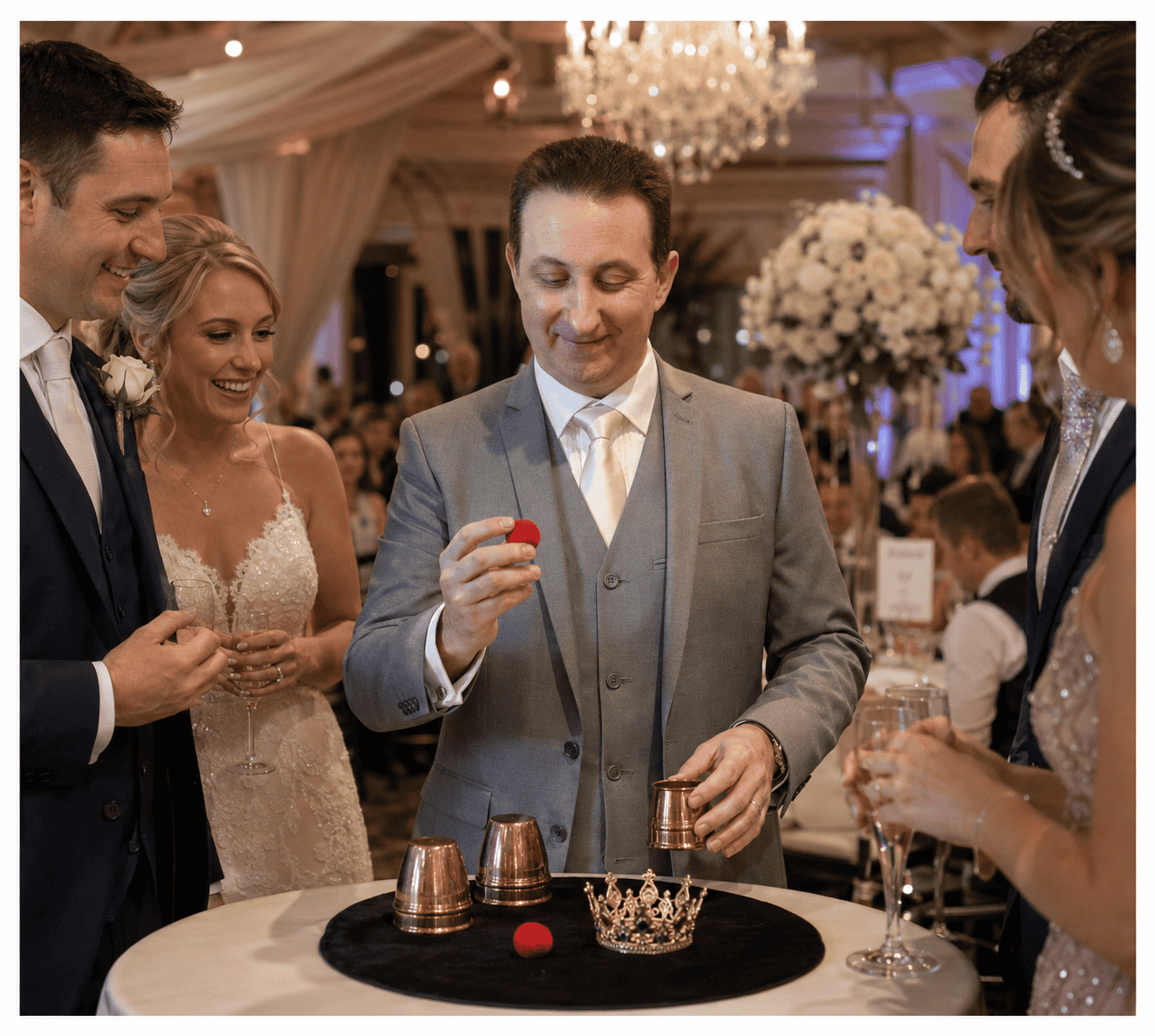
Andy Field builds a magic routine carefully, creating anticipation and increasing the impact of each moment.
A routine should have somewhere to go.
If every moment is equally important, nothing feels important.
Think about music.
A song usually has quieter moments and bigger moments.
Magic can work in the same way.
You might begin with something relatively simple.
Then increase the impossibility.
Then involve another spectator.
Then introduce a stronger revelation.
And finally deliver the climax.
This is called escalation.
It doesn't necessarily mean every trick needs to be more technically difficult.
It means the experience should develop.
The audience should feel that something is building.
Building that experience takes more than choosing a collection of good tricks.
The order of the effects, the transitions between them, the way the audience becomes involved and the strength of the ending all matter.
I've explained more about how magicians build a great magic performance, including how individual elements work together to create a satisfying experience for the audience.
14. Don't Oversell the Magic
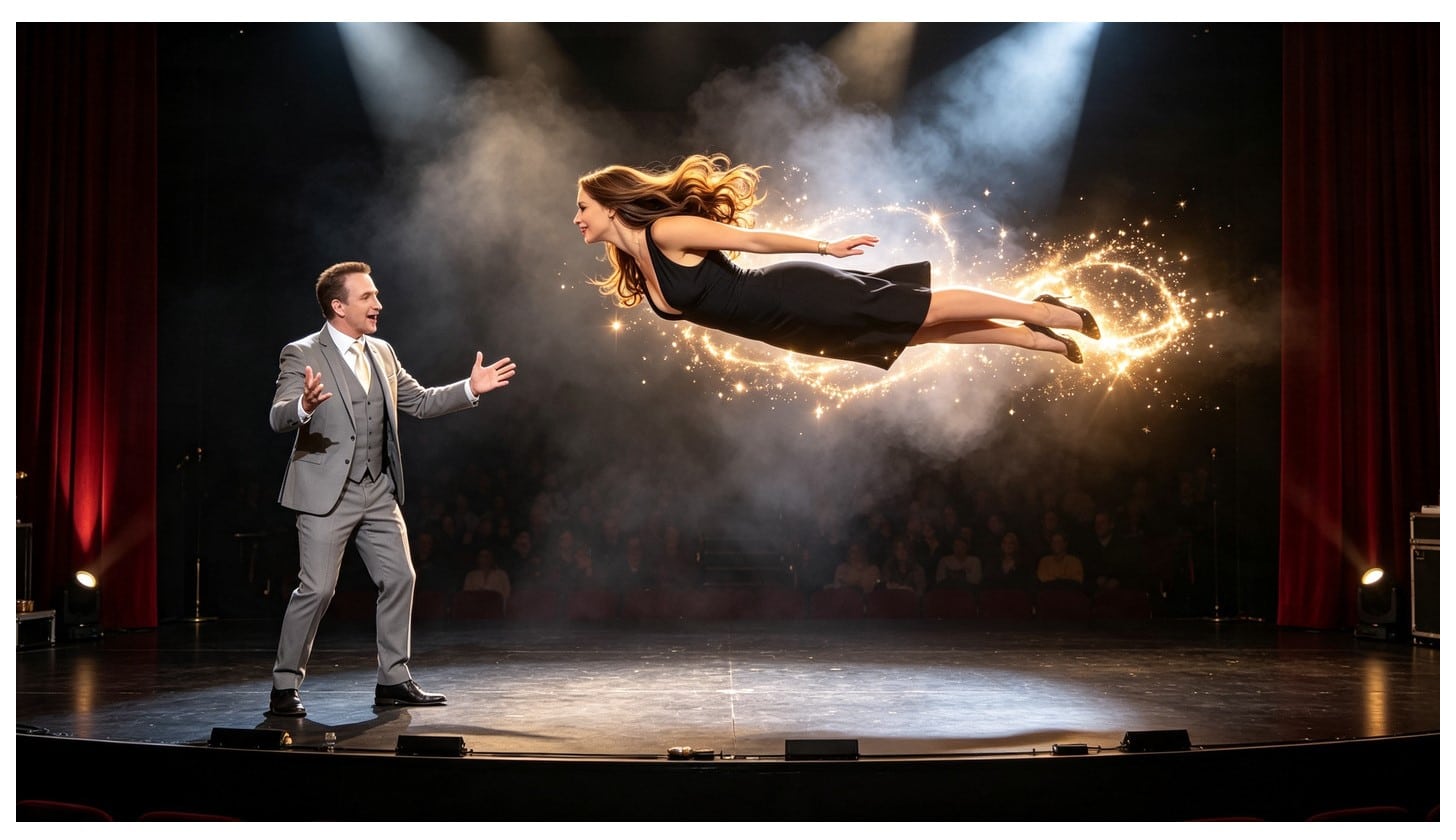
Let the magic speak for itself rather than overhyping an effect before the moment happens.
This is another mistake inexperienced performers can make.
"This is going to be the most incredible thing you've ever seen!"
Really?
Now you've got a problem.
You've just created an enormous expectation.
Sometimes the quieter approach is more effective.
"Watch this."
That's enough.
The audience doesn't need the magician to tell them how amazed they should be.
Let them decide.
Good showmanship trusts the magic.
It also trusts the audience.
15. Make Your Magic Feel Personal
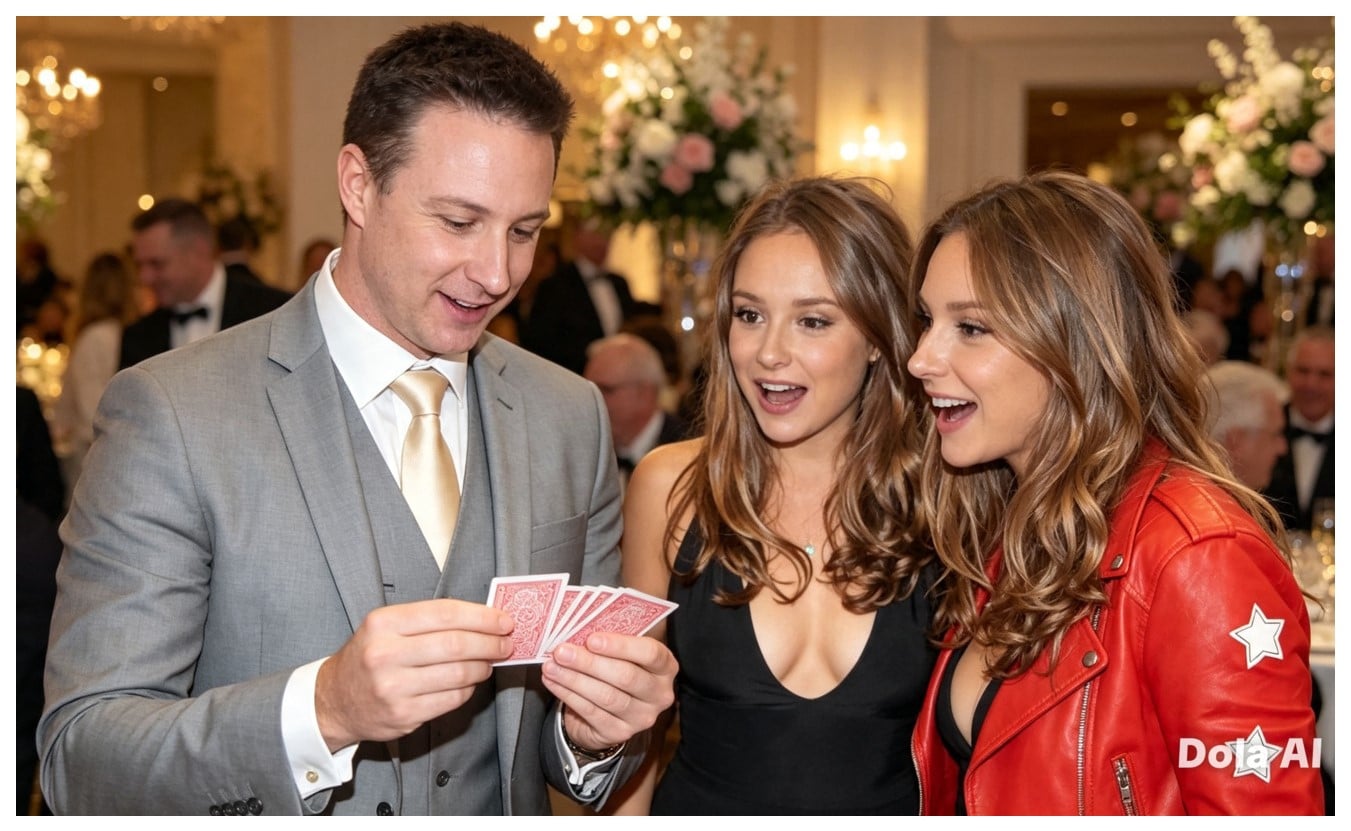
The strongest magic feels personal, creating a genuine connection between the magician and spectator.
Personalisation can make a routine considerably stronger.
If you know someone's name, use it.
If they've just mentioned something interesting, listen.
If they're celebrating something, acknowledge it.
If the spectator has made a genuinely free choice, make that choice matter.
This is another reason live magic can be so powerful.
The performance isn't being played from a recording.
It's happening now.
With these people.
In this room.
That makes every performance slightly different.
16. Learn to Improvise
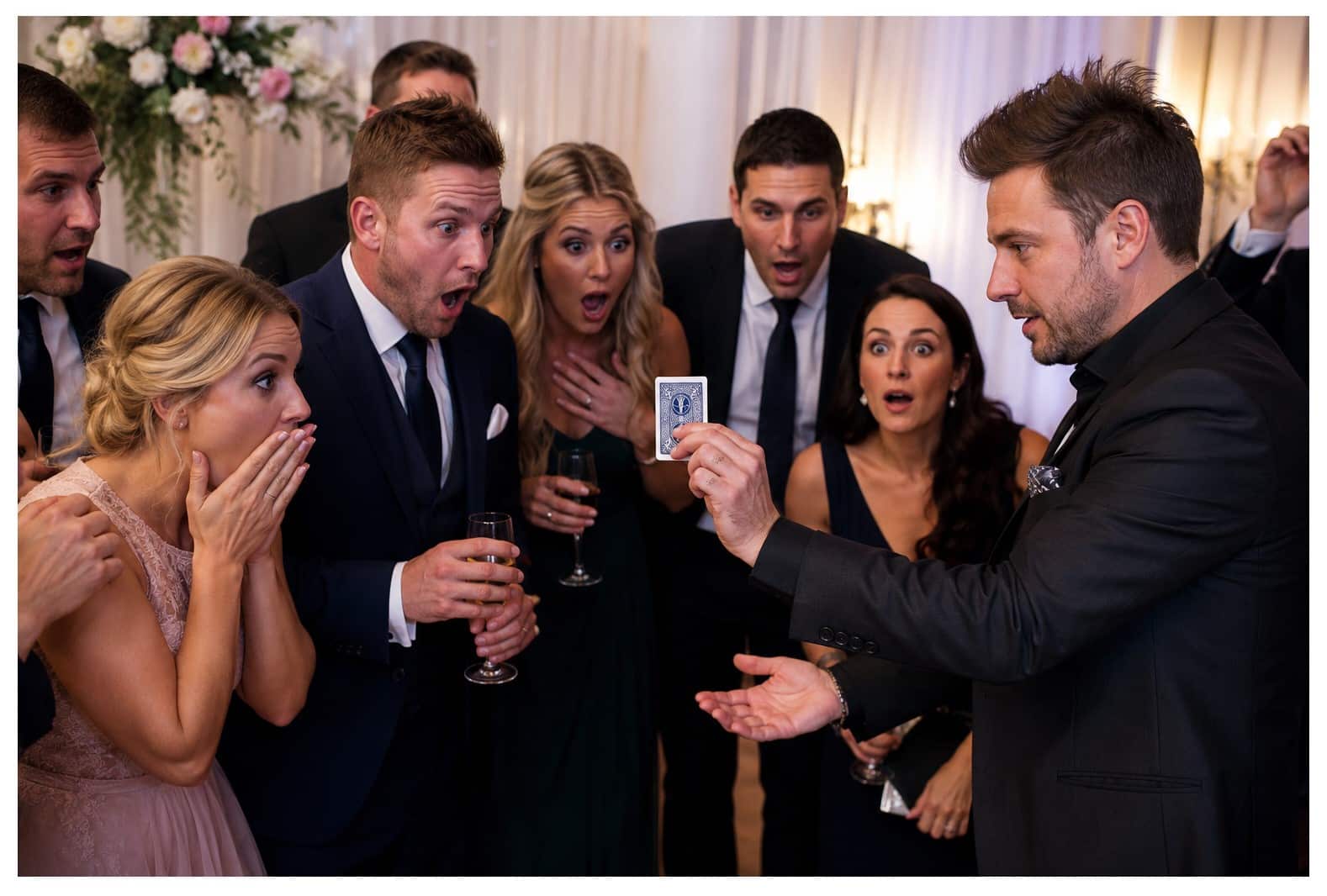
Learning to improvise helps a magician respond naturally to unexpected moments and keep the performance flowing.
No matter how carefully a magician rehearses, real life will interfere.
Someone drops a glass.
A child runs past.
A waiter walks between you and the group.
A spectator gives an unexpected answer.
Someone guesses the method.
Someone laughs for thirty seconds.
Someone doesn't understand the instructions.
Someone says:
"I saw that!"
They probably didn't.
But that's not the point.
A great performer doesn't fall apart when something unexpected happens.
They adapt.
That's improvisation.
You don't necessarily need to invent an entirely new routine.
You simply need to be comfortable enough with your material and your personality to respond naturally.
17. Know When to Leave
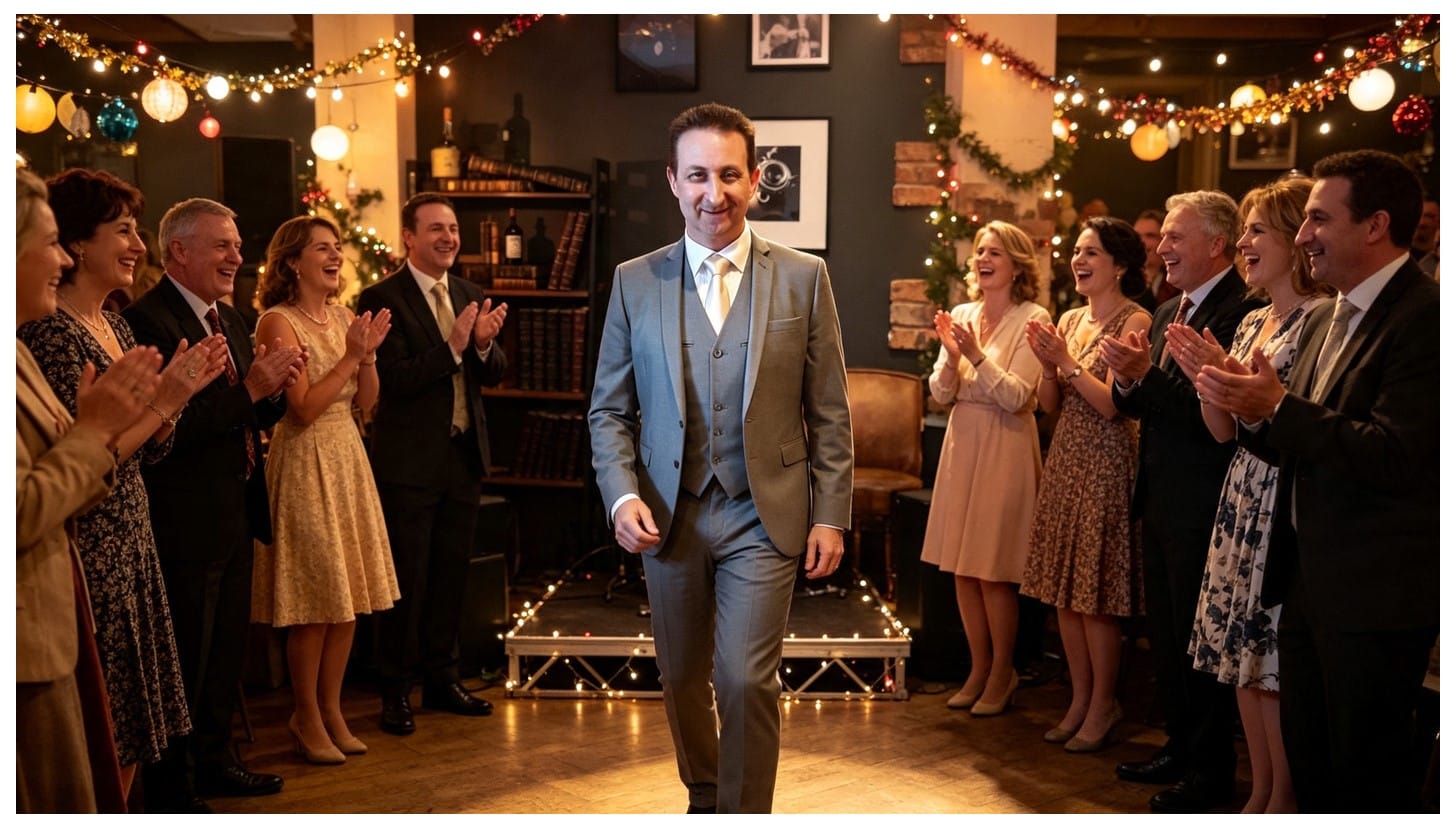
Great showmanship includes knowing when to finish a routine and leave the audience wanting more.
This might be one of the most important lessons for a professional close-up magician.
Don't overstay your welcome.
If a group has enjoyed three or four routines, that may be the perfect moment to leave them wanting another one.
A great performer understands energy.
If people are distracted because dinner is being served, don't fight the room.
If a group is having an important conversation, leave them to it.
If everyone is enthusiastic, stay and entertain them.
The goal isn't to perform the maximum number of tricks.
The goal is to create the best experience.
That's showmanship.
18. Understand the Difference Between Magic and Entertainment
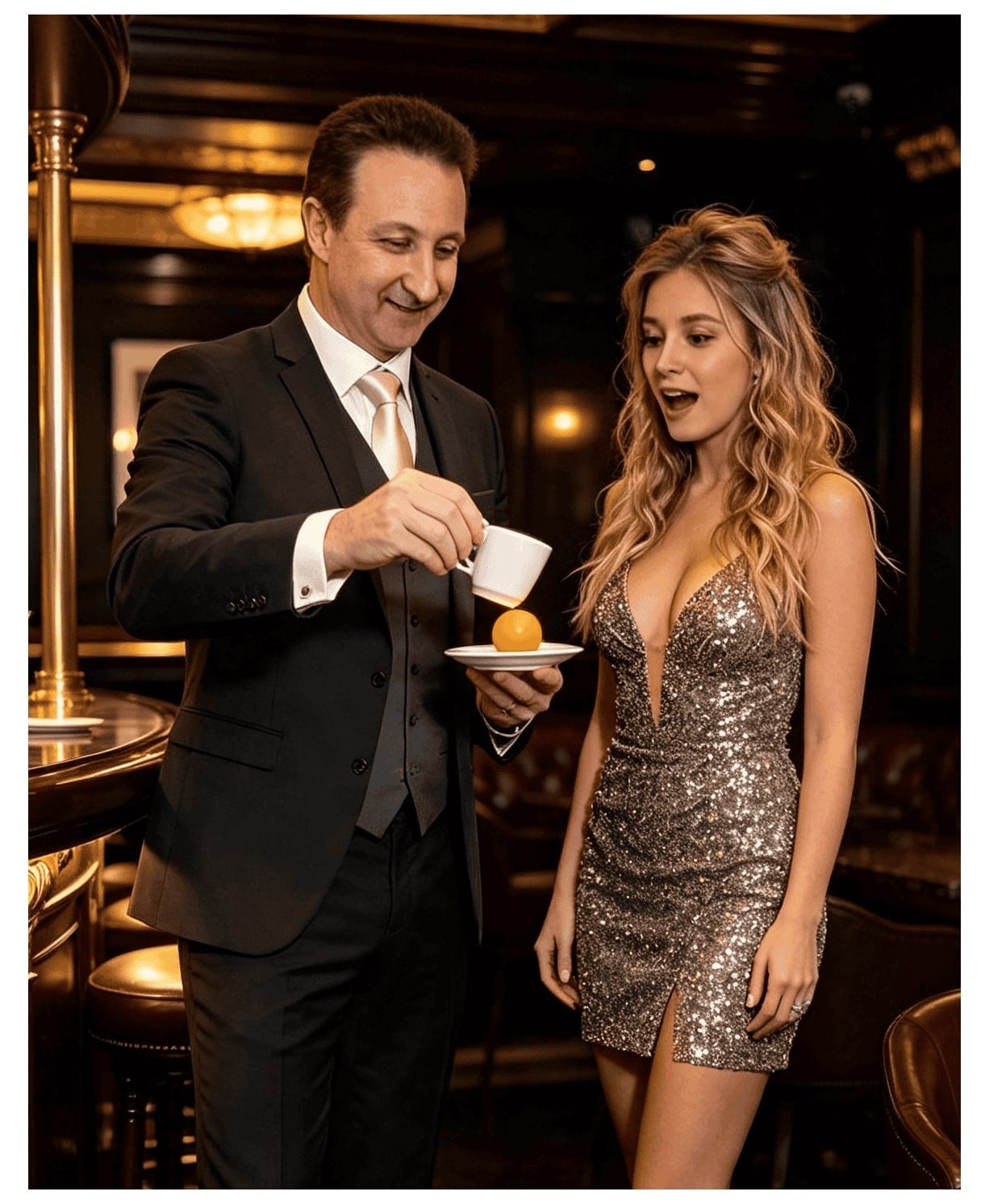 Magic is the method.
Entertainment is the result.
A magician can perform an incredibly difficult trick and leave an audience cold.
Another magician can perform something technically simple and have everyone talking about it for the rest of the evening.
Why?
Because entertainment isn't measured by difficulty.
Nobody walks out of a cinema saying:
"That film was excellent because the camera equipment must have been complicated."
They remember the story.
The characters.
The emotions.
The experience.
Magic is similar.
The audience doesn't need to know how difficult your technique was.
They need to enjoy what happened.
If you're interested in what those skills look like in practice, here's what happens when you hire a close-up magician, from the way the performance works to how guests experience the magic.
19. Showmanship at Weddings
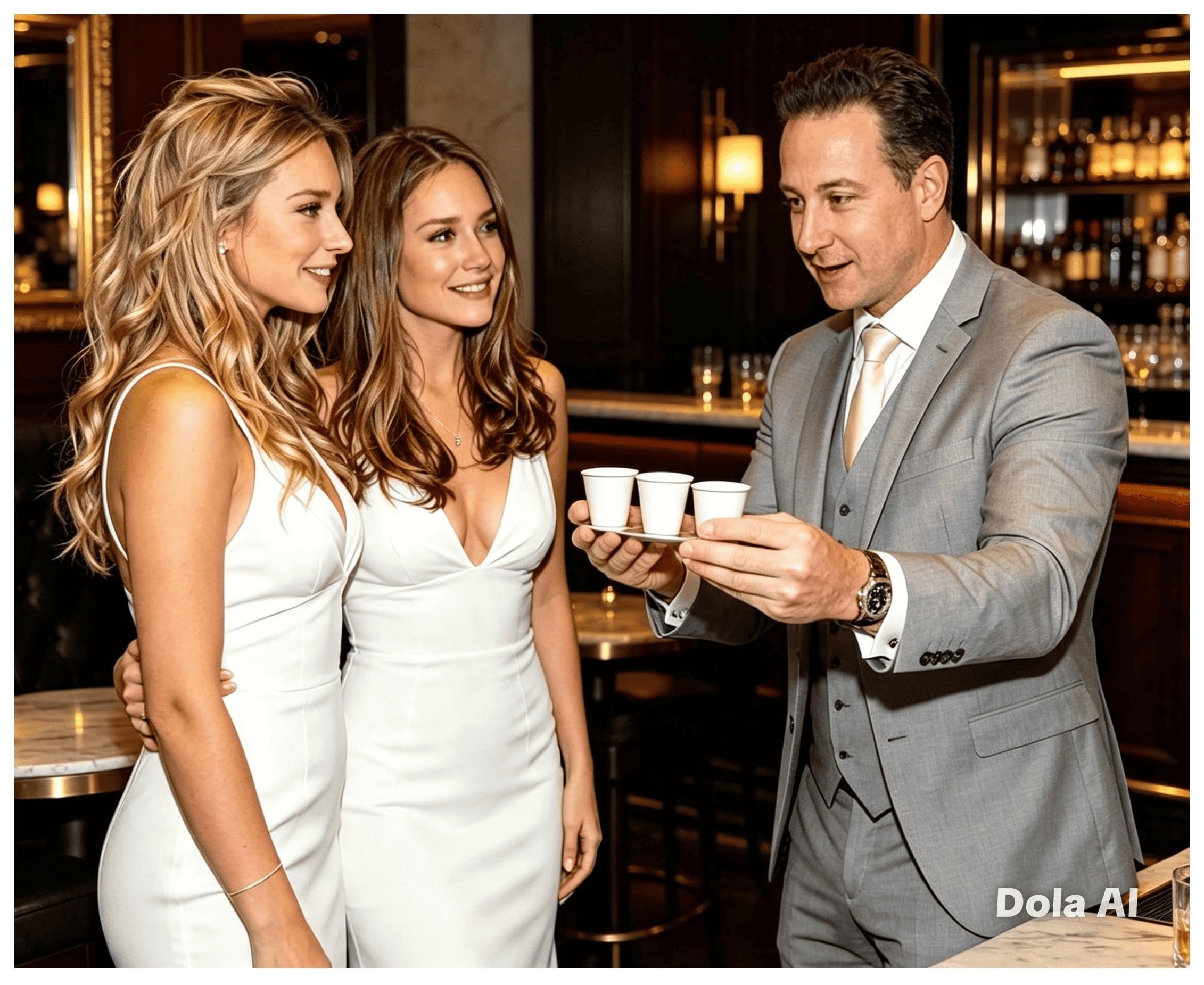
Close-up magic can bring wedding guests together and create memorable moments throughout the celebration.
Weddings are a perfect environment for a showman.
There are natural gaps throughout the day.
Guests arrive.
Photographs happen.
The couple disappears for pictures.
People wait for food.
The room changes between different parts of the celebration.
These moments can sometimes feel like dead time.
A good wedding magician can turn those gaps into opportunities for interaction.
The important thing is not simply performing tricks.
It's helping people connect.
Guests from different sides of the family may not know each other.
Magic gives them something to talk about.
Someone sees a card appear.
They tell another guest.
That guest wants to see it.
Suddenly people who weren't talking five minutes earlier have something in common.
That's entertainment doing a useful job.
At weddings, the ability to read the room is particularly important, especially when you're moving between different groups of guests.
I've performed at a range of wedding and event venues around Cheltenham, and you can see some of the Cheltenham event venues where I've performed close-up magic
If you're interested in my experience performing as a magician in Bath, you can read more about Andy Field in Bath.
That same ability to read a room is particularly valuable when entertaining wedding guests in a busy city such as Bristol, where different groups of guests may have very different expectations.
The same principles apply when entertaining wedding guests in Coventry. Reading the room, involving guests naturally and creating memorable moments are all important parts of a successful wedding performance. You can find out more about my experience as a wedding magician in Coventry.
20. Showmanship at Corporate Events

Close-up magic and entertaining guests at a corporate event.
Corporate events require a slightly different approach.
The magician needs to understand the environment.
People may be networking.
They may be meeting clients.
They may be colleagues who haven't seen each other for months.
The magic needs to fit around the event rather than take control of it.
This is where reading the room becomes particularly important.
A professional performer should be able to approach a group naturally, perform something engaging, and move on without disrupting the flow of the event.
The best corporate entertainment doesn't feel like an interruption.
It becomes part of the atmosphere.
Corporate events require a slightly different approach, particularly in a busy city such as Bristol, where networking and entertainment often need to work alongside one another. You can read more about my experience as a Bristol magician.
21. Showmanship at Parties

Close-up magic brings people together and adds entertainment to parties and social celebrations.
Private parties can be even more unpredictable.
People are relaxed.
They're talking.
They're eating.
They're drinking.
Somebody will almost certainly want to show you a magic trick they've learned from YouTube.
And that's fine.
It's part of the fun.
A good party magician doesn't need to dominate the room.
They can move between groups, create small pockets of entertainment and bring people together.
The performance becomes social.
That's why personality matters so much.
You're not simply delivering a routine.
You're entering somebody's party and becoming part of the atmosphere for a while.
Private parties can be unpredictable, whether you're entertaining a small gathering or a larger celebration in Worcester. My experience as a magician in Worcester involves exactly this sort of informal, interactive entertainment.
22. Close-Up Magic Demands Showmanship

Great showmanship turns technical magic into an engaging performance by combining presentation, timing and audience interaction.
Close-up magic is particularly unforgiving.
There isn't much distance between performer and spectator.
They can see your hands.
They can see your face.
They can ask questions.
They can interrupt.
They can hold the props.
Sometimes they can even stand behind you.
There is nowhere to hide.
That's exactly why great close-up magic is so impressive.
When something impossible happens inches away from someone's face, they can't blame theatrical machinery or elaborate stage equipment.
The experience is personal.
That's what makes close-up magic such a powerful form of entertainment.
This is particularly true when performing close-up magic for audiences in Gloucester, where the magician is often working just inches away from the spectators. You can read more about Andy Field in Gloucester
23. The Classic Example: Cups and Balls
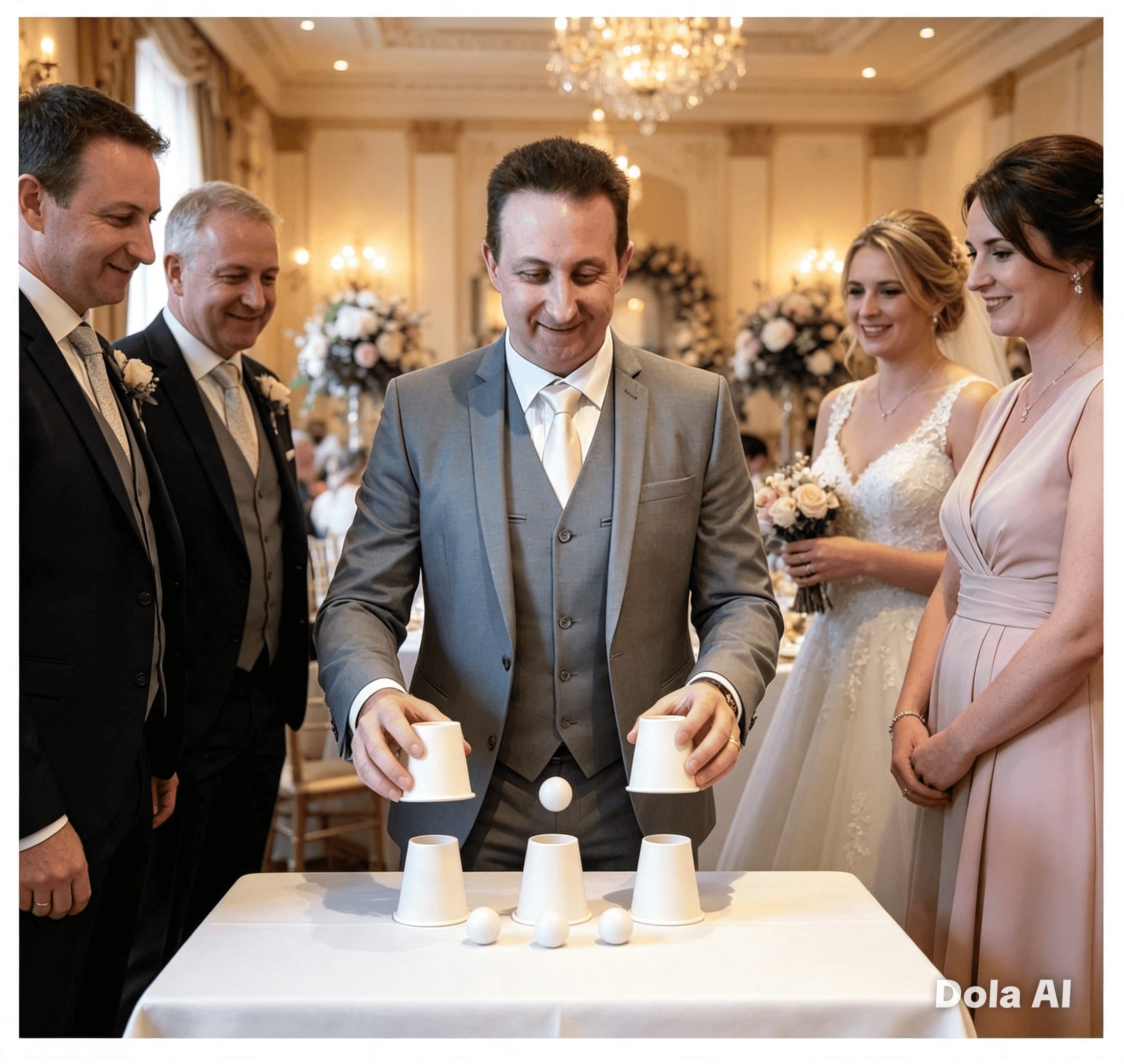
The Cups and Balls combines sleight of hand, misdirection, timing and showmanship to create a memorable magic performance.
If you wanted one routine that demonstrates many aspects of showmanship, the Cups and Balls would be an excellent example.
It combines:
- Sleight of hand
- Misdirection
- Timing
- Psychology
- Audience participation
- Comedy
- Storytelling
- Escalation
- Surprise
- A strong climax
The routine can look incredibly simple.
Three cups.
A few balls.
Yet underneath that simplicity is an enormous amount of performance skill.
The magician has to control attention while apparently doing nothing suspicious.
They have to make movements look natural.
They have to understand timing.
They need to manage the audience.
And they need to build towards the ending.
It's a perfect example of why showmanship is much more than technical skill.
I've developed and refined these skills during a quarter of a century of performing at weddings, parties and corporate events, including in Leicester.
In my article, Why I Love Performing in Leicester, I share what I enjoy about entertaining audiences in the city and bringing people together through close-up magic.
24. The Audience Doesn't Know Your Mistakes
 Here's something that every magician eventually learns.
The audience doesn't know what was supposed to happen.
If something goes slightly wrong, they may not notice.
That's why panic is often worse than the mistake itself.
Suppose a card ends up in the wrong position.
A nervous magician may suddenly freeze.
A confident performer can simply adapt.
Sometimes the audience thinks the mistake was deliberate.
Sometimes they don't even notice.
And sometimes the unexpected thing creates an opportunity for something better.
Experience teaches you not only how to perform the routine.
It teaches you how to survive when reality interferes.
25. Confidence Isn't Arrogance
Confidence helps a magician connect with an audience, but great showmanship means being confident without becoming arrogant.
A showman needs confidence.
But confidence doesn't mean acting like you're the most important person in the room.
In fact, the opposite can be true.
A confident performer can relax.
They don't need to prove themselves constantly.
They don't need to announce how clever they are.
They don't need to tell everyone how difficult their magic is.
They simply perform.
The audience can make its own judgement.
That's a much more comfortable relationship between performer and spectator.
26. Your Personality Matters
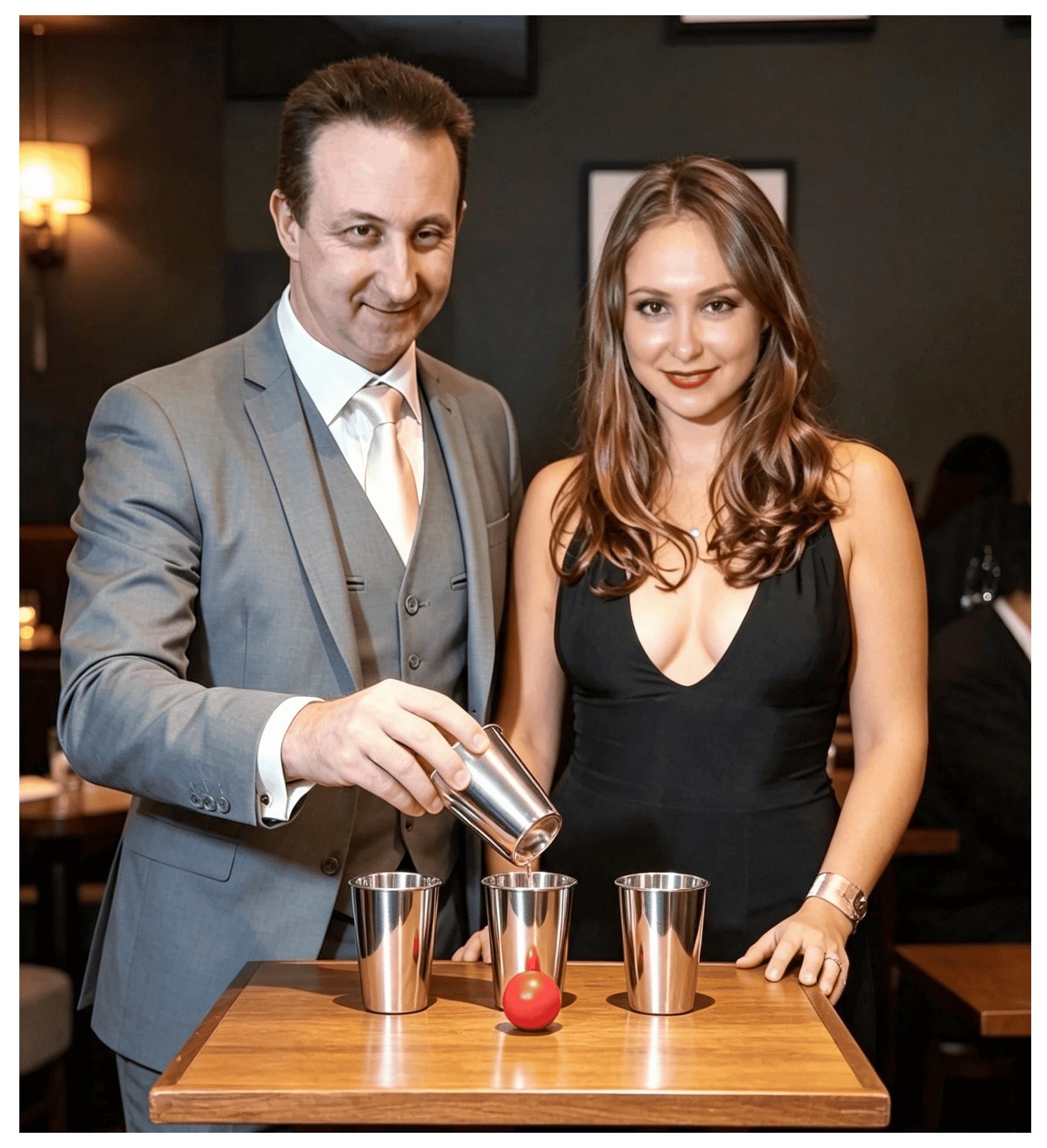
A magician’s personality helps shape the performance, build rapport with spectators and make the experience feel genuine.
There's no single personality that makes somebody a great magician.
Some performers are naturally funny.
Some are mysterious.
Some are relaxed.
Some are theatrical.
Some are understated.
Some are energetic.
The important thing is authenticity.
Trying to copy another magician's personality usually looks exactly like what it is.
An act.
The best performers develop their own style.
That's something I've learned over a quarter of a century of professional performance. A magician's style isn't just about personality, either. Appearance can play a part in creating the right impression, which raises an interesting question: why do magicians always wear suits?
You don't need to become somebody else to entertain people.
You need to become comfortable being yourself in front of them.
That's something I've learned over a quarter of a century of professional performance.
You don't need to become somebody else to entertain people.
You need to become comfortable being yourself in front of them.
That individual style becomes particularly important when you're performing for different audiences, including weddings, parties and corporate events around Swindon.
You can find out more about my work as a magician in Swindon.
27. Experience Changes Everything

Holly will practice two hours a day
You can read about showmanship.
You can watch videos.
You can practise in front of a mirror.
You can rehearse your routines hundreds of times.
Eventually, however, you need real people.
That's where experience becomes invaluable.
Real audiences behave differently.
They laugh at unexpected moments.
They ask strange questions.
They stand in the wrong place.
They make unexpected choices.
They interrupt.
They surprise you.
And every performance teaches you something.
After thousands of performances, you begin to recognise patterns.
You know when to approach a group.
You know when to leave.
You know when a routine needs speeding up.
You know when to slow down.
You know when somebody wants to participate.
And you know when they absolutely do not.
That's not something you can learn entirely from a book.
Real audiences teach you things that rehearsal cannot, whether you're performing at a wedding in Oxford or entertaining guests at a private party.
I've performed at hundreds of different events and venues across the South West, and those experiences have taught me things that simply can't be learned from rehearsal alone.
You can read more about the events and venues where I've performed magic across the South West.
I also perform at weddings, parties and corporate events as a magician in Leamington Spa, bringing close-up magic, sleight of hand and plenty of humour to the occasion.
28. Showmanship Is About Making People Feel Something
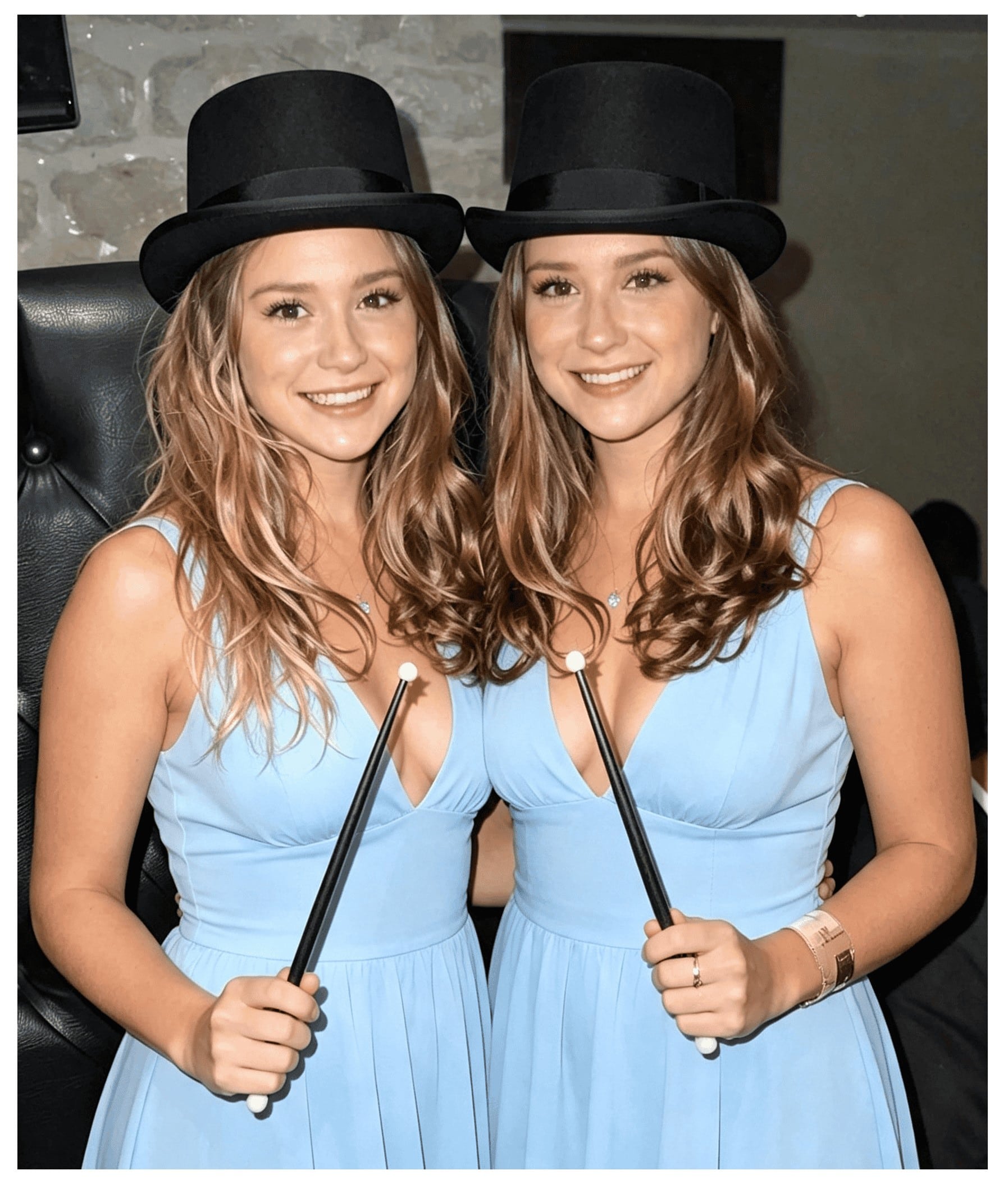
Great showmanship is about more than performing a trick — it is about creating a memorable experience that people genuinely feel.
This is ultimately what it comes down to.
People don't need to remember every trick.
They need to remember the experience.
Maybe they laughed.
Maybe they were completely baffled.
Maybe they held their own ring and watched it disappear.
Maybe their signed card appeared somewhere impossible.
Maybe they watched a friend experience something they couldn't explain.
I've also written about how magicians create impossible moments at weddings, where I look at how magic, interaction and showmanship can turn those individual moments into lasting memories.
Those are memories.
And that's what live entertainment is really about. If you'd like to explore how a magician can add value to your event, I've written a guide looking at the different ways professional magic can enhance weddings, parties, corporate events and private celebrations.
That's particularly important when performing in places such as the Cotswolds, where the atmosphere of a wedding, private celebration or special event can become part of the experience itself.
You can read more about Andy Field in the Cotswolds.
29. How I Approach Showmanship
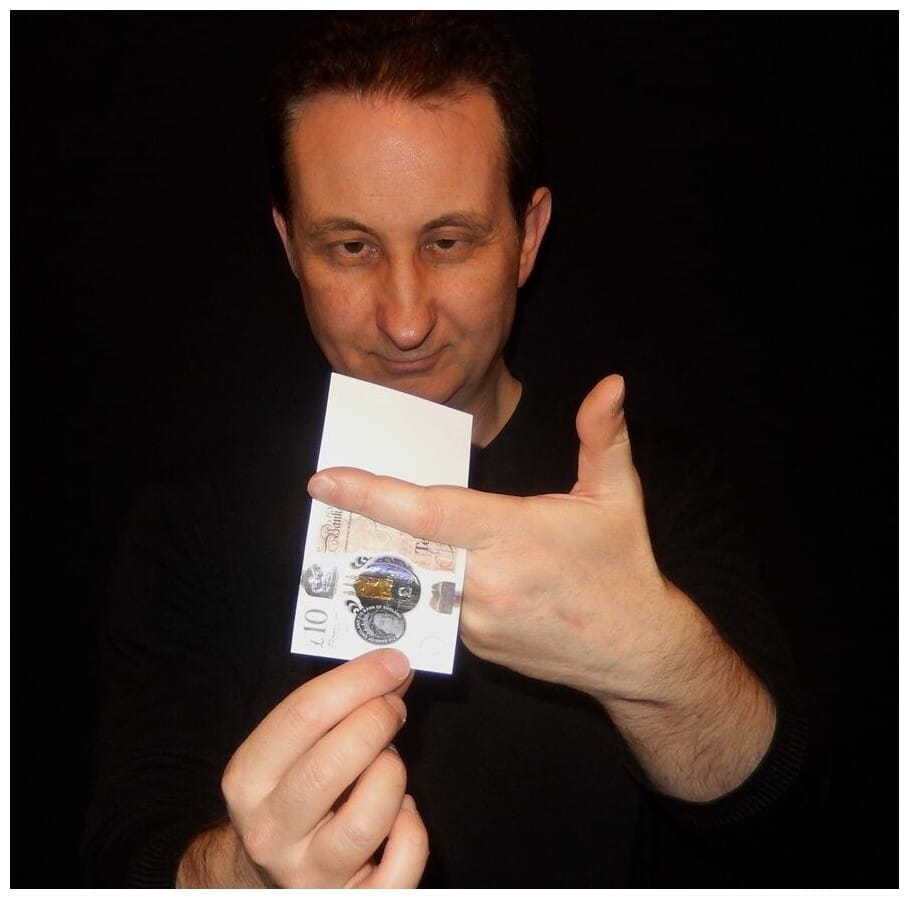 My own approach has developed over a quarter of a century of professional performance.
I specialise in close-up magic, sleight of hand and mind reading for adults at weddings, parties, corporate events and private functions.
I've learned that people don't want to feel as though they're being lectured to.
They want to have fun.
They want to be involved.
They want to laugh.
And they want to experience something they can't explain.
My magic has received more than 20 million views on YouTube, along with hundreds of Google reviews and 400+ Facebook recommendations.
I've also been fortunate enough to become a two-time S.A.M.S. Champion of Close-Up Magic and to work as a magic consultant and hand double for the BBC series Hustle.
But the basic principle remains remarkably simple.
Put people first.
Then perform the magic.
30. What Makes a Great Showman in Magic?
If I had to reduce everything we've discussed to a simple list, I'd say a great showman understands:
Technique
You need to know your magic.
Timing
You need to know when to move, speak and pause.
Psychology
You need to understand attention, expectation and perception.
Misdirection
You need to understand how people actually pay attention.
Communication
You need to make people understand what's happening.
That includes making the conditions of an effect clear. Something that becomes particularly important when separation between objects is part of the impossibility
Humour
You need to make the experience enjoyable.
Audience management
You need to know how to involve people without making them uncomfortable.
Improvisation
You need to cope when real life gets in the way.
Storytelling
You need to give your routines structure.
Personality
You need to make the performance feel like you.
Restraint
You need to know when enough is enough.
And above all:
Entertainment
The audience should enjoy themselves.
That's the job.
Frequently Asked Questions About Magic Showmanship
What is showmanship in magic?
Showmanship is the ability to turn technical magic into an entertaining performance. It involves presentation, timing, communication, audience interaction, humour, psychology, misdirection and the ability to create an emotional response.
Is showmanship more important than sleight of hand?
They are different skills. Technical ability gives a magician the tools to create an illusion, while showmanship determines how that illusion is presented and experienced. A professional magician needs both.
Can you learn showmanship?
Yes. Some aspects can be studied and practised, including timing, presentation, audience management and communication. However, much of a magician's development comes from performing for real audiences and learning how people react.
What makes a magician entertaining?
Entertainment comes from the combination of the magic and the performer. Personality, humour, interaction, storytelling, mystery and audience participation can all contribute to a memorable performance.
Why is psychology important in magic?
Magic relies heavily on the way people perceive information, form expectations and direct their attention. Understanding those processes helps a magician create convincing and entertaining illusions.
Is misdirection the same as distraction?
Not exactly. Distraction generally means taking attention away from something. Misdirection can involve directing attention towards something that appears important while the secret action happens elsewhere or is perceived differently.
Does a magician need to be funny?
No. Humour can be an important part of entertainment, but there is no single personality that makes a great magician. Some performers are funny, while others are mysterious, dramatic or understated.
What makes close-up magic difficult?
Close-up magic happens at very close range, meaning spectators can see the performer and props clearly. This places greater demands on technique, natural movement, audience management and misdirection.
Why is the Cups and Balls such an important magic trick?
The Cups and Balls combines many fundamental elements of magic, including sleight of hand, timing, misdirection, psychology, audience participation and presentation. It is a classic example of technique serving entertainment.
About Andy Field
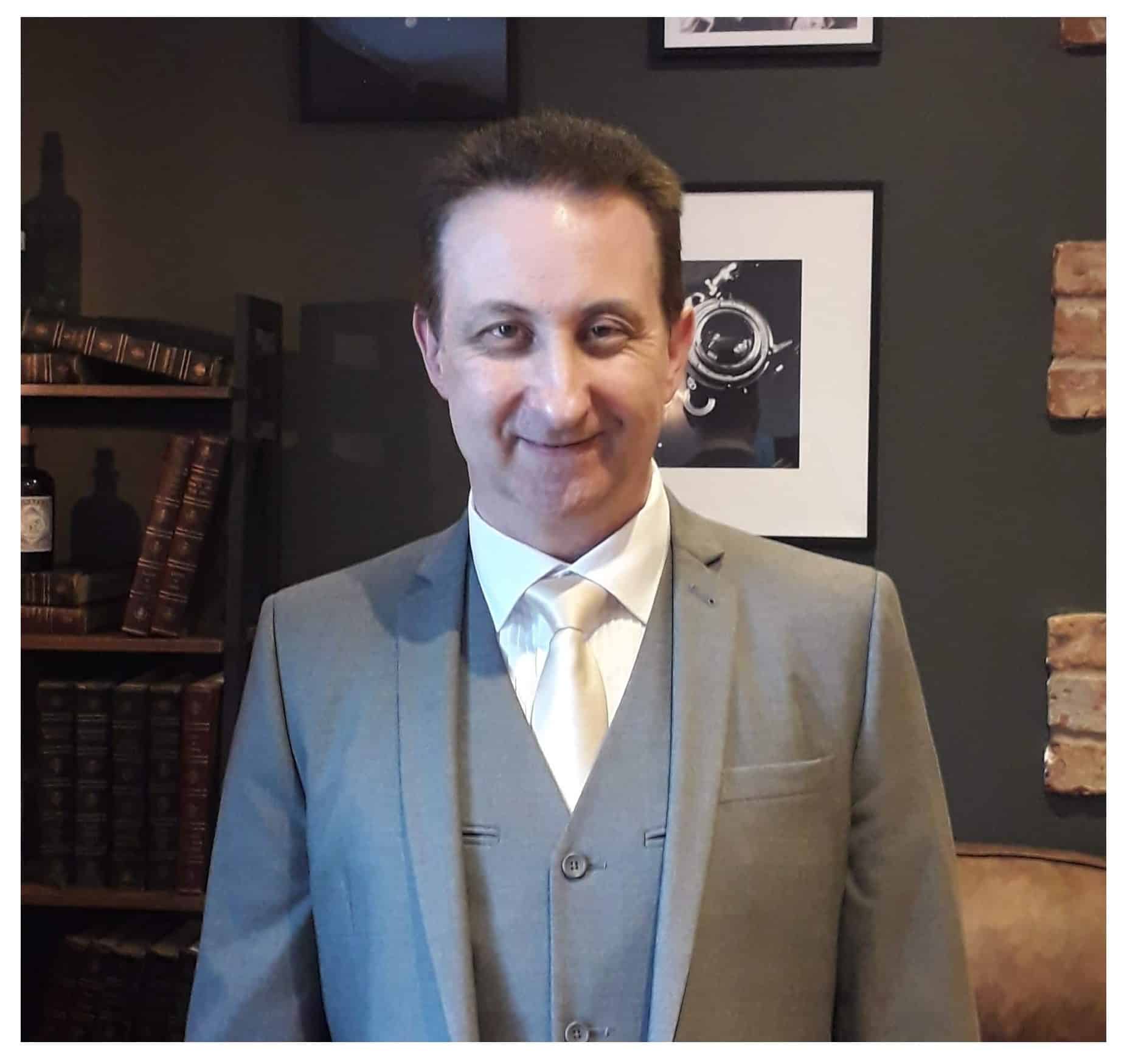 I'm Andy Field, a professional close-up magician with a quarter of a century of experience.
I've performed at weddings, parties, corporate events, private celebrations and other occasions throughout the UK.
I'm a two-time S.A.M.S. Champion of Close-Up Magic, have received more than 20 million YouTube views, hundreds of Google reviews and 400+ Facebook recommendations.
I've also worked as a magic consultant and hand double for the BBC television series Hustle and have been fortunate enough to be mentored by some exceptionally respected names in magic, including Michael Vincent and Darwin Ortiz.
But experience and credentials only tell part of the story.
What matters when I'm standing in front of a group of people is much simpler.
Are they having fun?
Are they involved?
Are they laughing?
Are they amazed?
And, when the magic is over, are they talking about it?
That's what showmanship means to me.
To learn more about my background, experience and work as a professional magician, see About Andy Field.
Andy Field Magician Service Areas
I perform professional close-up magic throughout the South West and surrounding areas, including Bristol, Bath, Worcester, Gloucester, Cheltenham, Oxford, Swindon and the Cotswolds.
If you'd like to find out more about me and my work in your area, I've created individual pages exploring my experience and connection with each location:
- About Andy Field in Bristol
- About Andy Field in Bath
- About Andy Field in Worcester
- About Andy Field in Gloucester
- About Andy Field in Cheltenham
- About Andy Field in Oxford
- About Andy Field in Swindon
- About Andy Field in the Cotswolds
- Magician Leamington Spa
These pages explain more about my professional experience, the type of magic I perform and the events I regularly entertain at in each area.
Explore More About Magic
If you'd like to go deeper into the individual skills that make up professional magic, these guides are a good place to continue:
Close-Up Magic
Close-Up Magic Explained looks at what close-up magic actually involves, why it is so personal and why it works particularly well at weddings, parties and corporate events.
Sleight of Hand
Sleight of Hand Magic Explained explores the technical side of magic and why apparently effortless movements can require years of practice.
Misdirection
How Misdirection Works in Magic looks at how magicians influence attention, expectation and perception without simply telling an audience where to look.
Psychology
Psychology in Magic: How Magicians Fool the Mind explores the fascinating relationship between magic, attention, perception and human behaviour.
Cups and Balls
The Cups and Balls Explained examines one of the great classic routines and shows how sleight of hand, timing, misdirection and showmanship can work together.
Final Thoughts: Great Magic Is About People
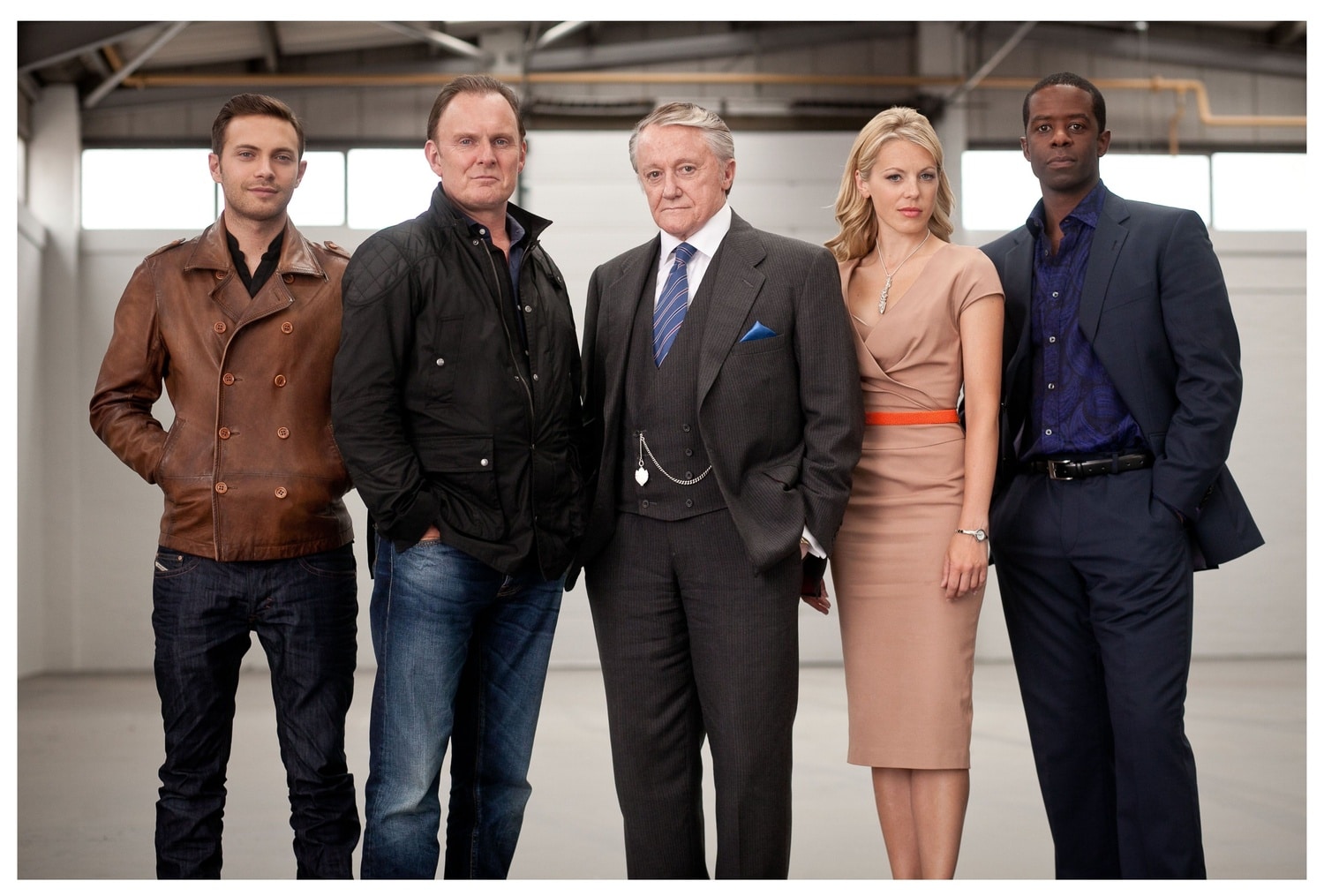
Andy Field worked as a magic consultant and hand double on the series.
You can learn thousands of magic tricks.
You can buy expensive cards.
You can practise complicated sleights.
You can memorise hundreds of routines.
But none of that guarantees you'll become a great showman.
Because magic isn't really about the objects.
It's about people.
It's about the moment somebody watches their own signed card appear somewhere impossible.
It's about the laugh when something unexpected happens.
It's about the look on someone's face when they realise that the explanation they were certain about can't possibly be right.
It's about a group of strangers suddenly having something to talk about.
It's about giving people a story they can tell afterwards.
And that's why showmanship matters.
The greatest magician in the room isn't necessarily the person with the fastest hands or the most complicated technique.
It's the person who understands what the audience is experiencing.
The person who knows when to speak.
When to pause.
When to make them laugh.
When to let them wonder.
When to involve them.
And when to simply get out of the way and let the magic happen.
After a quarter of a century of performing magic, that's still what fascinates me.
The secret method might be clever.
The sleight of hand might be difficult.
The psychology might be fascinating.
But the real magic happens when all of those things disappear and the spectator is left with one simple thought:
"I have absolutely no idea how he did that."
That's showmanship.
And that's what makes magic worth watching.
Book Magician Andy Field
I'm fortunate that I don't have to rely on magic to pay the bills. This means I don't need to charge inflated Saturday-night fees. I can concentrate on what I really enjoy — performing powerful, entertaining magic — while keeping my prices competitive.