Mind Reading Magic Explained

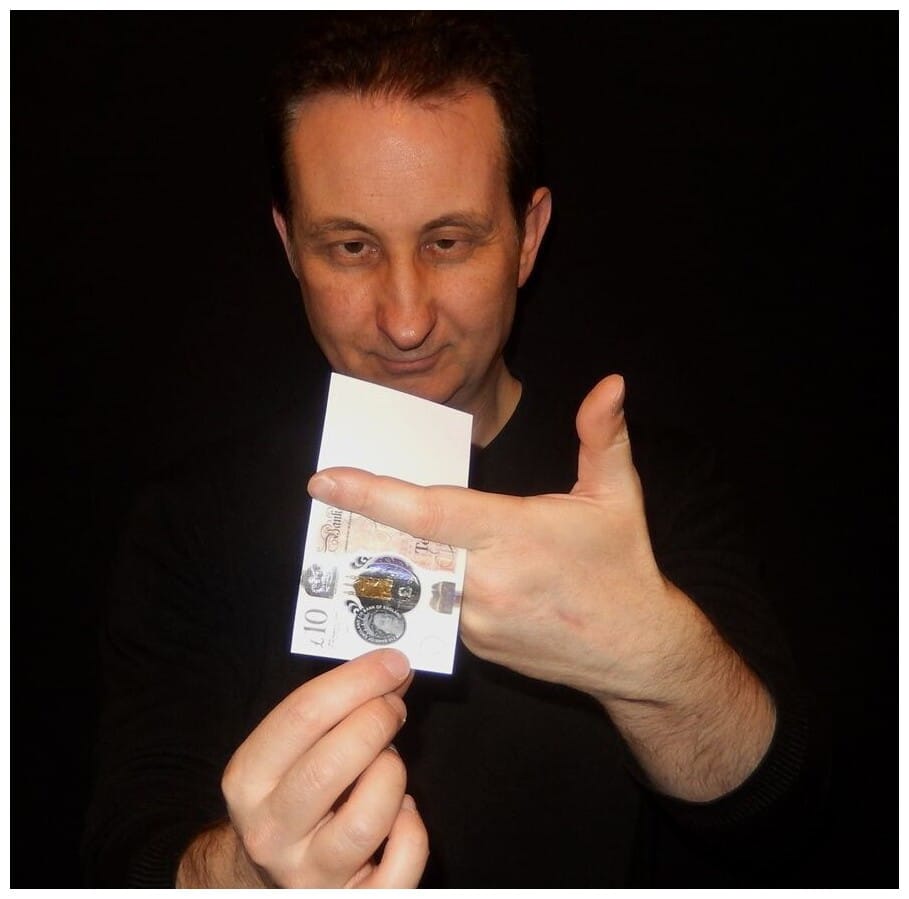
Andy Field is a professional magician with more than a quarter of a century of experience performing close up magic at weddings, parties, corporate events and private celebrations. He has performed at more than 1,000 weddings and is a two-time S.A.M.S. Champion of Close-Up Magic with more than 20,000,000 views on his YouTube and an array of Google reviews.
How Magicians Read Minds
Andy Field Magician
I’ve been performing magic for more than a quarter of a century, including hundreds of weddings and private and corporate events, and one of the questions I’m asked most often is surprisingly simple:
“How did you know what I was thinking?”
I’ve spent years studying and performing the psychology, sleight of hand, misdirection and showmanship that make moments like this possible.
I’ve also had the privilege of being a two-time S.A.M.S. Champion of Close-Up Magic, consulting on magic for the BBC series Hustle, working with experienced performers and mentors including Michael Vincent and Darwin Ortiz, and sharing magic with audiences through videos that have been viewed more than 20 million times.
And yet, even after all those years, there’s something wonderfully strange about watching somebody genuinely believe you have just read their mind.
Of course, I haven’t actually climbed inside their head.
That would make booking me rather more expensive.
What I have done is use a combination of psychology, language, observation, suggestion, misdirection, structure and sometimes completely sneaky bits of magic to create the experience of mind reading.
That distinction is important.
Mind reading magic isn't about claiming to possess supernatural powers. It is about creating an impossible moment where the audience knows what should be possible — and then experiences something that appears to contradict it.
So, how does mind reading magic actually work?
Let's have a look.
What is mind reading magic?
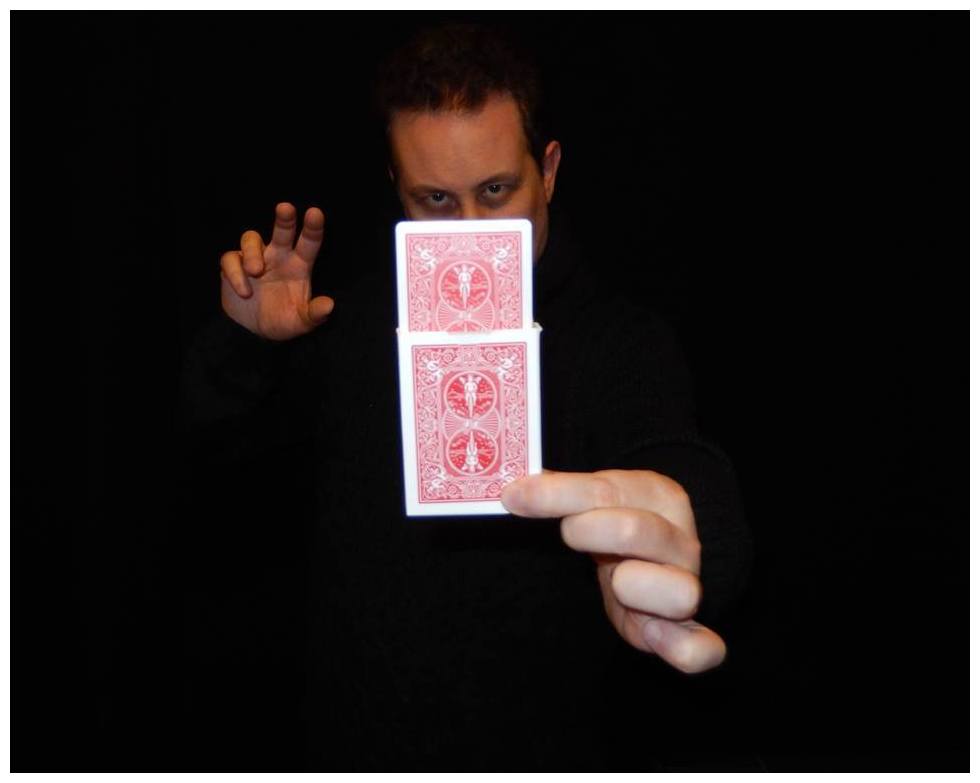
Andy Field demonstrating mind reading magic during a close-up performance
Mind reading magic is a branch of magic and mentalism designed to create the impression that a performer can discover information that should be impossible for them to know.
That information might be:
- A word someone is thinking of
- A drawing someone has secretly created
- A number someone has chosen
- A name from their past
- An object they have selected
- A decision they have made
- A memory they haven't revealed
- A prediction they believe nobody could possibly know
- Or even something apparently happening inside their own thoughts
The important word here is impression.
A professional magician or mentalist is creating a theatrical experience. The audience isn't normally being asked to believe that the performer has genuinely developed supernatural powers.
Instead, the performer constructs a situation in which the most entertaining explanation seems to be:
“He knew what I was thinking.”
That's where the real skill begins.
Because making somebody think you've read their mind is very different from simply guessing something correctly.
A lucky guess isn't particularly impressive.
Creating a situation where the spectator freely makes a choice, believes that choice is completely private, and then watching the performer reveal it is something else entirely.
Is mind reading real?

Understanding psychology, behaviour and suggestion helps explain how mind reading magic can create the illusion of thought reading.
If by “real” you mean supernatural telepathy, there is no established scientific evidence that a magician can genuinely read another person's thoughts simply by concentrating hard enough.
But the experience of apparent mind reading can be very real indeed.
I've performed effects where someone has written something down, folded it up, held onto it themselves and never apparently given me any useful information.
And then I've revealed it.
From their point of view, the experience can be extraordinarily convincing.
The method might involve psychology.
It might involve subtle information the spectator has unknowingly given away.
It might involve a cleverly structured choice.
It might involve a secret technique.
It might involve sleight of hand.
It might involve misdirection.
Often, it involves several of those things working together.
And sometimes the method is considerably simpler than the audience imagines.
That's one of the great pleasures of magic.
The method and the experience don't have to resemble each other.
Mind reading magic isn't just guessing
One of the easiest ways to understand the difference is to imagine I ask you to think of a number between one and ten.
You say nothing.
I look serious for a few seconds.
Then I announce, “Seven.”
If you're thinking of seven, that might look impressive.
If you're thinking of four, it looks like I got it wrong.
Either way, there isn't much of a performance.
Professional mind reading magic is usually much more carefully constructed.
The spectator might make several decisions.
They may genuinely believe those decisions are completely free.
They may write something down.
They may put something into an envelope.
They may mix objects.
They may make choices that appear to eliminate every possible method.
And then the information is revealed.
That structure is important because the audience isn't simply watching the magician make a guess.
They are watching a mystery develop.
That is one reason I talk so much about showmanship in magic.
The secret isn't enough.
The presentation matters.
The timing matters.
The wording matters.
The spectator matters.
And, perhaps most importantly, the experience matters.
The psychology behind mind reading magic
Psychology plays a huge role in apparent mind reading.
People are wonderfully predictable in some situations.
We make assumptions.
We follow patterns.
We respond to language.
We notice some things while completely ignoring others.
We also tend to remember experiences in ways that make them more mysterious afterwards.
A good mentalism routine can exploit some of these natural tendencies.
For example, the performer might give the spectator an apparently free choice.
But “free” doesn't always mean what the spectator thinks it means.
The wording of a question can influence how somebody interprets it.
The order in which possibilities are presented can affect decisions.
The amount of time somebody is given to make a choice can change the choice they eventually make.
None of this requires hypnosis or supernatural powers.
It's simply an understanding of human behaviour combined with theatrical technique.
That's why psychology in magic is such an important subject.
Magic isn't only about what the hands do.
It's also about what the audience believes happened.
Suggestion and influence
Suggestion is another important part of mentalism.
Imagine I give you a choice between several objects.
I might tell you:
“Don't choose the obvious one.”
That sounds like I'm giving you complete freedom.
But I've also planted an idea.
You now have to consider which object is “obvious”.
Perhaps you deliberately avoid it.
Perhaps you choose it anyway.
Either way, the language has affected the way you approach the decision.
This doesn't mean that every mentalist is secretly controlling people's minds.
It means that communication matters.
The words we use can influence how people interpret a situation.
A skilled performer understands this and builds it into the presentation.
The best versions are usually subtle.
If the audience can see exactly what you're trying to do, the mystery disappears.
The importance of observation
Another ingredient in apparent mind reading is observation.
A performer can sometimes obtain useful information simply by paying attention.
That might include:
- Facial expressions
- Changes in posture
- Hesitation
- The speed of a response
- Changes in voice
- Where somebody looks
- How confidently they answer
- The way they react to a suggestion
- Information they casually reveal in conversation
None of this means a magician can look at somebody's face and instantly know their deepest secret.
Real people aren't crossword puzzles with their answers printed on their foreheads.
But spectators constantly communicate information, often without realising it.
A performer who listens carefully can pick up clues that somebody else might miss.
That's particularly useful in close-up magic because the interaction is happening right in front of you.
Misdirection is about attention
People often think misdirection means distracting somebody while the magician secretly does something with the other hand.
Sometimes it does.
But good misdirection is much more sophisticated than that.
Misdirection is really about attention.
Where are you looking?
What do you believe is important?
What are you expecting to happen next?
What has the magician just told you to concentrate on?
If I make a particular action seem important, your attention naturally moves towards it.
Meanwhile, something else may happen without you giving it the same level of scrutiny.
That's why misdirection in magic is so closely connected to apparent mind reading.
The audience doesn't need to be distracted by something ridiculous.
They simply need to be paying attention to the wrong thing at the right moment.
And sometimes they don't even realise their attention has been guided.
Sleight of hand can be involved too
Mentalism and sleight of hand aren't completely separate worlds.
A mind reading effect can sometimes use physical techniques to secretly obtain, switch or control information.
A performer might apparently place something somewhere while secretly doing something else.
A written prediction might appear to have been sealed before a crucial decision is made.
An object might apparently remain untouched while something important has already happened.
That is where sleight of hand becomes relevant.
The important point is that sleight of hand isn't necessarily about making your fingers move incredibly quickly.
Good sleight of hand is about making an action look completely ordinary.
If the audience sees a suspicious move, you've created a problem.
If the move looks like something that anybody would naturally do, the secret can disappear into the action.
Does a mind reader need to know information beforehand?
Not necessarily.
This is another common misconception.
People sometimes imagine that a mentalist must have secretly researched every spectator before the performance.
Occasionally performers may use information that has been openly provided in advance, particularly in television or highly structured stage shows.
But live close-up mentalism can work in very different ways.
The performer can obtain information during the interaction itself.
Sometimes the information comes from a choice.
Sometimes it comes from conversation.
Sometimes it comes from an apparently innocent action.
Sometimes the method has nothing to do with information gathering at all.
And sometimes the spectator genuinely gives the performer almost nothing.
That's when the method can become particularly clever.
The spectator is part of the method
One of the biggest mistakes inexperienced performers make is thinking that the magician is the only person doing anything.
In strong interactive magic, the spectator is part of the machinery.
They make choices.
They hold objects.
They write things down.
They shuffle.
They remember.
They forget.
They react.
They sometimes accidentally provide information.
And they create the emotional response that makes the routine memorable.
This is particularly important with mind reading because the spectator needs to feel that they made the decision.
If I simply tell you what you're going to choose, that's much less interesting.
If you genuinely believe you could have chosen anything, and I somehow know what you chose, the impossibility becomes much stronger.
Why free choice is so important
“Free choice” is one of the most fascinating ideas in magic.
Suppose I place five cards on a table.
I ask you to choose one.
You point to a card.
You could have chosen any of the five.
At least, that's what it feels like.
The magician's job is to make that experience convincing.
This is where psychology, language, timing and technique can all overlap.
A choice can be genuinely free.
It can be influenced.
It can be controlled.
Or the performer can build an effect that succeeds regardless of which option the spectator chooses.
The clever part is that the audience doesn't necessarily know which situation they are experiencing.
That's why the outcome can feel impossible.
Predictions and mind reading
Predictions are closely related to mind reading.
A prediction effect might involve a performer apparently knowing what someone is going to choose before they choose it.
For example, a spectator might select a card, word, number or object.
The performer then reveals that the information was already written down.
The obvious question is:
“How could you possibly have known?”
That's exactly the question the routine is designed to create.
There are many different methods for achieving this kind of effect.
Some rely on forcing a choice.
Some rely on multiple possible outcomes.
Some involve secret writing.
Some use switches or other sleight of hand.
Some rely heavily on presentation.
And some combine several methods so that even if the spectator works out one possibility, there are several others still protecting the mystery.
Why the Cups and Balls can feel like mind reading
At first glance, the Cups and Balls doesn't sound like a mind reading trick at all.
It's a classic piece of sleight-of-hand magic involving cups and small objects.
But the underlying principles are surprisingly relevant.
The spectator believes they understand what is happening.
They watch the objects.
They make assumptions about where things are.
They follow the action.
And then reality appears to contradict what they thought they saw.
That is exactly the same psychological territory that makes mentalism powerful.
The audience doesn't experience the secret method.
They experience the impossibility.
Why presentation matters more than the secret
This is something I've learnt over many years of performing.
Two magicians can perform essentially the same trick and produce completely different reactions.
One might get a polite smile.
The other might have everyone around the table talking about it for the rest of the evening.
Why?
Because the trick isn't the whole performance.
The story matters.
The personality matters.
The timing matters.
The relationship with the spectator matters.
The humour matters.
The build-up matters.
And the final moment matters.
That's why I consider showmanship in magic every bit as important as technical ability.
You can know an extraordinary secret.
If you present it badly, nobody cares.
You can perform a relatively simple effect beautifully.
People can remember it for years.
Mind reading at weddings
Mind reading magic can work particularly well at weddings because it creates interaction between people who may not know each other particularly well.
A wedding already has an emotional atmosphere.
People are celebrating.
They're talking.
They're drinking.
They're meeting relatives.
They're catching up with old friends.
A good close-up magician can move between groups and create little pockets of entertainment without taking over the entire event.
Mind reading effects can be especially effective because they encourage conversation.
Someone chooses a word.
Another guest watches.
A prediction is revealed.
Suddenly three people are discussing how on earth it happened.
That is much more useful to a wedding than simply demonstrating technical skill.
The magic becomes part of the social atmosphere.
I've written more about the practical side of this in The Best Time for a Wedding Magician to Perform and How Magicians Create Impossible Moments at Weddings.
Mind reading at corporate and private events
The same principle works at corporate events, dinners and private parties.
People don't necessarily want to sit through a long magic show.
They often want something they can experience themselves.
That's one of the reasons close-up magic works so well.
I can approach a small group, introduce myself, perform something interactive and then move on.
Nobody has to stop the entire event.
Mind reading can make that interaction particularly personal.
The spectator isn't just watching me perform.
They are the person apparently having their thoughts revealed.
That difference can turn a magic trick into a story they tell afterwards.
And that's ultimately what I'm interested in creating.
Not another trick.
A story.
Mind reading isn't the same as being psychic
It's worth making the distinction clear.
A magician performing mentalism is creating a theatrical illusion.
A psychic makes a different kind of claim.
There are performers who present themselves as genuine psychics, mediums or people with supernatural abilities. That's a separate subject from theatrical magic.
When I perform mind reading magic, I'm performing magic.
The audience knows they're seeing a magician.
The fun comes from the fact that, for a few moments, the explanation seems to disappear.
It's a bit like watching a really good film.
You know it's fiction.
That doesn't stop you becoming emotionally involved in the story.
Why audiences enjoy being fooled
You might think people would be annoyed when a magician fools them.
Usually the opposite happens.
People enjoy the challenge.
They try to work out what happened.
They look for suspicious movements.
They accuse their friends of helping me.
They accuse me of cheating.
Sometimes they accuse me of being a witch.
I'm still waiting for the paperwork.
The reason people enjoy being fooled is that magic gives them permission to experience something outside normal expectations.
For a few minutes, they don't need to know how everything works.
They can simply enjoy the mystery.
The role of humour
Humour is particularly useful in mind reading.
Mentalism can become very serious if you're not careful.
Someone stands silently.
The magician stares intensely.
Dramatic music starts.
A long pause.
Someone coughs.
Everyone wonders when the bus is arriving.
I prefer interaction and humour.
A joke can relax the spectator.
It can also make them less conscious of the structure of the routine.
More importantly, it makes the experience feel like entertainment rather than an examination.
The spectator should feel involved rather than interrogated.
Can you learn mind reading magic?
Absolutely.
You can learn techniques used in mentalism and apparent mind reading.
But learning the secret method is only the beginning.
A performer also needs to learn:
- How to communicate clearly
- How to structure a routine
- How to manage attention
- How to use pauses
- How to read reactions
- How to make spectators comfortable
- How to deal with unexpected answers
- How to recover when something doesn't go according to plan
- How to build suspense
- How to finish strongly
And, above all, how to perform for actual people.
Reading a book about magic isn't the same as standing in front of someone who has decided to challenge you.
That's where experience matters.
I've been performing for around 25 years, and I still learn from performances.
Every audience is different.
Every room is different.
Every spectator reacts differently.
That's one of the reasons I enjoy close-up magic so much.
You never quite know what is going to happen.
Mind reading versus close-up magic
Mind reading is often associated with mentalism, while close-up magic covers a broader range of effects performed close to the audience.
The two overlap considerably.
A close-up magician might perform cards, coins, psychological effects, predictions, mind reading and other forms of sleight of hand during the same performance.
If you're unfamiliar with the terminology, my guide to close-up magic explained goes into more detail about what close-up magic actually involves.
It's also useful when deciding what sort of magician you want at an event.
I've covered that question in What Type of Magician Should I Hire?.
The answer depends very much on the event, the audience and what you want people to experience.
Mind reading across Bristol, Bath, Gloucester and beyond
I perform close-up magic and interactive magic at events across the South West and surrounding areas.
That includes Bristol, where I've performed for weddings, parties, corporate events and private occasions. You can read more about the service on my magician Bristol page, as well as the more detailed Complete Guide to Hiring a Magician in Bristol.
I also perform throughout Gloucester, with more information available on my magician in Gloucester page.
In Cheltenham, I've performed at a variety of venues and events, and you can see some of those experiences on my magician in Cheltenham page and in Places I've Performed Magic in Cheltenham.
For events in Swindon, my magician in Swindon page explains more about the type of close-up magic I provide there.
I also perform in Oxford and Oxfordshire, with details on my magician in Oxford and Oxfordshire page.
Bath is another area I regularly cover. My magician in Bath and Somerset page explains more about my work there, while Card Trick Magician Bath looks more specifically at card magic in the city.
And for Worcestershire events, there's my magician in Worcester page.
The important thing is that the location doesn't change the fundamental principles.
Whether I'm performing in a wedding venue in Bath, a hotel in Bristol, a private party in Gloucester or a corporate event in Oxford, the objective remains the same:
Get people involved. Make them laugh. Give them something impossible to talk about afterwards.
Why mind reading works so well in close-up magic
There's a practical reason mind reading can be so effective at close range.
The spectator is involved.
They aren't sitting 30 metres away watching something happen on a stage.
They're holding the object.
They're making the decision.
They're answering the question.
They're writing something down.
They're looking directly at me.
That creates a much stronger sense of personal involvement.
When something impossible happens to you, it feels different from watching it happen to somebody else.
That's one of the fundamental strengths of close-up magic.
The secret isn't always the cleverest part
Here's another thing I've learnt after years of performing.
Magicians can become obsessed with methods.
We love clever techniques.
We love complicated gimmicks.
We love discussing tiny differences between two versions of the same effect.
Audiences generally don't care.
They care about what happened to them.
That's a useful lesson for any magician.
The cleverest method in the world isn't automatically the strongest performance.
Sometimes the simplest method, presented properly, produces the strongest reaction.
That is where experience, performance and showmanship come into play.
What makes a great mind reading performance?
For me, a strong mind reading routine needs several things.
The spectator must matter
They shouldn't feel like a prop.
They should feel like the person making the magic happen.
The conditions should be clear
The audience needs to understand why the outcome appears impossible.
If the conditions are confusing, the mystery becomes confusing too.
There should be a reason for everything
Good routines don't feel like a series of random actions.
The questions, choices and movements should all have a purpose.
The reveal needs to land
You don't want to rush the most important moment.
But you don't want to drag it out until everyone has forgotten what the question was either.
Timing is everything.
The personality should come through
A magician isn't a robot demonstrating techniques.
People are hiring a performer.
They want somebody who can interact with their guests and contribute to the atmosphere.
That's where How a Magician Can Benefit Your Event becomes relevant.
The value isn't simply the number of tricks performed.
It's the experience created around them.
What about card tricks?
Card magic and mind reading overlap more than many people realise.
A card can become a thought.
A spectator can freely select one.
They can remember it.
They can lose it in the deck.
And the magician can apparently know which card they merely thought of.
The cards become a vehicle for something psychological.
That's why I don't see a contradiction between sleight of hand and mentalism.
They're different tools that can create similar experiences.
Even something like Three Card Monte Explained demonstrates how much perception, attention and expectation can influence what spectators believe they have seen.
The real secret of mind reading magic
So, after all that, what's the secret?
There isn't one single secret.
That's probably the most honest answer.
Mind reading magic can involve psychology, suggestion, observation, sleight of hand, misdirection, memory, language, mathematical principles, clever props, secret information and carefully constructed routines.
But even knowing all of those ingredients doesn't automatically make somebody a good mind reader.
Because the real challenge is putting them together invisibly.
The audience shouldn't see the machinery.
They should experience the mystery.
That's the difference between explaining a method and creating a moment.
Final thoughts
Mind reading magic works because it plays with one of the most fascinating things we all possess:
our own thoughts.
A card can disappear.
A coin can vanish.
A ball can travel through a solid cup.
But when a magician appears to know something that exists only inside your head, the experience feels much more personal.
That's why mind reading remains such a powerful part of magic and mentalism.
It's not about pretending to possess supernatural powers.
It's about using psychology, technique, presentation and showmanship to create a moment where the audience genuinely wonders how you could possibly have known.
After more than 25 years of performing, that's still the part I love.
Not knowing whether someone will laugh.
Not knowing whether they'll immediately try to catch me out.
Not knowing whether they'll spend the next ten minutes analysing what happened.
But knowing that, for a brief moment, I've given them something they didn't expect.
A little mystery.
A little laughter.
And hopefully one impossible story to tell afterwards.
And that's really what good magic should do.
Not simply show you a trick.
It should give you a moment.
If you'd like to understand more about the thinking behind the magic, you can also explore About Andy Field, where I explain more about my background and experience as a professional magician, or continue into the wider subjects of close-up magic, sleight of hand, misdirection and psychology in magic.
Because once you start looking beyond the trick itself, magic becomes much more interesting.
And considerably more sneaky.
Andy Field Magician Service Areas
I regularly provide close up magic for weddings, parties, corporate events and special occasions across the South West and surrounding areas. You can find out more about my magic services in the following locations:
- Bristol Magician
- Gloucester Magician
- Cheltenham Magician
- Swindon Magician
- Somerset Magician
- Magician Oxford
- Magician Bath
- Magician Worcester
- Magician Cotswolds