How Misdirection Works in Magic: The Psychology Behind the Impossible

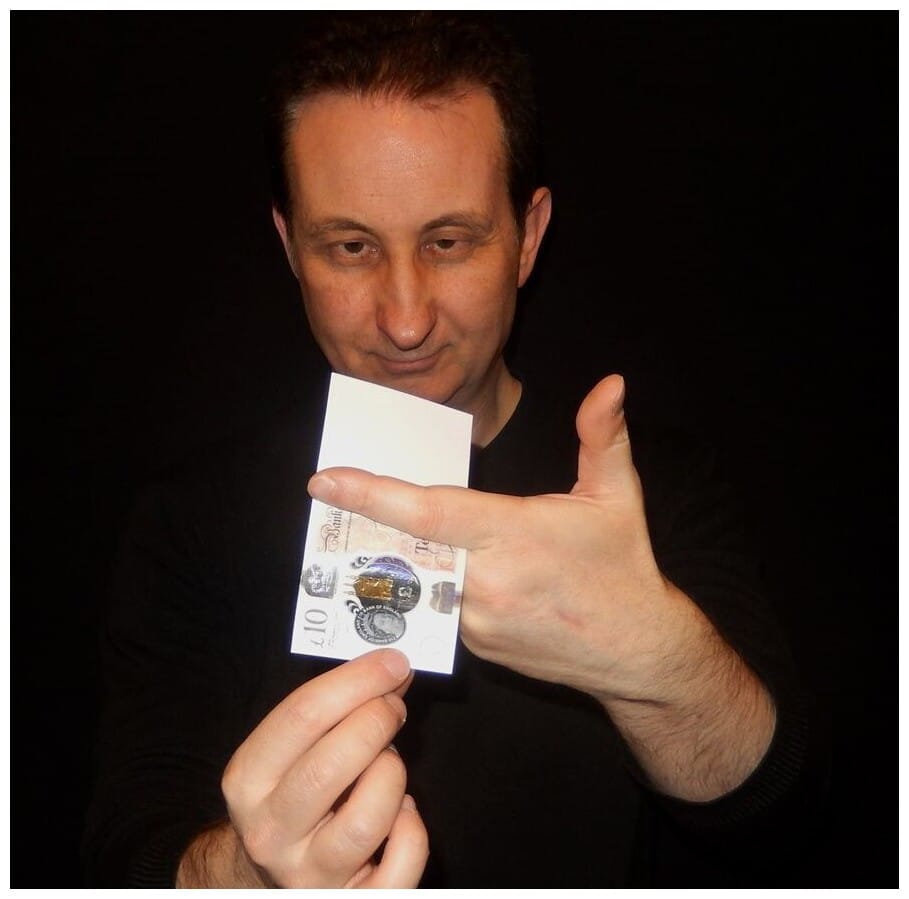
Andy Field is a professional UK magician, offering close up magic, sleight of hand illusions, mind reading and more, for a variety of occasions. Over the years Andy has built a strong global following,with millions of views on his YouTube channel and an array of reviews across multiple platforms. Having amassed experience as a wedding magician, party magician & close up magician, Andy is seen as one of the industries most tried and tested professional magicians.
Misdirection in Magic
How does a magician make a coin disappear while you are looking directly at his hands? How can a playing card apparently jump from one place to another when you were watching every move? And how can a magician borrow your ring, hold it in front of you, and somehow make it appear somewhere it absolutely should not be?
The answer is often misdirection.
 I’m Andy Field, a professional close-up magician with a quarter of a century of experience, specialising in close-up magic, sleight of hand, mind reading and the kind of magic that happens right in front of your eyes.
I’ve performed at weddings, parties, corporate events, restaurants and private functions, and over the years I’ve learned something rather important:
The secret to good magic isn't simply hiding what you're doing. It's controlling what people believe they are seeing.
I've performed magic for thousands of people, had my work seen by millions online, received hundreds of recommendations and even been consulted by the BBC for Hustle.
And despite all that experience, there is still something wonderfully funny about watching somebody stare directly at a magician's hands and then say:
“I didn't see you do anything.”
Exactly.
That's the idea.
But misdirection is considerably more sophisticated than simply waving your left hand while secretly doing something with your right.
In fact, some of the best misdirection in magic doesn't look like misdirection at all.
It looks like nothing happened.
And that's what makes it so fascinating.
The Cups and Balls is a particularly good example of this. The magician can appear to draw attention to one action while another is happening elsewhere.
What Is Misdirection in Magic?
Misdirection is the art of influencing where an audience looks, what they notice, what they remember and, perhaps most importantly, what they think is important.
The word can be slightly misleading.
You might imagine that misdirection means deliberately making somebody look in the wrong direction.
Sometimes it does.
But a magician doesn't necessarily need to make you look somewhere else.
Instead, they may make you:
- Look at the right thing at the wrong moment.
- Look at the wrong thing at the right moment.
- Notice something but dismiss its importance.
- Remember an action differently from how it actually happened.
- Concentrate on a question while something else is taking place.
- Follow a natural movement without questioning it.
- Assume that something happened at a particular moment when it actually happened earlier.
That's a much more powerful form of deception.
The magician isn't necessarily controlling your eyes.
They're controlling your attention.
And those are two very different things.
You can look directly at a magician's hands and still miss the secret.
That sounds impossible.
But it happens all the time.
Close-up magic isn't simply about having fast hands. A magician also has to understand where the audience's attention is and what they believe they are seeing.
This is where misdirection in magic becomes so important. Good misdirection can allow a magician to perform something directly in front of a spectator without the secret being recognised.
Misdirection Isn't Just “Look Over There!”

A magician performs a close-up card trick for a group of spectators, demonstrating how misdirection can influence where an audience focuses their attention.
One of the biggest misconceptions about magic is that misdirection means something like this:
“Look over there!”
The magician points dramatically to the ceiling.
You look up.
The magician secretly does something with a coin.
Job done.
That's certainly one form of theatrical misdirection, but it's not particularly sophisticated.
If I suddenly point at the ceiling and shout, “LOOK!”
you're probably going to look.
But you're also going to wonder why I did it.
And if you know you're watching a magician, you'll immediately become suspicious.
You might think:
“He's doing something while I'm looking up there.”
Congratulations.
You've just become the world's worst audience member.
Or possibly the world's best.
It depends whether you're trying to catch me.
Professional magicians generally use something much subtler.
The aim isn't necessarily to pull your eyes away from the secret.
It's to make the secret unimportant in your mind.
That's where psychology comes into play.
How Human Attention Helps a Magician

A street performer demonstrates Three Card Monte to spectators, illustrating how limited attention can make it difficult to follow every movement during a fast-paced card game.
Human beings are actually rather selective about what they pay attention to.
We don't consciously process every single thing happening around us.
If we did, walking into a supermarket would be exhausting.
You'd have to think about every packet of cereal, every person walking past, every noise, every light, every movement and every trolley.
Instead, your brain filters information.
It decides what deserves your attention.
That filtering system is incredibly useful in everyday life.
Unfortunately for you, when you're watching a magician, it can also be used against you.
A magician can take advantage of the fact that attention is limited.
If I ask you to concentrate on a playing card, for example, your attention becomes focused.
I can then perform a completely ordinary action somewhere else.
You may see it.
But you don't necessarily process it as important.
And that's a crucial distinction.
This is one reason performing as a Gloucester magician involves much more than simply knowing clever sleights; understanding where people's attention naturally goes is just as important.
Seeing Something Isn't the Same as Noticing It
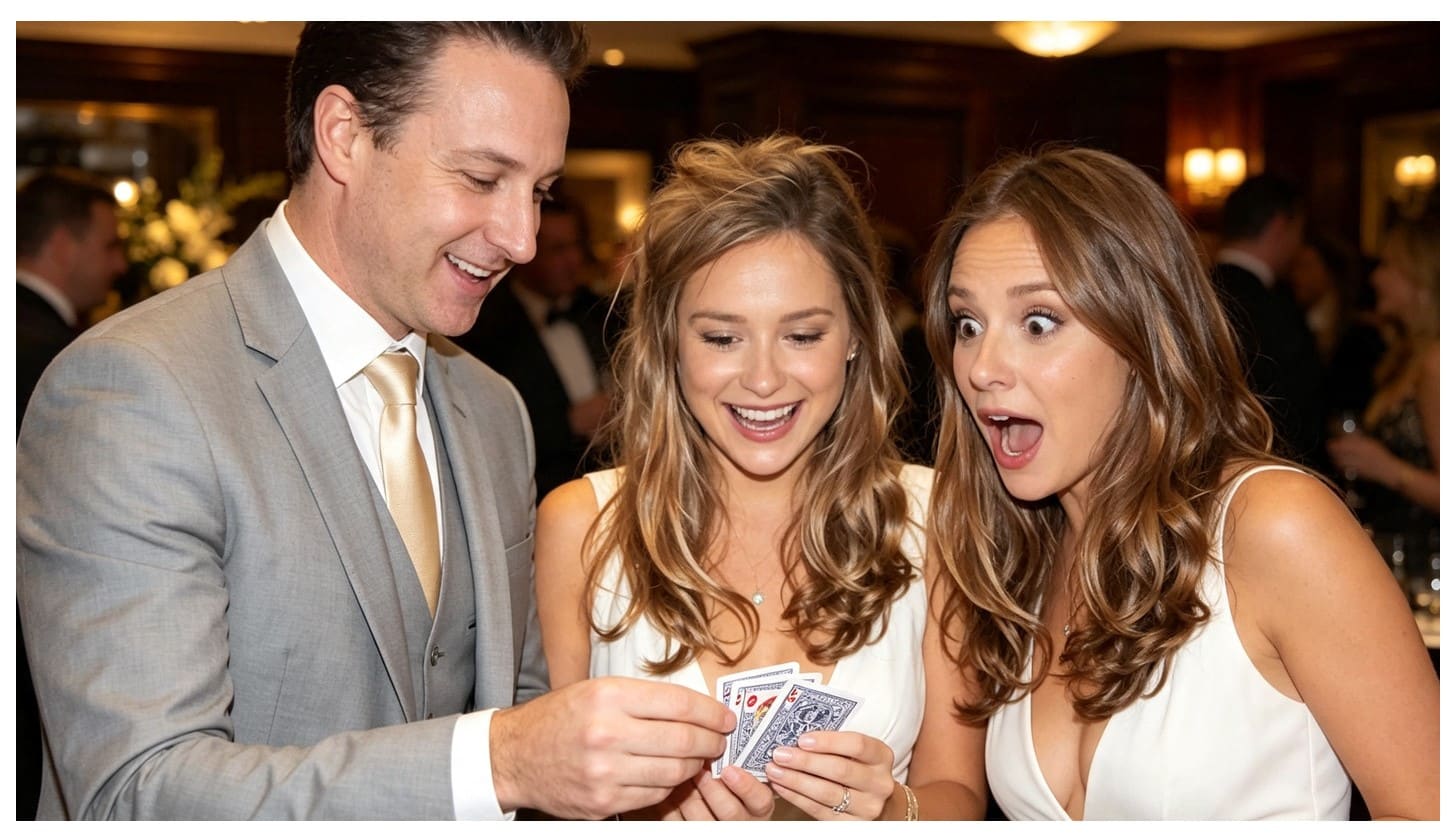
Two spectators watch closely as a magician makes an object disappear, illustrating how people can see an action without consciously noticing or understanding what happened.
This is one of the most important ideas behind misdirection.
You can see something without consciously noticing it.
Imagine you're watching me perform a coin trick.
I hold a coin in my right hand.
I show it to you.
You know exactly where it is.
I move my hand.
You watch it.
The coin disappears.
Your immediate reaction is:
“Where did it go?”
But here's the interesting part.
You may have been watching the secret move the entire time.
Your eyes were there.
Your brain simply didn't interpret what was happening as significant.
That's because people don't experience reality like a video camera.
Your brain is constantly interpreting what your eyes receive.
And the magician can exploit that.
The Psychology of Expectation

A magician places a coin into his hand, demonstrating how audience expectations can influence what spectators believe they have seen during a magic trick.
Expectation is one of the magician's best friends.
If I place a coin in my left hand and close my fingers around it, you naturally expect the coin to remain there.
Why wouldn't you?
That's what normally happens when somebody puts a coin into their hand.
Your brain doesn't spend the next ten seconds considering every possible alternative.
It assumes the obvious explanation.
The coin is in the hand.
That's perfectly reasonable.
Unless you're a magician.
Then the obvious explanation is usually the one you should be suspicious of.
But the audience doesn't know that.
And that's where expectation becomes incredibly useful.
A magician can establish a pattern.
Perhaps I repeatedly put objects into my left hand.
You learn the pattern.
Left hand.
Left hand.
Left hand.
Then, on the crucial occasion, I don't put the object into my left hand at all.
I make exactly the same movement.
Your brain fills in the missing information.
You believe you've seen the object go into the left hand.
But you didn't.
You saw a movement that looked like the previous movements.
The secret happened in the gap between what you saw and what you assumed.
That's misdirection.
The Magician's Greatest Weapon: Natural Movement
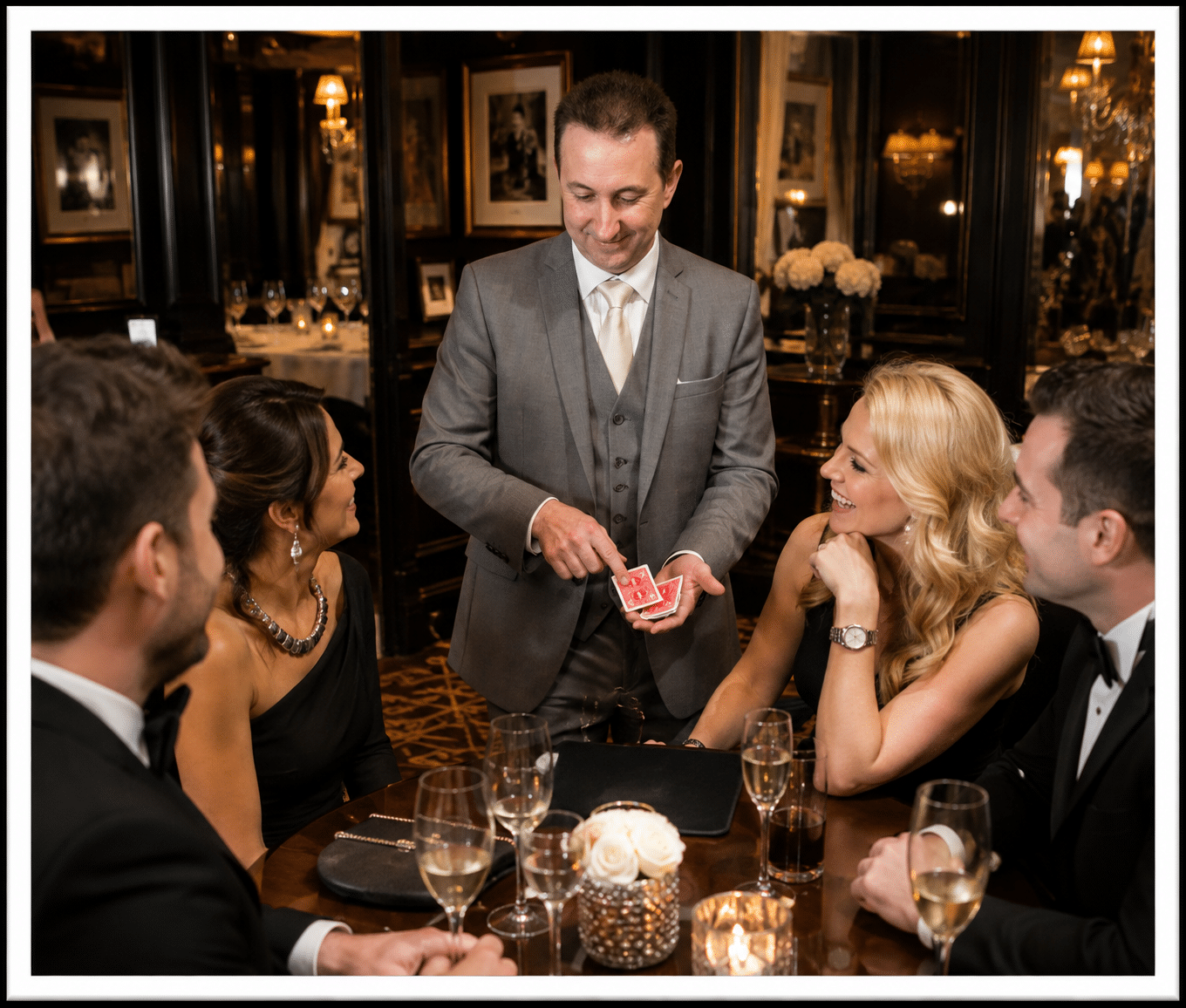
A magician naturally entertains a small group during a close-up performance, showing how relaxed and purposeful movements can help make magical actions appear completely ordinary.
One of the things that separates experienced sleight-of-hand performers from beginners is the ability to make secret actions look completely natural.
If I reach into my pocket for no apparent reason, you're likely to notice.
If I reach into my pocket because I need something, that's different.
The action has a purpose.
This is incredibly important.
People pay attention to unusual behaviour.
They tend to ignore ordinary behaviour.
A magician therefore tries to make secret actions appear to be exactly what they should be.
If I need to put something away, I don't want the movement to look like:
“I am now performing a secret magical manoeuvre.”
I want it to look like:
“I'm putting this away.”
There is nothing suspicious about that.
And that's the beauty of it.
The best misdirection can look almost boring.
Natural movement is something I use regularly when performing close-up magic at weddings, parties and corporate events.
If you're looking for a professional magician in Leicester, my approach combines sleight of hand, misdirection and relaxed, entertaining interaction to create memorable moments for guests.
Timing Is Everything
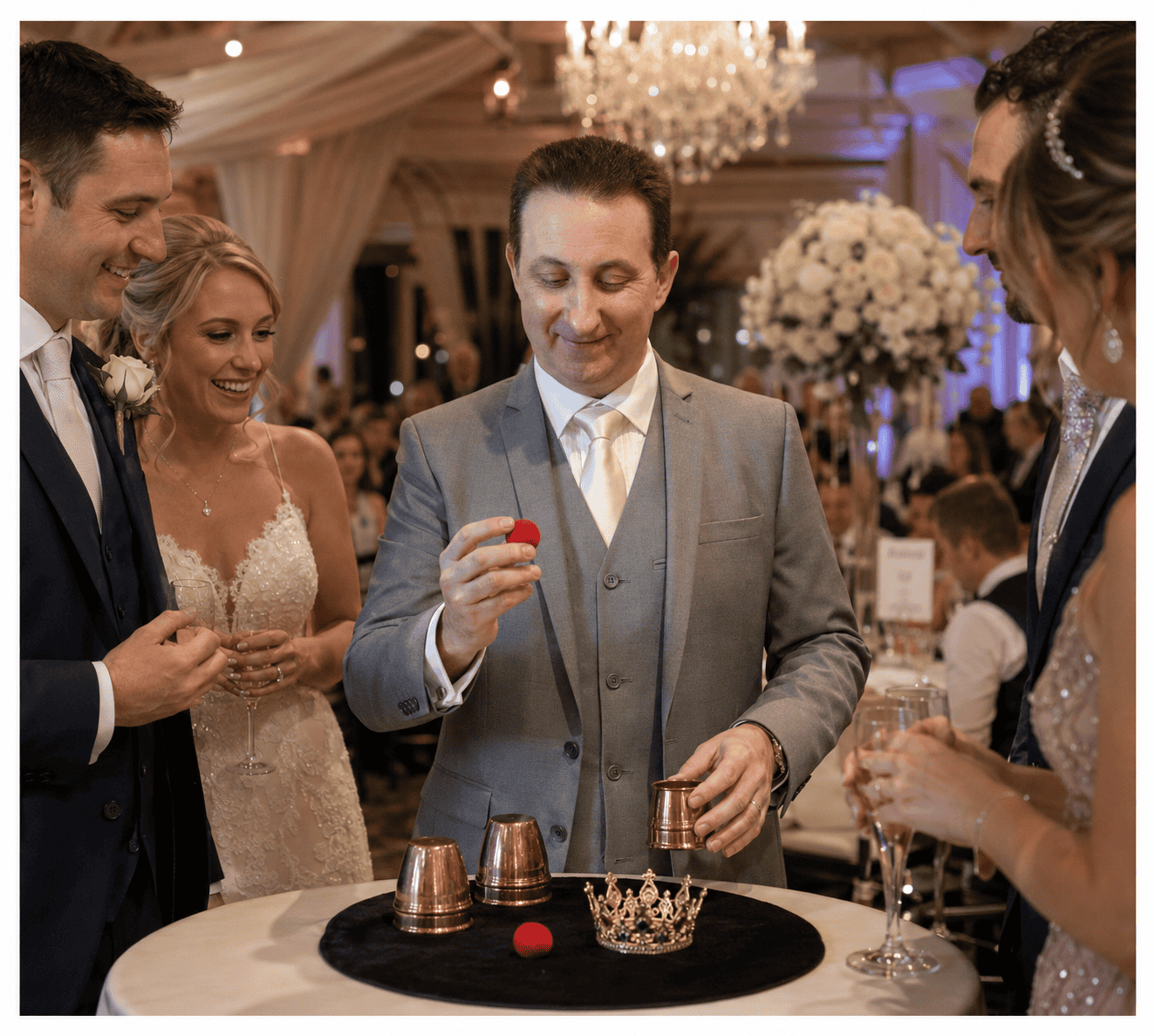
Timing is crucial in The Cups and Balls Illusion
Misdirection isn't only about where you look.
It's also about when you look.
Timing is fundamental to close-up magic.
Suppose I want to secretly transfer a coin from one hand to another.
I could do the secret move at any time.
But that doesn't mean it will work at any time.
If I do it while you're staring intensely at my hands, I may be in trouble.
Instead, I might create a moment when your attention naturally shifts.
Perhaps I ask you a question.
Perhaps you answer.
Perhaps I look at you.
And, almost automatically, you look back at me.
That tiny moment can be enough.
The important thing is that the secret movement doesn't feel connected to the question.
Your attention has shifted naturally.
You haven't been told to look away.
You chose to.
And that's far more powerful.
Eye Contact Is a Powerful Tool

Lisa Field makes strong eye contact with the audience
People naturally follow other people's eyes.
If you're talking to somebody and suddenly glance toward something, there's a good chance they'll look too.
Magicians can use this instinctively.
Suppose I want you to watch my left hand.
I don't necessarily have to point at it.
I can simply look at it.
You may follow my gaze.
Now imagine that I want your attention somewhere else.
I look directly at you.
You look at me.
Suddenly your attention has moved without me saying a word.
This is one reason good close-up magic can feel so personal.
The magician isn't performing in some distant spotlight.
They're interacting directly with you.
You're part of the process.
And sometimes you're unknowingly helping the magician perform the secret.
This is especially important when working as a Cheltenham magician, where spectators are often standing only inches away and directly interacting with the performer.
The Importance of Speech
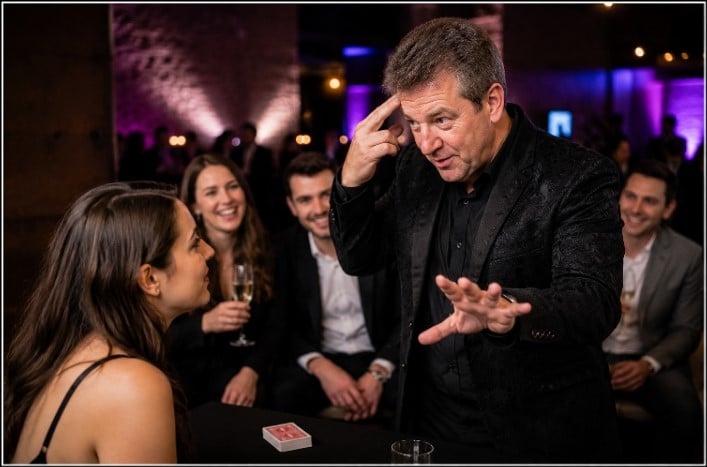
The words a magician or "patter" are very important. Most magicians memorise a script with a certain trick.
What a magician says can be just as important as what they do.
Words can direct attention.
They can create expectations.
They can establish a sequence.
They can make an action seem more important than another.
Imagine I say:
“Watch the card very carefully.”
What are you going to do?
Watch the card.
Obviously.
Now suppose I perform a secret action somewhere else while you're concentrating on the card.
You may not even realise that your attention has been redirected.
The words have done the work.
But speech can also be used for something subtler.
A magician can talk about one moment while secretly doing something during another.
The audience tends to assume that the important moment is the moment being discussed.
That assumption can be exploited.
And because the conversation feels natural, the misdirection doesn't feel like misdirection.
Misdirection and Distraction Are Not the Same Thing

A magician performs a close-up trick while spectators watch his hands closely, illustrating how misdirection can work even when the audience is looking directly at the action.
People often use the words misdirection and distraction as though they're identical.
They're not.
Distraction generally means taking attention away from something.
Misdirection is broader.
It's about controlling the audience's perception of what matters.
A distraction might be:
“Look at this!”
Misdirection might be:
“Watch what happens when I put the card here.”
The audience watches.
But they may be watching the wrong part of the action.
The second approach is much more interesting because the magician hasn't necessarily taken your attention away.
They've directed it somewhere they want it to be.
That's why great misdirection can work even when you are staring directly at the magician's hands.
The same principles apply when performing close-up magic as a Swindon magician, where the aim is to make the magic feel completely natural rather than obviously engineered.
Why Magicians Sometimes Look at You
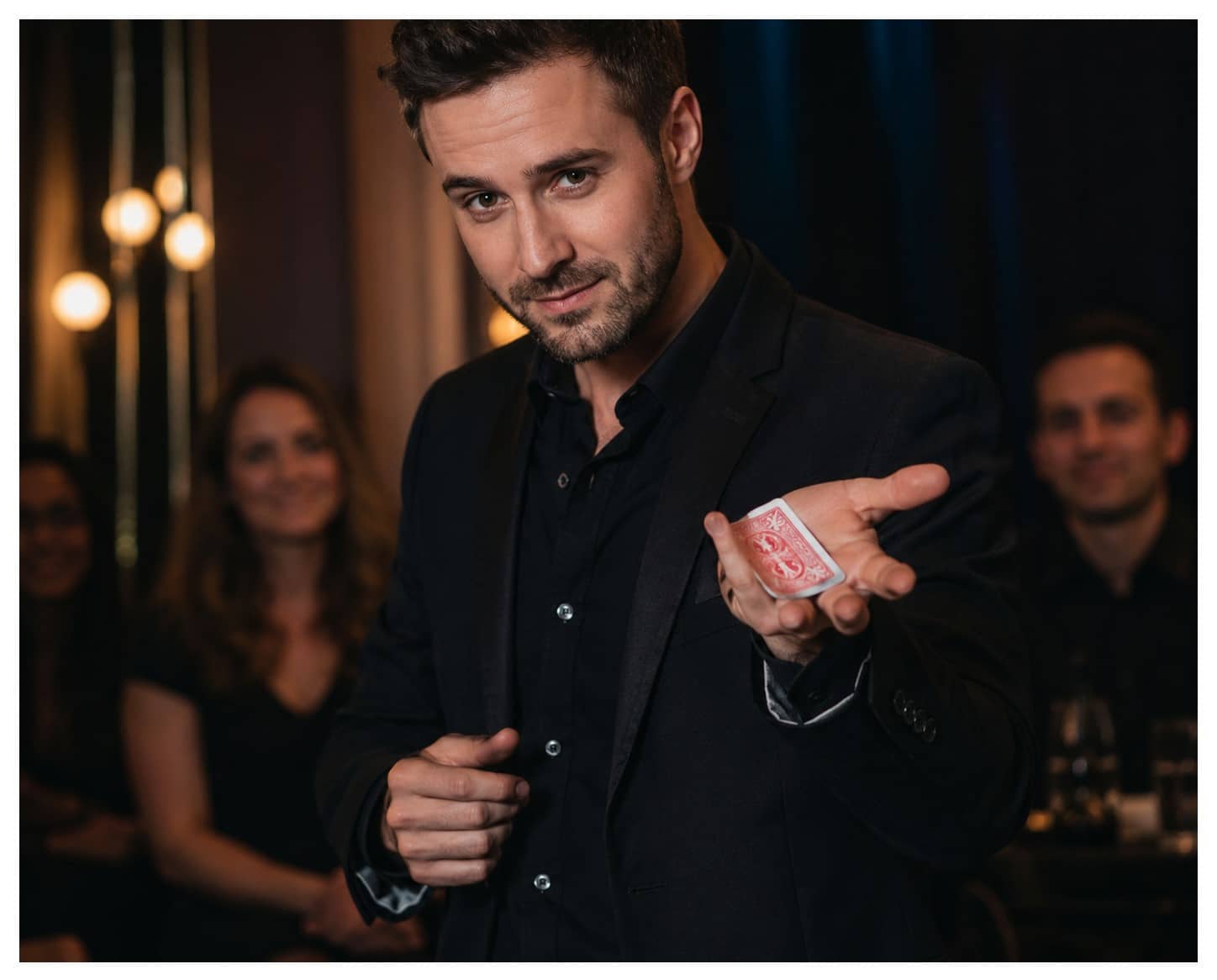
A magician makes eye contact with a spectator while performing a card trick, demonstrating how attention can be redirected through natural interaction and eye contact.
Here's something you may notice when watching an experienced close-up magician.
They may perform an action and then suddenly look at the spectator.
That isn't necessarily because they're checking whether you enjoyed the trick.
It can be part of the misdirection.
If I look at you, you are very likely to look back at me.
Human interaction is powerful.
If somebody speaks to you, you look at them.
If somebody looks directly into your eyes, you often respond.
This creates a tiny shift in attention.
And sometimes that's all a magician needs.
It doesn't take ten seconds.
It doesn't even necessarily take one second.
A fraction of a second can be enough.
This same principle is especially important in mind reading, where the magician often has to control attention and create the right psychological conditions for the effect to feel impossible.
The Secret Can Happen Before You Think It Does

A group of spectators watches in amazement as a magician performs close-up magic, illustrating how the secret behind an effect may happen before the audience realises the magical moment has arrived.
One of the cleverest aspects of magic is that the audience often assumes the secret happens at the moment the magical effect appears to occur.
But it doesn't have to.
A magician may secretly position an object much earlier.
They may prepare something before the audience realises it matters.
They may obtain information before the apparent miracle.
They may control a card long before it becomes important.
By the time the audience thinks:
“That's the moment it happened!”
the secret may already be finished.
This is another reason why simply watching closely isn't necessarily enough.
You're watching the wrong moment.
The Magician Controls the Story

Two spectators watch a magician perform close-up magic, illustrating how a magician can control the sequence of events, expectations and apparent magical moments throughout a performance.
Magic is not simply a collection of secret techniques.
It's a story.
The magician decides:
- What happens first.
- What happens next.
- What the audience expects.
- Which actions appear important.
- When the magical moment appears to occur.
- Where the audience believes the object has been.
- What they remember afterwards.
This is why presentation matters so much.
Two magicians can know exactly the same sleight of hand.
One can make it look miraculous.
The other can make it look like somebody desperately trying to find a pound coin under the sofa.
The difference isn't necessarily the technique.
It's the presentation.
This becomes particularly important when performing as an Oxford magician, because the presentation and interaction can be just as important as the sleight itself.
Why Sleight of Hand Needs Misdirection

A magician performs Three Card Monte using sleight of hand and misdirection, illustrating how physical technique and controlled attention work together to create an impossible effect.
Sleight of hand and misdirection often work together.
A sleight may allow the magician to secretly move, conceal or exchange an object.
Misdirection helps ensure that the audience doesn't recognise what has happened.
You can think of them as two parts of the same machine.
Sleight of hand provides the method.
Misdirection helps hide the method.
But there's an important point here.
A magician shouldn't rely entirely on misdirection to cover poor technique.
If a sleight is obvious, no amount of theatrical pointing is going to save it.
The secret movement needs to be convincing in its own right.
The cleaner the technique, the less misdirection may be required.
This is why experienced magicians spend countless hours practising apparently tiny movements.
A coin doesn't care how long you've been practising.
It will still fall on the floor.
Usually at the worst possible moment.
Misdirection Can Be Almost Invisible

Holly shows playing cards during a magic performance, illustrating how ordinary and natural actions can help conceal what is really happening during a trick.
The most effective misdirection often doesn't feel like anything.
There may be no dramatic gesture.
No shout.
No sudden movement.
No suspicious glance.
The magician simply behaves naturally.
That is what makes it so difficult to detect.
Imagine watching somebody put a playing card on a table.
Nothing unusual.
They pick up another card.
Nothing unusual.
They talk.
They smile.
They joke.
They ask you a question.
Everything appears normal.
And then suddenly the impossible happens.
That's when you start replaying the sequence in your head.
“Hang on… when did that happen?”
That's the point.
The magician has encouraged you to remember the whole sequence as ordinary.
That's one reason I enjoy performing as a Somerset magician: the best reactions often come when spectators have no idea that anything unusual has happened until the impossible moment arrives.
The Role of Memory in Magic

Two spectators show money during a close-up magic performance, illustrating how details from a magical experience can become part of what the audience remembers afterwards.
Misdirection doesn't only affect what you notice during a trick.
It can affect what you remember afterwards.
This is fascinating because spectators often reconstruct a trick based on their overall experience.
You might remember:
“I held the card the whole time.”
Perhaps you did.
But perhaps there was a moment when the magician took it back for two seconds.
You might remember:
“The coin never left my hand.”
Maybe it didn't.
But perhaps the magician secretly exchanged something else while your attention was elsewhere.
You remember the important parts.
The magician knows which parts you are likely to remember.
And that's part of constructing the effect.
Misdirection in Card Magic
 Playing cards are perfect for misdirection.
There are dozens of ways a magician can control attention during a card routine.
For example, the audience might be concentrating on:
- Their selected card.
- The deck.
- The magician's explanation.
- The position of a card.
- A prediction.
- Another spectator.
Meanwhile, something else may be happening.
A magician can also use repetition.
If the same action happens several times, the audience becomes accustomed to it.
That familiarity creates comfort.
Then the magician changes the action at exactly the right moment.
Because the movement looks familiar, the change can pass unnoticed.
This is one of the reasons repetition is so powerful in magic.
These same principles are particularly important in Three Card Monte, where misdirection, psychology and the spectator's assumptions can all be used to create the illusion that they know exactly where the winning card is.
Misdirection in Coin Magic
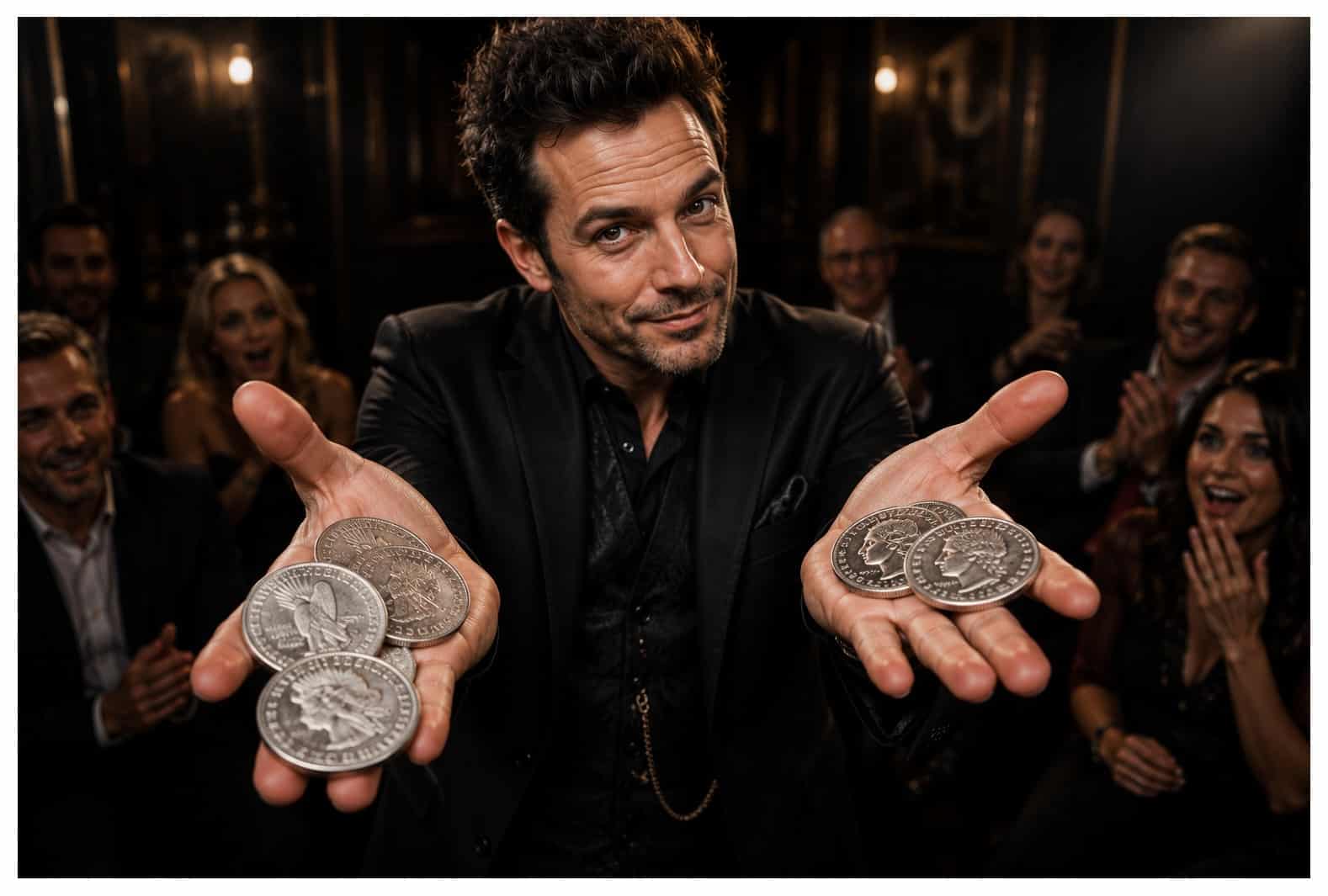
A magician performs a coin trick, demonstrating how movement, timing and controlled attention can be used together to create the illusion of a disappearing or moving coin.
Coins create a slightly different challenge.
They're small.
They're shiny.
And people love watching them.
If I put a coin in my hand and tell you to watch it, you probably will.
So the magician needs to understand how people perceive movement.
A moving object naturally attracts attention.
That means the magician can sometimes use one movement to hide another.
The eye follows movement.
But it doesn't necessarily follow every movement equally.
Large, natural movements can make smaller actions less noticeable.
And once again, timing matters.
The secret may happen when the audience believes the important action has already finished.
Misdirection With Borrowed Objects

Ordinary personal objects can become part of an apparently impossible magical effect.
Borrowed objects are particularly entertaining because they remove some of the audience's suspicion.
If you hand me your ring, your phone or a coin from your pocket, you know it is yours.
You know where it came from.
That gives you confidence.
And confidence is useful to the magician.
You may think:
“Well, there's no way he could have prepared my ring.”
Exactly.
So when something impossible happens with it, the effect becomes even stronger.
Misdirection helps the magician handle the object naturally while maintaining the impression that everything is happening spontaneously.
Why Close-Up Magic Is So Powerful
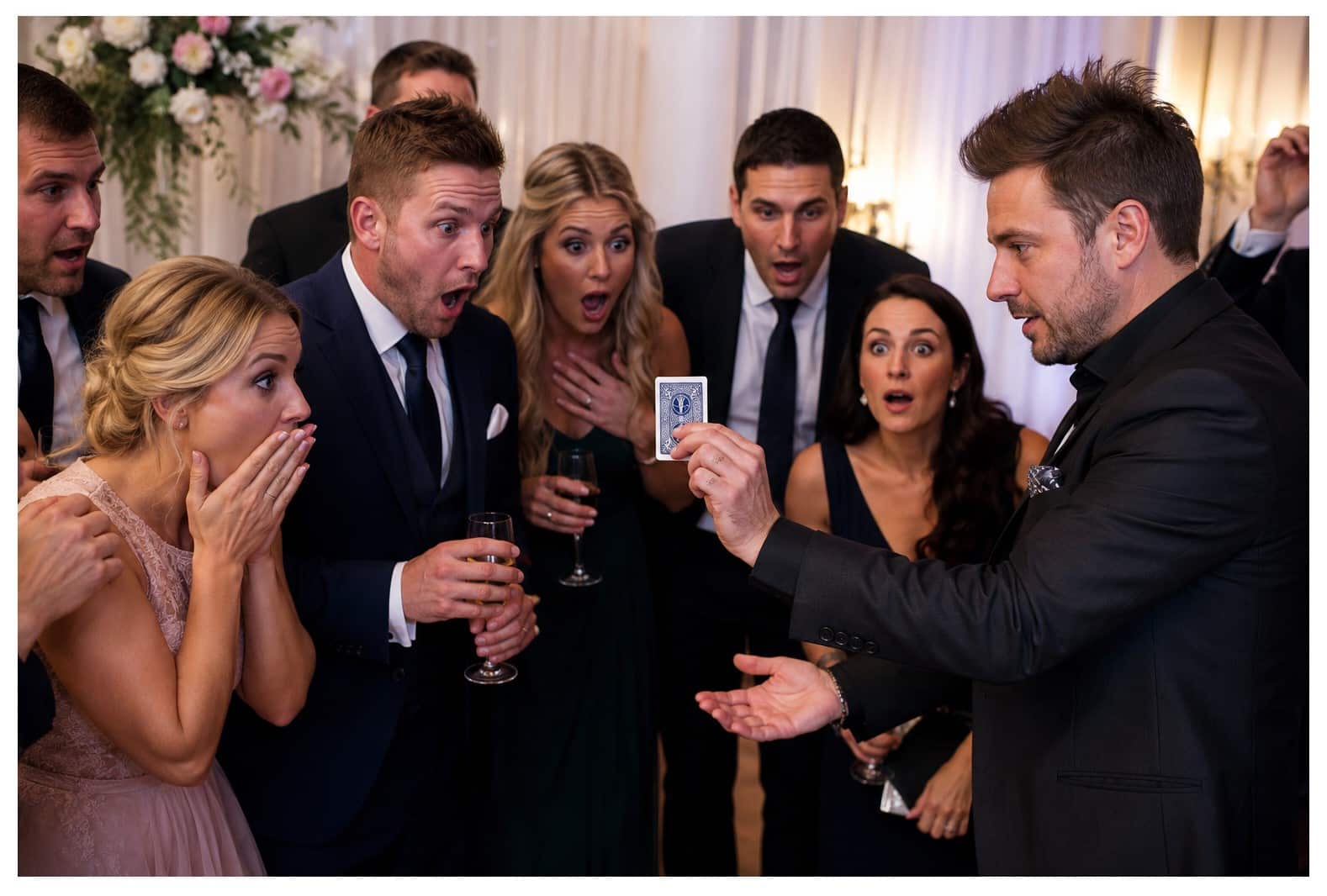
A magician performing at close range can create a personal and powerful experience for the audience.
Close-up magic brings misdirection right into the audience's personal space.
There is nowhere to hide.
You're not sitting fifty feet away watching a stage.
You're standing a few feet from the magician.
Sometimes you're holding the object or making the decisions.
Sometimes you're even holding the magician's hands.
And yet the magic can still happen.
That's why close-up magic fascinates me.
I've spent a quarter of a century working with cards, coins, borrowed objects, everyday items and psychological principles, and I still love the moment when somebody says:
“No. Do that again.”
That's magician language for:
“I have absolutely no idea what just happened and I'm not emotionally prepared to accept it.”
That interaction is also one of the reasons a magician can add real value to an event, beyond simply performing tricks.
Can You Beat a Magician by Watching More Carefully?
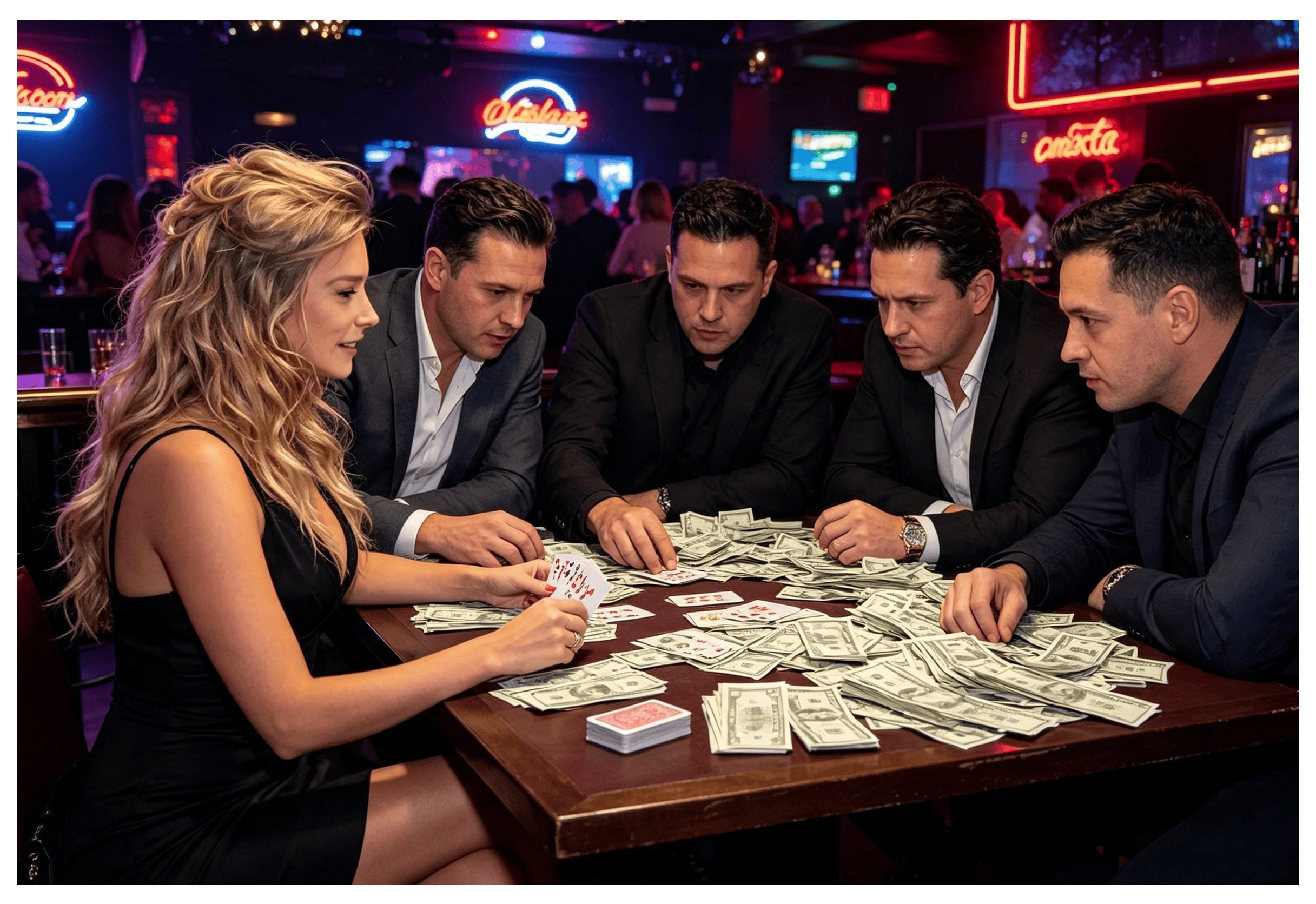
Holly fools a group of spectators during a close-up performance, illustrating how careful attention does not necessarily reveal the secret behind a magic trick.
This is one of the questions I get asked regularly.
People assume that if they watch closely enough, they'll catch the secret.
Unfortunately, it's not quite that simple.
Watching more carefully can actually make things worse.
Why?
Because the magician knows what you're watching.
If I know you're staring at my right hand, I can use that knowledge.
Your intense concentration becomes predictable.
And predictable attention can be exploited.
That's why some of the best magic happens when spectators are convinced they haven't looked away for even a second.
They haven't.
They just didn't understand what they were seeing.
Whether I'm performing as a Bath magician at a wedding, private party or corporate event, close-up magic works because the audience isn't simply watching — they're involved.
Misdirection Is About Making the Audience Feel Safe
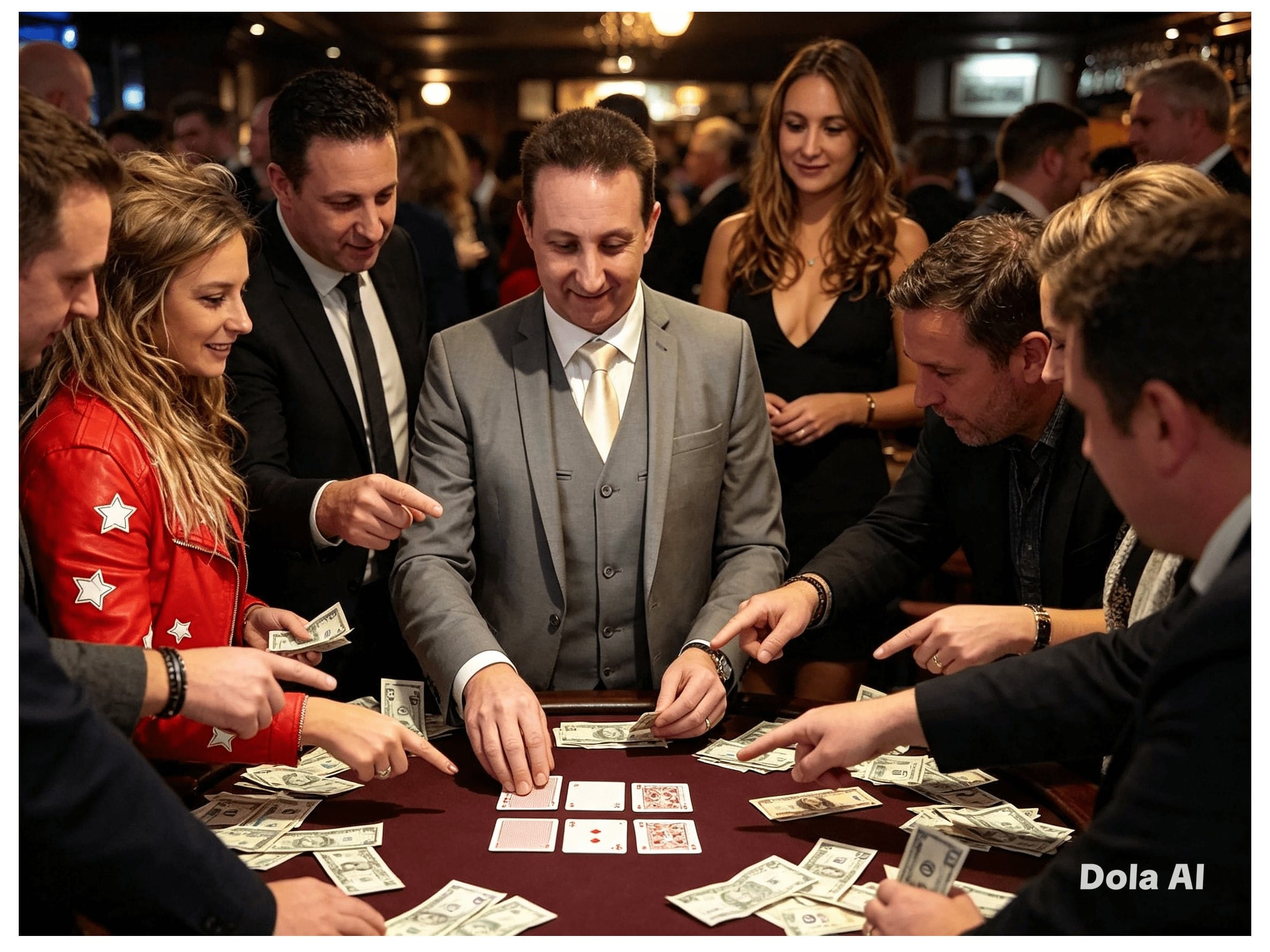
A magician performs a close-up trick for an engaged and relaxed audience, showing how a comfortable atmosphere can help spectators enjoy the experience without analysing every movement.
Another important element is trust.
A good magician doesn't want the audience feeling as though they're being attacked by deception.
The experience should be enjoyable.
You want people to relax.
You want them to laugh.
You want them to feel involved.
And when people are relaxed, they naturally behave differently from someone trying desperately to catch a criminal.
If you're enjoying yourself, you aren't analysing every finger movement.
You're participating.
You're reacting.
You're laughing.
You're answering questions.
You're experiencing the story.
That creates opportunities for misdirection.
Why Experienced Magicians Make It Look Easy

An experienced magician performs Three Card Monte with a relaxed and confident manner, illustrating how practice allows complex techniques to look natural and effortless.
A professional magician can sometimes perform a technique while talking to someone, making eye contact, moving naturally and thinking about what comes next.
That doesn't happen by accident.
It's the result of practice.
When a sleight is new, the magician has to concentrate on every part of it.
Eventually the movements become more natural.
The magician can then concentrate on presentation, timing and audience management.
That's when misdirection becomes much more powerful.
The audience isn't watching someone desperately trying to execute a secret move.
They're watching someone who appears completely relaxed.
And relaxed is convincing.
That level of natural performance comes from years of working with real audiences in different situations. I've performed at a huge variety of events and venues across the South West, and each environment teaches you something different about timing, interaction and audience management.
Misdirection Doesn't Always Mean Deception

How misdirection is part of the entertaining interaction between magician and audience rather than simply deception.
There's also something important to understand about the word deception.
In magic, deception is part of the agreed game.
You know I'm trying to fool you.
I know you're trying to catch me.
That's what makes it fun.
It's rather like a game of chess.
Except in chess, the other person knows exactly what your pieces are doing.
In magic, I'm hoping you don't.
And if I fool you, I haven't cheated.
I've done my job.
Can Misdirection Be Used Without Talking?
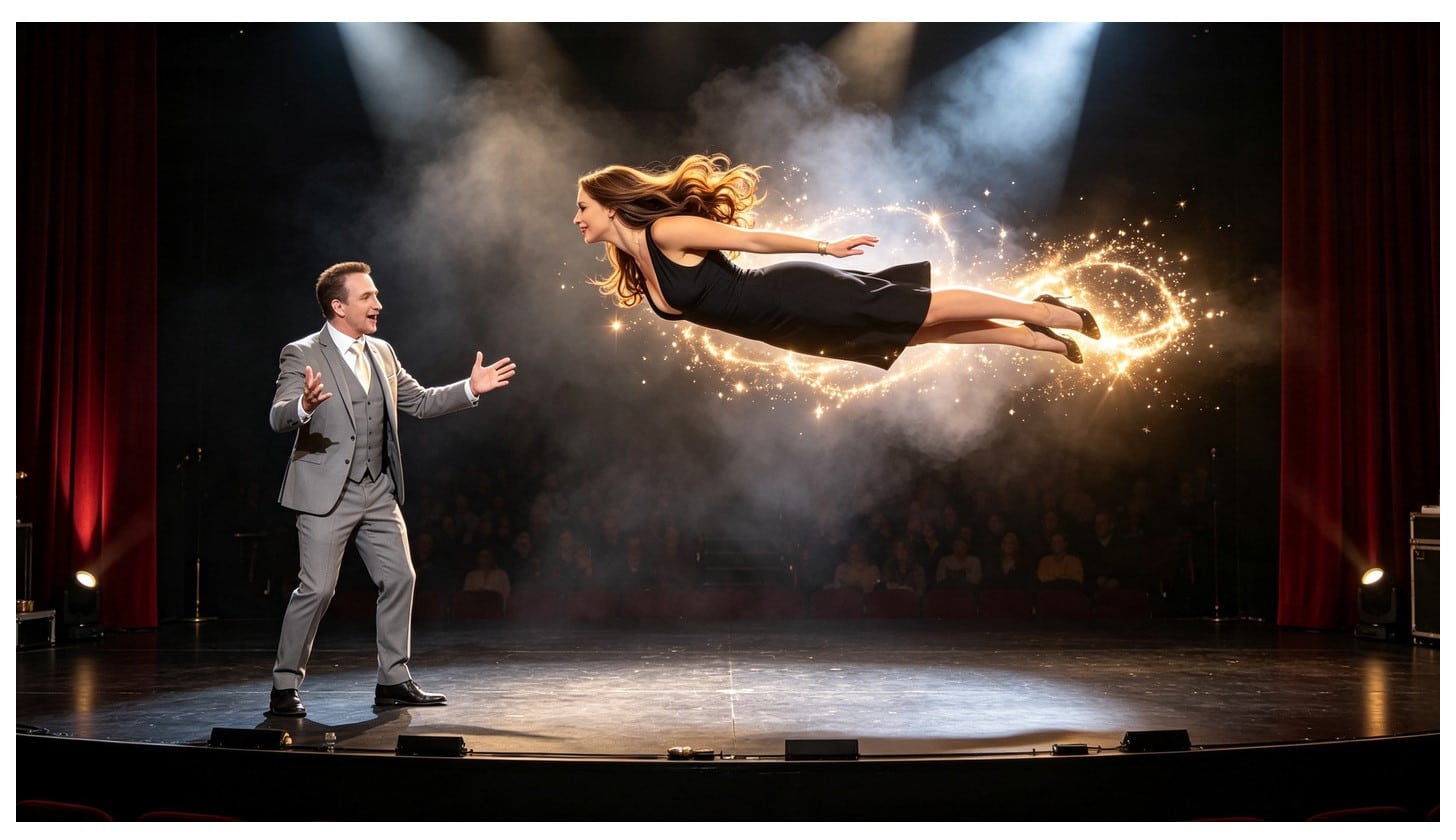
A magician performs a stage illusion without speaking, using movement, timing and music to create the magical experience without relying on spoken words.
Absolutely.
A magician can use:
- Eye contact.
- Body position.
- Gestures.
- Movement.
- Silence.
- Facial expressions.
- Rhythm.
- Timing.
- Where an object is placed.
- Where the magician stands.
In fact, silence can sometimes be incredibly powerful.
If I suddenly stop talking, you may instinctively pay closer attention.
That change in rhythm can itself become a form of attention control.
The magician is effectively conducting the audience.
Not with a baton.
With behaviour.
The Difference Between Good and Bad Misdirection

A comparison between professional and amateur magic performance, illustrating how experienced magicians use natural movement and subtle misdirection rather than obvious distractions.
Bad misdirection feels obvious.
The magician suddenly makes a huge gesture.
They tell you where to look.
They behave strangely.
You immediately think:
“Something is happening while he's doing that.”
Good misdirection feels natural.
You don't notice that your attention has been controlled.
You simply experience the effect.
That's the real skill.
The audience shouldn't leave thinking:
“What a clever piece of misdirection.”
They should leave thinking:
“How the hell did he do that?”
That's a much better result.
Why Magicians Study Psychology
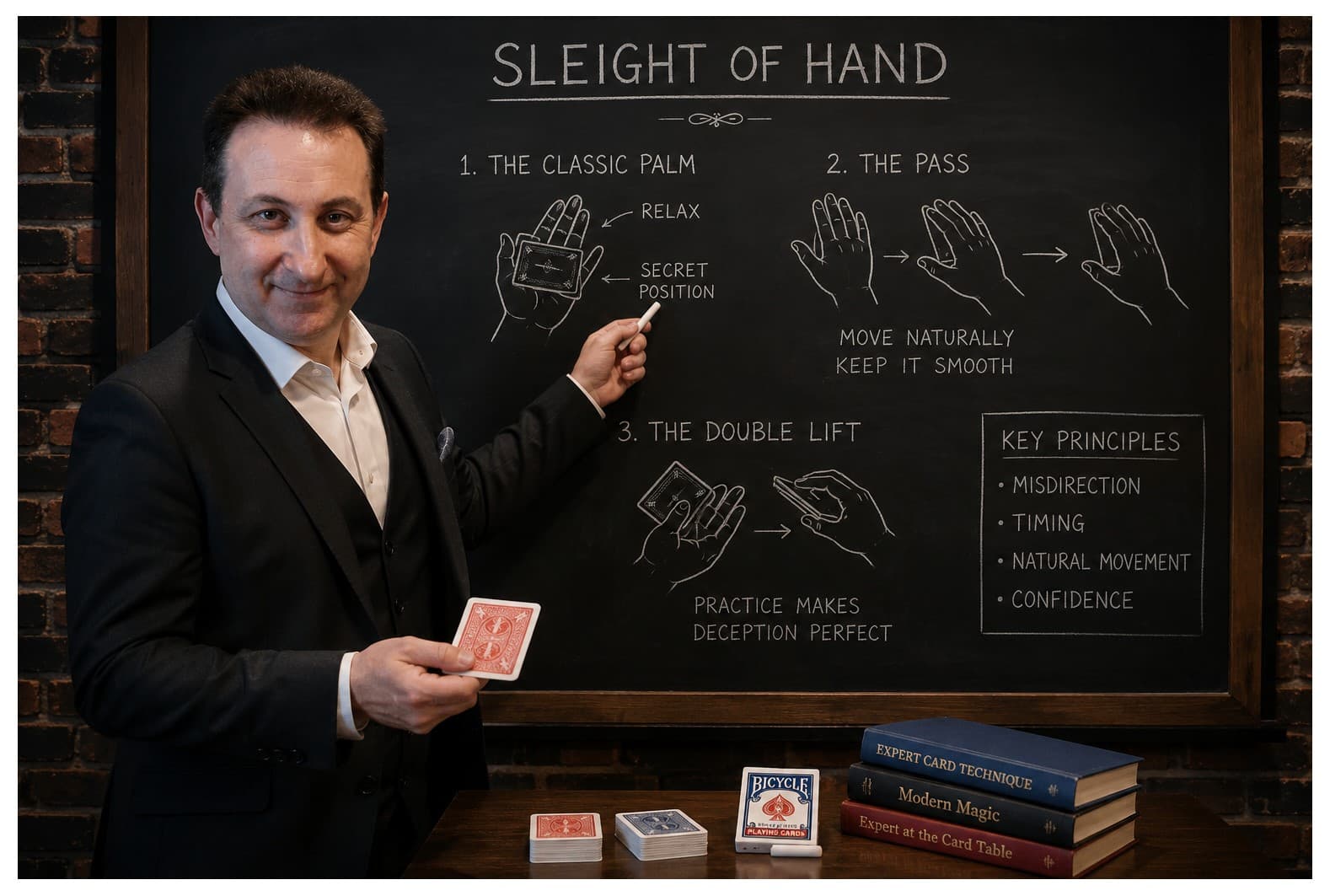 You don't need to be a psychologist to perform magic. But understanding psychology in magic and how people behave is incredibly useful.
But understanding how people behave is incredibly useful.
Magicians learn through experience that people tend to:
- Follow movement.
- Follow eye contact.
- Trust familiar actions.
- Make assumptions.
- Look where they're told.
- Ignore apparently unimportant actions.
- Remember events selectively.
- Expect patterns to continue.
- Concentrate on things they believe are important.
None of these behaviours are weaknesses.
They're normal human behaviour.
The magician simply knows how to build a performance around them.
The Audience Is Part of the Secret
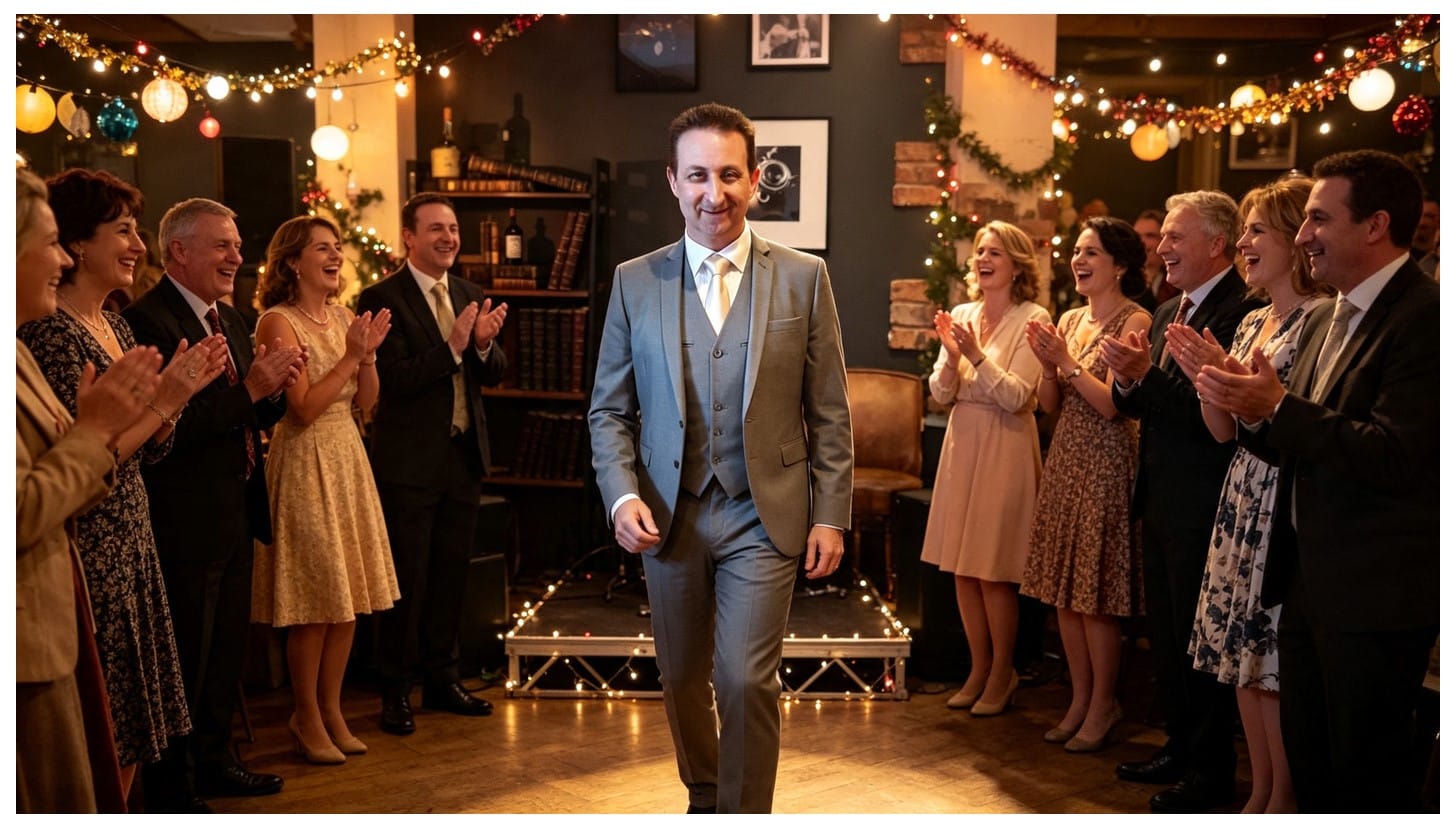
A magician moves among spectators during an interactive magic performance, showing how the audience's attention, reactions and participation can become an important part of the magic.
This may be the most surprising thing about misdirection.
The audience isn't merely watching the trick.
The audience is helping create it.
Your attention.
Your expectations.
Your assumptions.
Your reactions.
Your decisions.
Your memory.
All of these become part of the performance.
That's why the same trick can feel completely different with two different people.
One person might stare at the magician's hands.
Another might watch their face.
Someone else might be laughing so much they miss half the trick.
And occasionally there's that one person who watches everything with the intensity of a security guard at a bank.
I like those people.
They keep me honest.
They also make me work harder.
That's particularly true when performing as a Cotswolds magician, where intimate weddings, private celebrations and smaller gatherings can create incredibly personal magical experiences.
Can You Learn Misdirection?

Magician Andy Field reads a book about magic, representing the study and practice involved in learning misdirection, audience management and the psychology behind magical performance.
Yes.
But learning misdirection isn't simply learning a list of things to do.
It's about understanding people.
A magician needs to learn:
What are they watching?
Why are they watching it?
What do they expect to happen next?
When does their attention naturally change?
Which movements look normal?
Which movements look suspicious?
And perhaps most importantly:
What does the audience think the trick is about?
Once you understand those questions, you can begin designing magic rather than simply performing tricks.
Misdirection and the Art of Making Magic Impossible
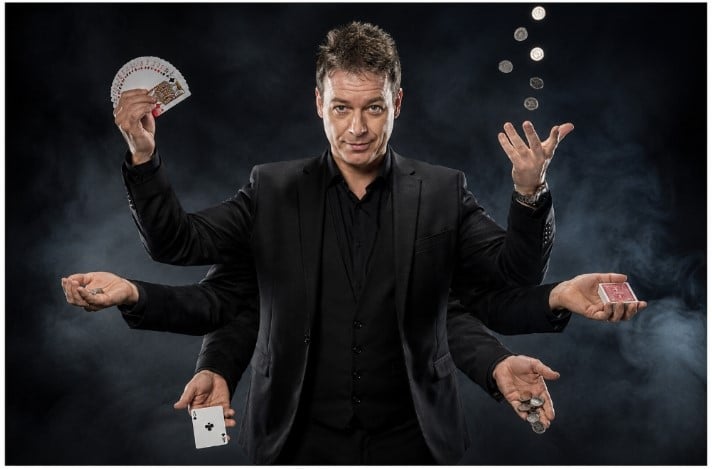 Ultimately, the magician's goal isn't to hide every secret movement.
That's impossible.
People see far more than magicians sometimes realise.
The goal is to make what they see mean something different.
You can watch a magician's hand move.
You can see the movement.
You can even describe it afterwards.
But if you've interpreted that movement incorrectly, you still haven't discovered the secret.
That's the real power of misdirection.
It isn't necessarily about hiding reality.
It's about controlling the story your brain creates from reality.
And that is considerably more interesting than simply saying:
“Look over there!”
How Misdirection Fits Into Close-Up Magic

Andy Field performs close-up magic for two amazed spectators, demonstrating how misdirection, timing, psychology and audience interaction work together in an intimate magic performance.
Close-up magic combines sleight of hand, psychology, presentation, timing and audience interaction.
If you're considering hiring a professional magician for an event, my complete guide to hiring a magician explains what to look for, the different types of magic available and how to choose the right performer for your occasion.
Misdirection is one of the threads running through all of those elements.
It's particularly important when performing magic with playing cards, coins and borrowed objects because the audience is often only inches away from the action.
I've also written about Sleight of Hand Explained, which looks more closely at the physical skill behind many magical effects.
The two subjects overlap, but they aren't the same.
Misdirection is about what the audience perceives.
When the two are combined properly, something rather wonderful happens.
The method disappears.
And all that's left is the impossible.
There is also a fascinating middle ground between intimate close-up magic and a traditional stage show.
Parlour magic allows a magician to perform for a slightly larger group while keeping the interaction, personality and sleight of hand that make close-up magic so engaging..
These principles are particularly useful at business events, where people are talking, moving around and interacting with one another.
Frequently Asked Questions About Misdirection in Magic
What is misdirection in magic?
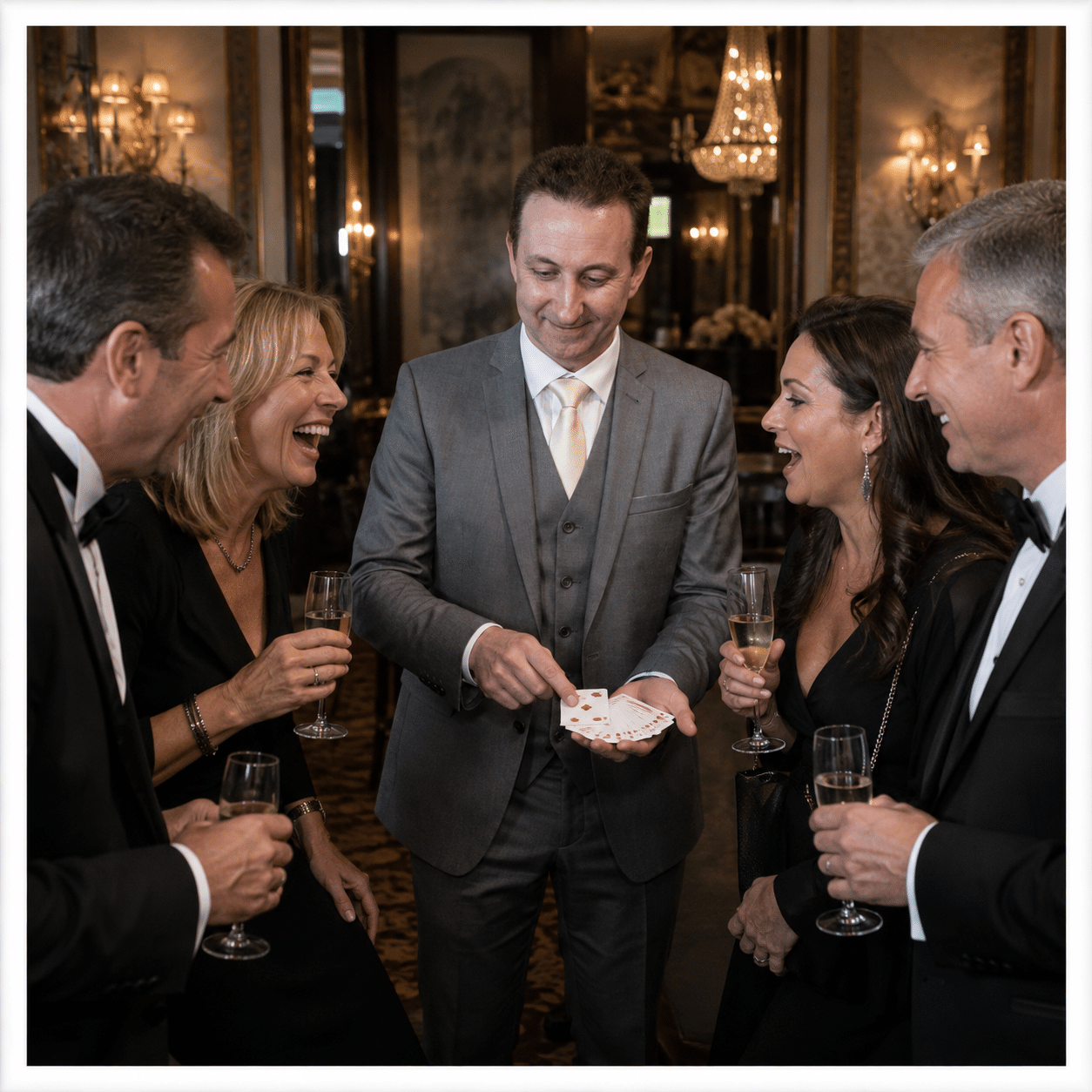 Misdirection is the use of attention, timing, psychology, movement, speech and expectation to influence what an audience notices and how they interpret what they see.
It doesn't necessarily mean making somebody look away.
Often, the magician allows the audience to look directly at the action while encouraging them to interpret it incorrectly.
Is misdirection the same as distraction?
No.
Distraction is one form of misdirection, but misdirection is much broader.
A distraction deliberately takes attention away from something.
Misdirection can instead direct attention towards something that appears important while the secret happens elsewhere or at another time.
Does misdirection mean telling the audience to look somewhere else?
 Not necessarily.
In sophisticated close-up magic, the magician may never tell the audience where to look.
Eye contact, speech, natural movement, timing and expectation can influence attention without the spectator realising it.
Why does misdirection work?
Misdirection works partly because human attention is selective.
We don't consciously process everything we see.
Our brains constantly filter information and decide what appears important.
Magicians can construct routines that take advantage of those normal processes.
Can you see the secret and still miss it?
 Yes.
Yes.
This is one of the most interesting aspects of magic.
You can physically see an action without understanding its significance.
The magician may make an important action appear ordinary, causing the audience to overlook it even though their eyes were looking in the correct direction.
Do professional magicians use psychology?
Yes.
Although magic isn't necessarily about academic psychology, professional performers use knowledge gained from experience about attention, expectation, body language, timing and human behaviour.
Is misdirection important in close-up magic?
 Extremely.
Close-up magic takes place at close range, often involving cards, coins, rings and borrowed objects.
Because the audience is so close, controlling attention and perception becomes particularly important.
Can you learn misdirection?
Yes.
A magician can study attention, timing, audience management and presentation, while developing the sleight-of-hand skills needed to perform the actual techniques.
However, effective misdirection comes from understanding why an audience is watching something, not simply memorising a collection of gestures.
Final Thoughts: The Real Secret of Misdirection

Holly and Lisa perform a Three Card Monte game for a group of men, illustrating how misdirection, psychology and carefully controlled attention can make a seemingly simple card game so fascinating.
Misdirection is one of the most fascinating parts of magic because it demonstrates something we experience every day without thinking about it:
Seeing isn't always believing.
Your eyes can be open.
You can be concentrating.
You can be standing inches away.
You can even be holding the object yourself.
And you can still completely miss what's happening.
That's not because you're stupid.
It's because you're human.
And that's exactly what a good magician understands.
After a quarter of a century of performing magic, I've learned that the most memorable moments aren't necessarily the tricks involving the biggest props or the most complicated techniques.
Sometimes it's a borrowed coin.
A playing card.
A ring.
A simple question.
A moment of eye contact.
And then suddenly something impossible has happened.
You look at me.
I look at you.
You say:
“I was watching your hands!”
And I say:
“I know.”
That's misdirection.
And that's why good magic can be so wonderfully frustrating.
You didn't look away.
You didn't blink.
You didn't miss anything.
You just didn't see the secret hiding in plain sight.
About Andy Field
 Andy Field is a professional close-up magician specialising in close-up magic, sleight of hand, mind reading and interactive magic for weddings, parties, corporate events, restaurants and private functions.
With a quarter of a century of experience, Andy has performed for audiences throughout the UK and has built a reputation for entertaining people at close quarters with magic involving playing cards, coins, rings, borrowed objects and everyday items.
His online performances have received more than 20 million views, while he has received hundreds of recommendations from people who have experienced his magic at events.
Andy has also been a SAMS Champion of Close-Up Magic and has been consulted by the BBC for Hustle.
If you'd like a magician who doesn't simply perform tricks but gets people involved in the magic, Andy Field can bring close-up magic, sleight of hand and mind reading to your next event.
Andy Field Magician Service Areas
I regularly provide professional close-up magic for weddings, parties, corporate events and special occasions across the South West and surrounding areas. You can find more information about my magician services in the following locations:
- Bristol Magician
- Gloucester Magician
- Cheltenham Magician
- Swindon Magician
- Somerset Magician
- Magician Oxford
- Magician Bath
- Magician Cotswolds
Explore More About Magic
Book a UK Magician
I'm fortunate that I don't have to rely on magic to pay the bills. This means I don't need to charge inflated Saturday-night fees. I can concentrate on what I really enjoy — performing powerful, entertaining magic — while keeping my prices competitive.