Money Magic: The Art of Making Coins and Banknotes Do the Impossible

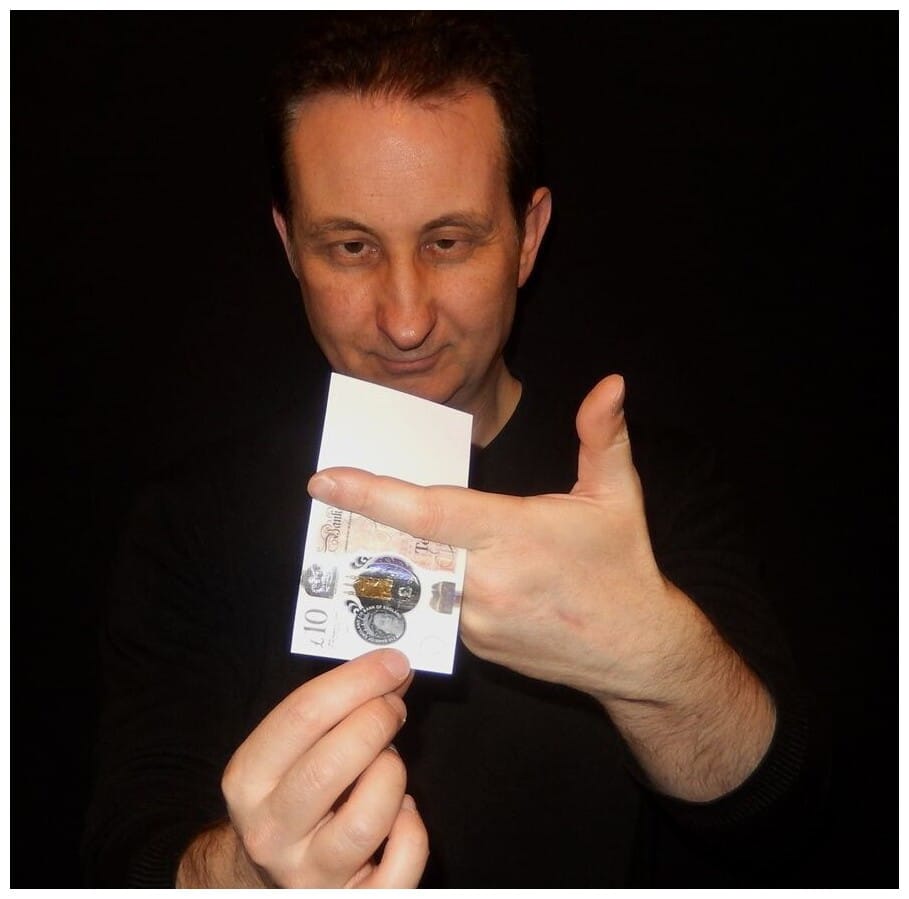
Andy Field is a professional close-up magician with more than a quarter of a century of experience performing close up magic at weddings, parties, corporate events and private celebrations. He has performed at more than 1,000 weddings and is a two-time S.A.M.S. Champion of Close-Up Magic with more than 20,000,000 views on his YouTube and an array of Google reviews.
Money Magic With Coins and Banknotes
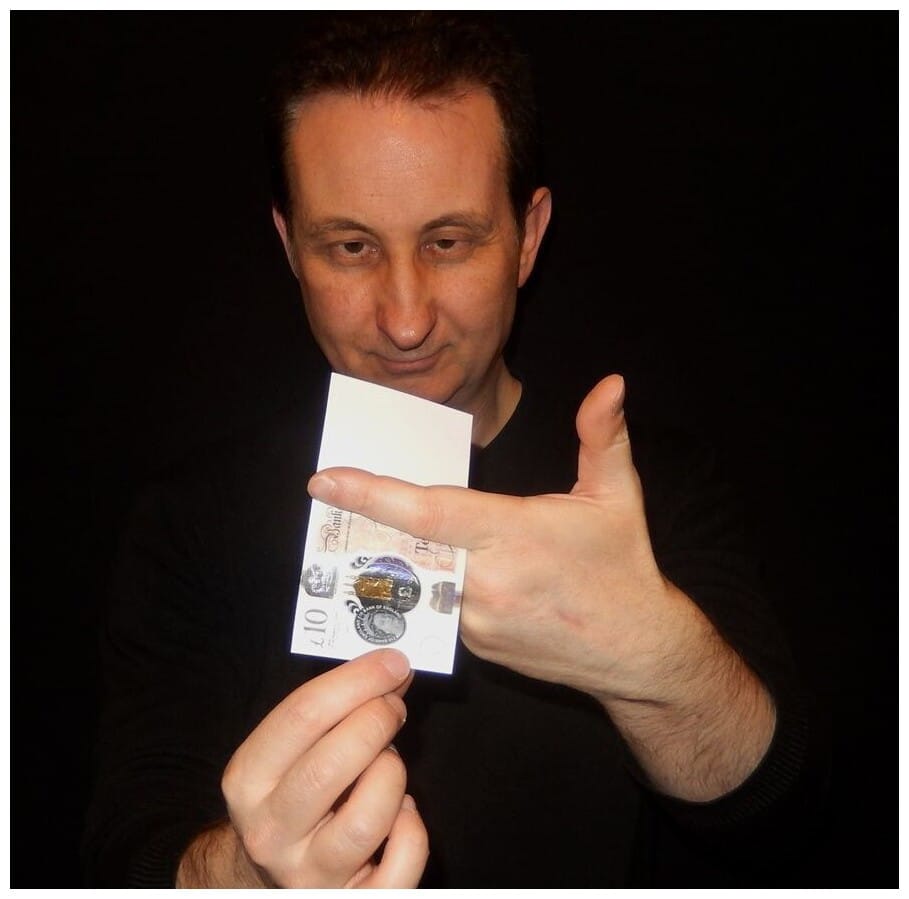
Andy Field practising sleight of hand with a banknote.
Money is something we handle almost every day. We put coins in our pockets, take banknotes out of our wallets and use them to pay for things.
We understand how money works, where it belongs and what should happen when we hand it to somebody.
But give a magician a coin or a banknote and the rules suddenly seem to change.
A coin disappears from an empty hand. A banknote changes denomination. Money travels from one place to another without any apparent explanation. Sometimes a borrowed coin can even appear somewhere it absolutely should not be.
I'm Andy Field, a professional close-up magician with a quarter of a century of experience, specialising in sleight of hand, close-up magic and mind reading.
I've performed at thousands of weddings, parties, corporate events and private functions, entertaining people at close quarters with magic involving playing cards, coins, borrowed objects and everyday items.
My performances have received millions of views online, I've received hundreds of recommendations from clients, and I've also been consulted by the BBC for Hustle.
One of the things I particularly enjoy about close-up magic is taking something completely ordinary and making it appear extraordinary.
And money is perfect for that.
After all, everybody knows what a coin looks like. Everybody understands what a banknote is. There is no complicated prop to explain and no elaborate piece of equipment to introduce.
It's just money.
Yet somehow, in the magician's hands, it can become impossible.
What Is Money Magic?
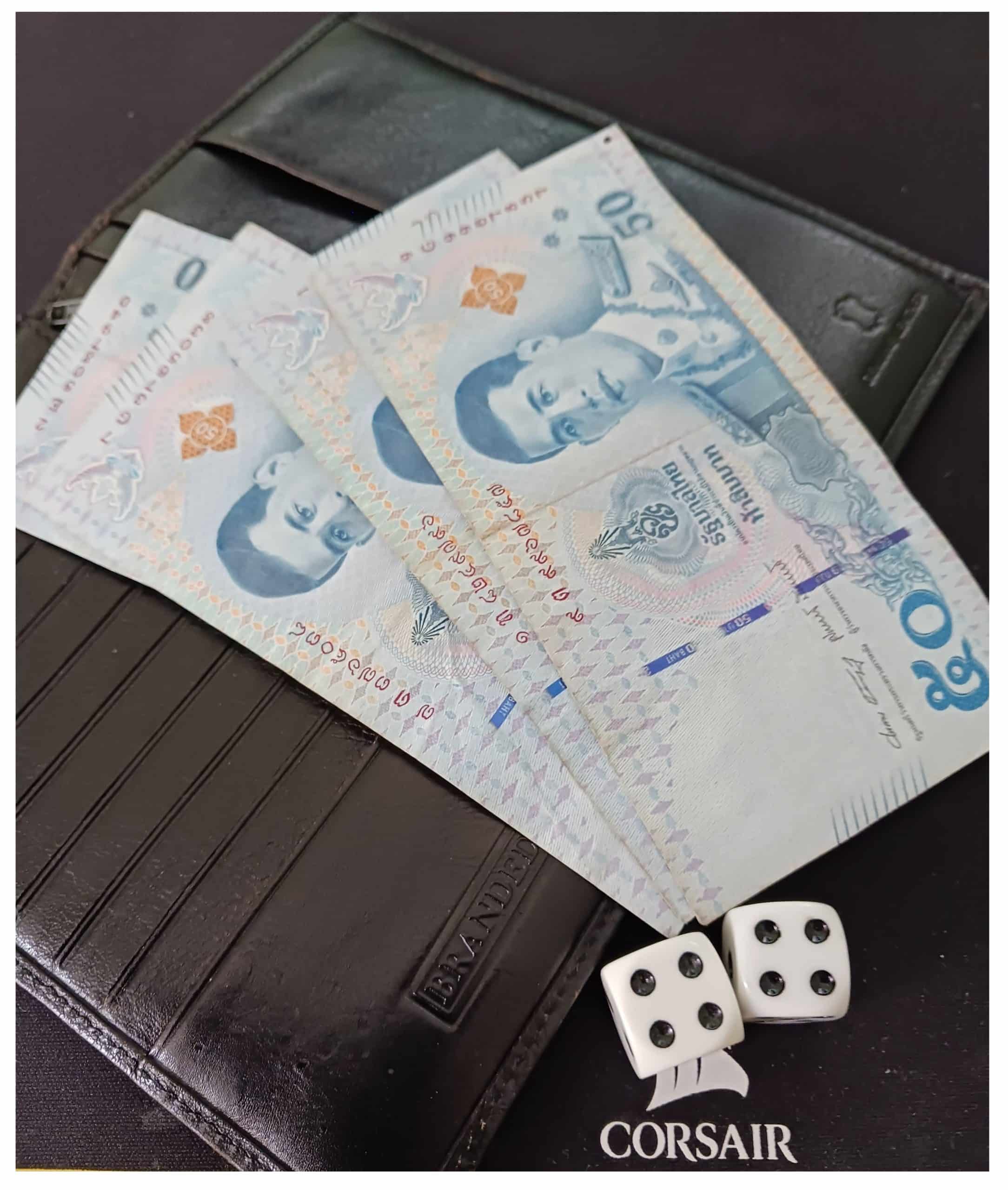
An assortment of coins and banknotes illustrating money magic.
Money magic is a form of magic that uses coins, banknotes and sometimes other forms of currency to create apparently impossible effects.
It can involve:
- Coins appearing from nowhere.
- Coins disappearing from someone's hand.
- Money travelling between the magician's hands.
- A banknote changing into a different denomination.
- Borrowed money appearing in an unexpected location.
- Coins passing through apparently solid objects.
- A signed banknote reappearing somewhere impossible.
- Several coins appearing from an apparently empty hand.
Some money magic is incredibly visual. Other effects rely on psychology, timing and the spectator's expectations.
The beauty of using money is that the audience already understands the object.
If I produce a silver coin from an apparently empty hand, you immediately understand what has happened — or, more accurately, what you think has happened.
You don't need to learn the rules of an imaginary game or understand an unusual prop.
You simply see a coin.
Then it disappears.
And that's rather difficult to explain.
Money magic is closely connected to close-up magic, because coins and banknotes can be examined, handled and experienced at very close range.
Why Money Is Such a Good Subject for Magic

Coins and banknotes make excellent subjects for magic tricks because they are familiar everyday objects.
One of the reasons money works so well in magic is familiarity.
People handle coins and banknotes all the time. They know their size, weight, appearance and purpose.
A magician doesn't have to convince you that a coin is a coin.
You already know.
That familiarity creates an interesting situation.
When somebody shows you an ordinary coin and then makes it disappear, you don't immediately assume that the coin was an unusual magical object.
You assume it was a normal coin.
And that makes the effect more convincing.
There is also something rather personal about money.
If I borrow a coin from you, it belongs to you. You know where it came from. You know that you handed it to me.
If something impossible happens with it, the experience can feel much stronger than watching a magician produce an unfamiliar object.
The money has a connection to you.
It isn't simply a prop.
It's your coin.
This is particularly useful in close-up magic because the audience can become directly involved in the effect.
The spectator isn't just watching something happen from a distance. They may be holding the coin, choosing a banknote or deciding where the money should go.
And when the impossible happens, they have a personal reason to remember it.
The Disappearing Coin
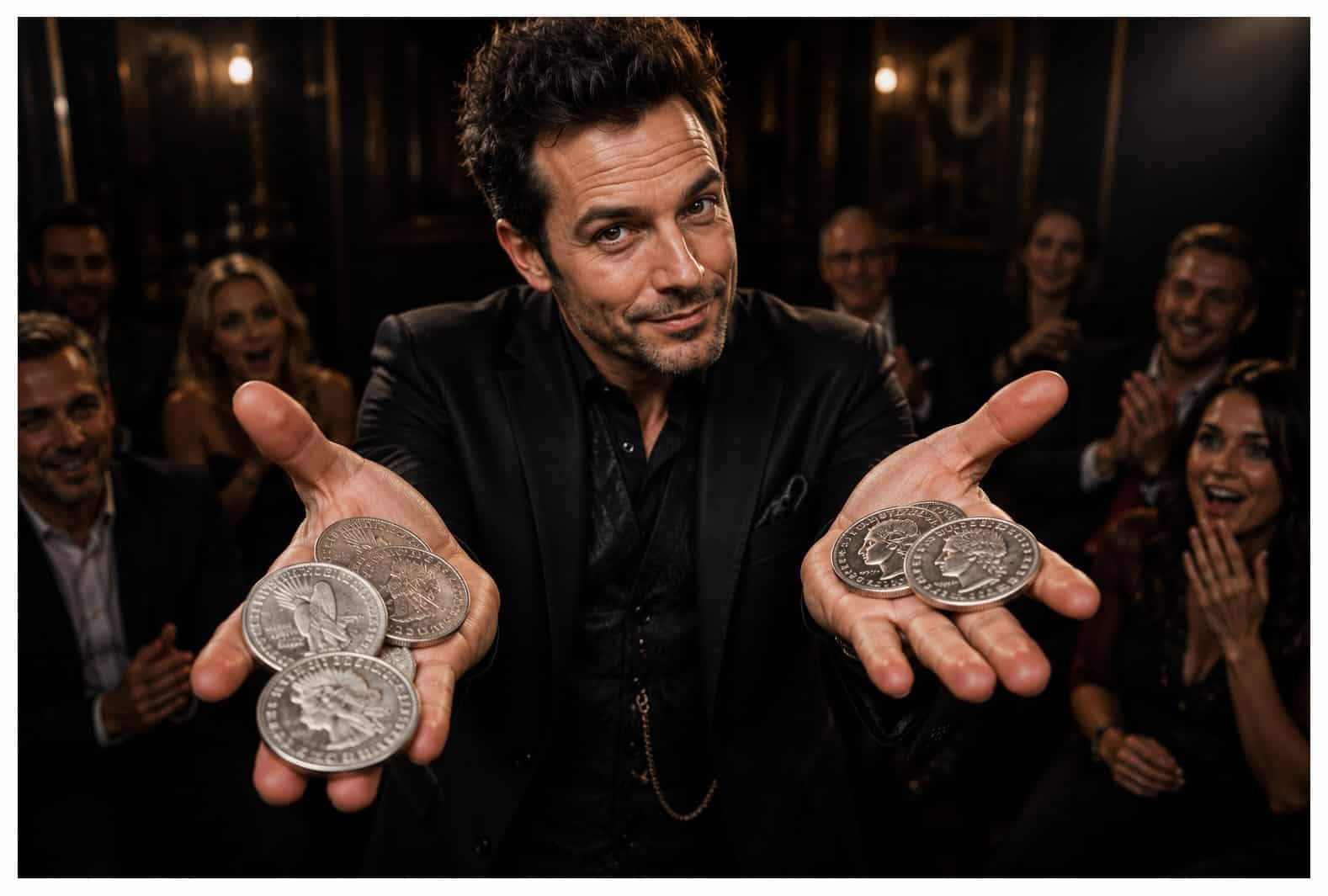
The disappearing coin is one of the classic effects in money magic.
The disappearing coin is probably one of the most recognisable examples of money magic.
A magician shows a coin, places it into one hand and closes their fingers.
The other hand may make a gesture, perhaps a little magical wave or an apparently innocent movement.
The magician opens their hand.
The coin has vanished.
Simple.
Except, of course, it isn't.
The interesting part is that the audience believes they know exactly where the coin should be.
They watched it being placed into the hand. They saw the fingers close. They have a clear mental picture of the coin's location.
When the hand opens and the coin is gone, that picture suddenly makes no sense.
The secret behind a disappearing coin can involve a variety of techniques, including concealment, false transfers and carefully timed movements.
However, the physical technique is only part of the effect.
The magician also has to make the actions look natural.
If the hand movements appear suspicious, the audience may become aware that something is happening.
The aim is to create a sequence that feels completely ordinary until the moment the coin disappears.
This is where experience matters.
A magician may spend countless hours practising a movement that lasts less than a second. The audience should never feel that they are watching somebody struggling to perform a difficult technique.
They should simply see a coin.
And then nothing.
How Do Magicians Make Coins Disappear?
Making money disappear is one of the classic effects in close-up magic.
There isn't one single method.
Different coin effects use different techniques, depending on the desired outcome.
Some rely on a coin being secretly retained in the hand. Others involve transferring an object without the audience recognising that the transfer has taken place.
A magician may also use natural movements to conceal what is happening.
For example, imagine somebody placing a coin into their left hand.
You naturally expect the coin to remain there.
If the magician performs a convincing movement that appears to place the coin in that hand, your brain may accept the action without questioning it.
The interesting part is that you don't necessarily need to look away.
You might be watching the hands throughout.
The secret is in how you interpret the movement.
This is where misdirection in magic becomes important. Misdirection isn't simply about making somebody look in the wrong direction. It involves influencing what the audience notices, expects and believes they have seen.
A good coin magician understands that the audience is not a video camera recording every movement.
People interpret what they see.
And that interpretation can be influenced.
Coin Magic and Sleight of Hand
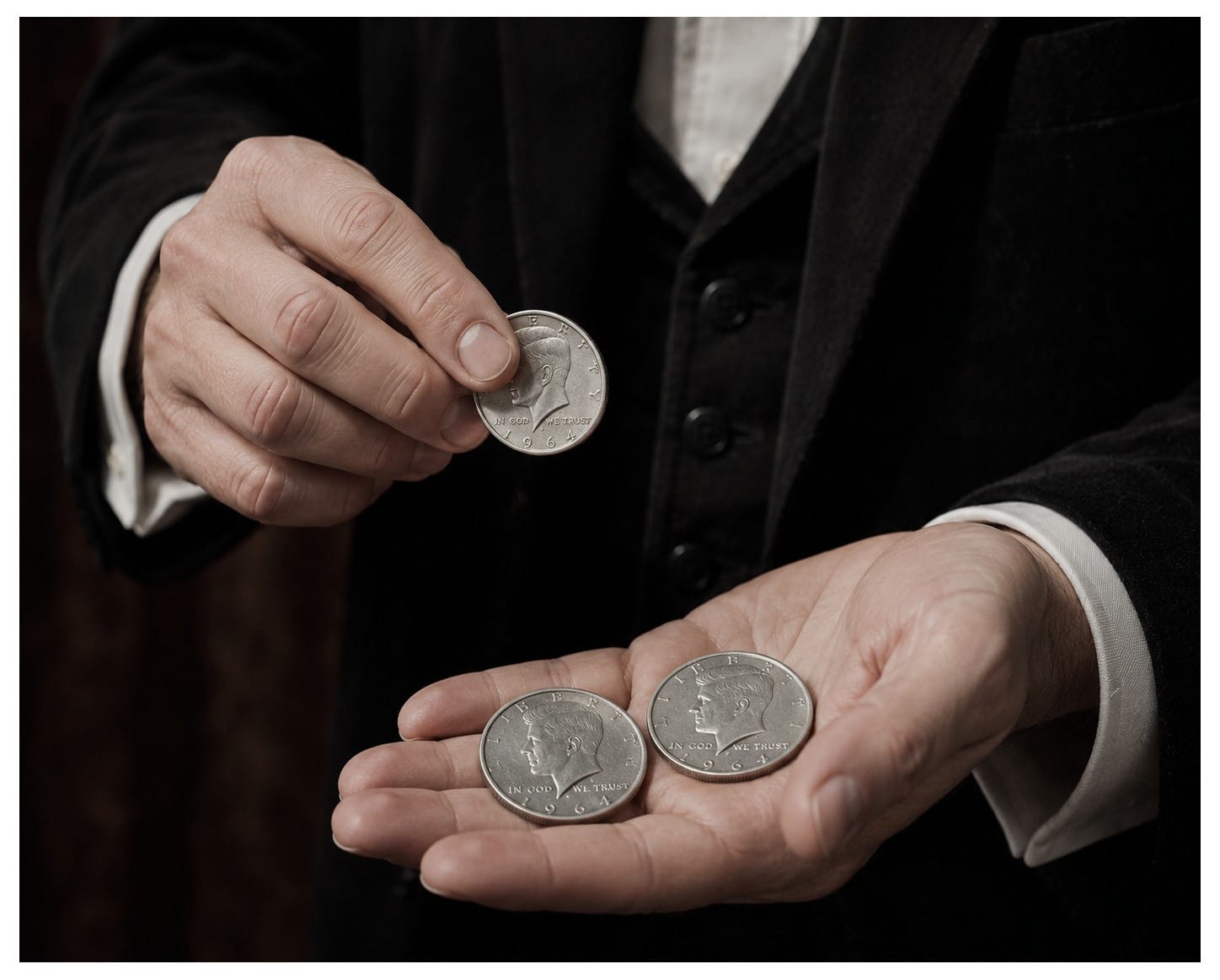
Coin magic relies on skill, precision and sleight of hand to create seemingly impossible effects.
Coin magic requires considerable physical skill.
Coins are small, which makes them particularly challenging to handle secretly.
A movement that looks perfectly natural to the magician can appear suspicious to somebody standing just a few feet away.
This is why sleight of hand is so important.
Sleight of hand involves techniques that allow magicians to secretly conceal, transfer, control or manipulate objects.
With coins, these techniques can include:
- Concealing a coin in the hand.
- Secretly transferring a coin between hands.
- Making an empty hand appear to contain something.
- Making a hand appear empty when it isn't.
- Controlling the position of a coin during a sequence.
- Producing a coin from an apparently impossible location.
The difficulty isn't simply learning the mechanics.
It's making the mechanics look completely natural.
A beginner might concentrate so hard on performing a secret movement that the rest of their body becomes stiff and unnatural.
An experienced performer has learned to make the action part of an ordinary sequence of movements.
That's one reason I always emphasise that sleight of hand is about far more than moving your fingers quickly.
The audience should be enjoying a performance, not watching somebody demonstrate how quickly they can move their hands.
Banknote Magic: When Money Changes in Front of Your Eyes

Banknotes offer exciting possibilities for money magic.
Coins aren't the only form of money that works beautifully in magic.
Banknotes offer a completely different set of possibilities.
Imagine showing somebody a £5 note.
You hold it between your fingers, perhaps fold it once or twice, and then unfold it.
It's now a £20 note.
The audience has watched the money throughout.
Or perhaps a banknote is folded, placed into somebody's hand and apparently transformed into something else.
The visual nature of banknote magic makes it particularly effective.
A banknote has a recognisable design, colour and denomination. When that denomination changes, the audience immediately understands the significance.
There is also a wonderful sense of humour available.
Imagine borrowing a £10 note and apparently turning it into a much larger amount.
The spectator might be delighted.
Until you explain that you would be happy to keep the difference.
Suddenly the magic becomes a rather less attractive financial arrangement.
Banknote magic can involve visual transformations, switches, folds, predictions and other techniques.
The secret may be physical, psychological or a combination of both.
As with coin magic, the quality of the performance depends on making everything appear natural.
Can a Magician Borrow Your Money?

A close-up magician borrows a spectator's banknote to perform an entertaining money magic trick.
Absolutely.
Borrowed money can make a magical effect particularly memorable because the spectator knows the object is theirs.
There is a difference between watching a magician perform with their own coin and watching them perform with something you have just taken from your wallet.
The second situation feels more personal.
A magician might borrow a coin, examine it and then make it disappear.
They might borrow a banknote and make it appear in an unexpected location.
Or the money might become part of a routine in which the spectator makes decisions and participates in the effect.
Of course, a professional magician should treat borrowed belongings respectfully.
The audience needs to feel comfortable handing over an object, and the magician should make sure it is returned safely.
The magic should be entertaining, not an excuse to make somebody worry about losing their money.
In fact, one of the best things about using borrowed objects is that the audience can become part of the story.
The magician isn't simply showing off a clever technique.
They're creating an experience around something that belongs to the spectator.
Why Timing Matters in Money Magic
 A coin can be concealed perfectly and a banknote can be handled expertly, but neither will necessarily create a convincing magical effect without good timing.
Timing is one of the most important elements of close-up magic.
Consider a simple disappearing coin routine.
The magician shows the coin, makes a movement and opens their hand.
If the sequence feels rushed, the audience may become suspicious.
If it feels too slow, they may start analysing every movement.
The magician needs to understand the rhythm of the effect.
Sometimes a pause is more powerful than a movement.
Sometimes the audience needs a moment to understand what they have just seen.
And sometimes the best moment is the one immediately before the magic happens.
A good performer understands when to move, when to speak, when to make eye contact and when to let the audience concentrate.
This is one of the reasons money magic can be so entertaining in a live setting. The magician can respond to the spectator's reactions and adjust the performance accordingly.
A coin might disappear, but the reaction is very much alive.
The Psychology Behind Money Magic
 Money magic isn't simply about secret finger movements.
It also involves understanding how people think.
When somebody sees a coin placed into a hand, they naturally expect it to remain there.
When somebody watches a banknote being folded, they assume it is still the same banknote.
These are perfectly reasonable assumptions.
The magician can build an effect around them.
Expectation is particularly useful.
If an action has been repeated several times, the audience becomes familiar with it. They begin to anticipate what will happen next.
The magician can then introduce a small change.
Because the movement looks familiar, the difference may go unnoticed.
The audience believes it has seen one thing when something else has happened.
That is one of the fascinating aspects of magic.
The spectator isn't necessarily failing to look.
They may be looking directly at the action but interpreting it differently.
Good money magic takes advantage of this without making the audience feel foolish.
The aim is to surprise them, entertain them and leave them wondering how something so simple became so impossible.
Money Magic at Weddings and Parties

A close-up magician performing entertaining money magic at weddings and parties.
Money magic works particularly well at weddings, parties and social events because the objects are familiar and the effects can be performed at close quarters.
For anyone looking for more detailed information in close-up entertainment, you can also discover more about my work as a close-up magician in Bristol.
A magician doesn't need a stage, elaborate equipment or a large performance area.
A coin or banknote can be enough to create a memorable moment.
At a wedding, for example, guests might be enjoying drinks and conversation when a magician approaches their table.
A coin appears.
It vanishes.
A borrowed object becomes part of the routine.
Within moments, a small group of people is laughing, reacting and trying to work out what happened.
The same approach works at birthday parties, private celebrations and corporate functions.
If you're arranging an event and considering entertainment, my guide to what type of magician you should hire explains the different styles of magic available and what to consider when choosing a performer.
Money magic can be a particularly effective part of a close-up performance because it doesn't require the audience to understand anything complicated.
They already know what a coin is.
They already know what a banknote is.
They just don't know how it disappeared.
Performing Money Magic Across the South West
As a professional close-up magician, I perform at weddings, parties, corporate events and private functions across the South West and surrounding areas.
Money magic is one of the many possibilities available during a close-up performance. It can be combined with card magic, sleight of hand, mind reading and borrowed-object effects to create a varied and entertaining experience.
I regularly provide magic for events in:
- Bristol – Close-up magic for weddings, corporate functions and private celebrations.
- Gloucester – Interactive magic for parties, weddings and special occasions.
- Cheltenham – Close-up entertainment for weddings, private events and business functions.
- Swindon – Sleight of hand and interactive magic for a variety of events.
- Somerset – Professional close-up magic for celebrations and corporate occasions.
- The Cotswolds – Personal, entertaining magic for weddings and private gatherings.
The location might change, but the aim remains the same: to create entertaining moments that people remember.
Is Money Magic Suitable for Corporate Events?

A close-up magician performing money magic at a corporate event.
Yes. Money magic can work particularly well at corporate events because it is visual, easy to understand and suitable for small groups.
At a drinks reception, for example, a magician can move between groups of guests, performing close-up effects without interrupting the event.
A disappearing coin or transforming banknote can provide an immediate talking point.
People naturally start discussing what they have just seen.
Some will insist they know how it was done.
Others will ask to see it again.
And there is usually somebody who wants to inspect the magician's hands.
That's all part of the fun.
Money magic can also be combined with other forms of close-up entertainment, ensuring that the performance doesn't become repetitive.
A good magician understands that the objective isn't simply to perform as many tricks as possible.
It's to entertain people.
Is Money Magic Difficult to Learn?
Like most forms of sleight-of-hand magic, money magic takes practice.
A beginner can learn a basic coin vanish, but making it convincing in front of an audience is another matter.
There are several things to develop:
1. Finger control
Coins are small objects, and handling them secretly requires accuracy and consistency.
2. Natural movement
Secret actions should not look different from ordinary actions.
3. Timing
The magician needs to understand when to perform a movement and when to allow the audience to concentrate on something else.
4. Misdirection
The performer needs to understand how attention and expectation influence what spectators notice.
5. Presentation
A technically perfect coin trick can still be dull if the performer doesn't know how to make it entertaining.
6. Repetition
Practice is essential. A movement that works once in front of a mirror isn't necessarily ready for a live audience.
The real challenge is bringing all these elements together.
You want the audience to see a relaxed performer, not somebody concentrating desperately on a coin.
Why Presentation Is Just as Important as the Secret
There is a temptation in magic to concentrate entirely on the method.
How does the coin disappear? How does the banknote change? How does the magician secretly transfer the object?
These are interesting questions, but they aren't the whole performance.
Imagine two magicians performing exactly the same coin vanish.
The first shows the coin, makes a movement and opens an empty hand.
The second builds a little story around the coin, involves a spectator, creates anticipation and delivers the disappearance at exactly the right moment.
The difference comes down to how the effect is constructed and presented. Building a great magic performance involves much more than mastering individual tricks.
It's about creating a sequence of moments that captures attention, involves the audience and makes the experience entertaining from beginning to end.
The secret might be identical.
The audience experience is completely different.
This is why showmanship in magic is so important.
A magician needs to understand how to build a moment, involve the audience and make an effect entertaining.
The secret creates the possibility of magic.
The performance makes people care about it.
Why Simple Money Magic Can Be More Powerful Than Complicated Illusions
Money magic leaves a lasting impression on audiences.
Some of the most memorable magical moments involve remarkably ordinary objects.
A coin. A banknote. A borrowed ring. A playing card. Even something as traditional as the Cups and Balls can create an astonishing effect using objects that appear completely ordinary.
There is something particularly appealing about seeing an impossible effect created with something that could have come straight out of your pocket.
You don't need a huge prop or a complicated stage arrangement.
In fact, the simplicity can make the effect even stronger.
When a magician makes a coin disappear in front of you, there is very little to hide behind.
The object is familiar.
The movements are visible.
The audience is close.
And yet the result is impossible to explain.
That's one of the reasons I enjoy close-up magic so much.
The magic isn't happening somewhere far away.
It's happening right in front of you.
Frequently Asked Questions About Money Magic
What is money magic?
Money magic is a form of magic using coins, banknotes and other forms of currency. Effects can include making money appear or disappear, changing one denomination into another and making borrowed money travel to an unexpected location.
How do magicians make coins disappear?
Magicians use techniques such as concealment, false transfers, sleight of hand and misdirection. The exact method depends on the effect, but the aim is to make the movements appear natural and convincing.
Can magicians change a £5 note into a £20 note?
Yes. Banknote transformations are a familiar type of money magic. They rely on carefully constructed techniques that make a change of denomination appear to happen in front of the audience.
Do magicians use real money?
They can. Some effects use ordinary coins and banknotes, while others may involve specially prepared props. Borrowed money can also be used in suitable routines.
Is coin magic the same as sleight of hand?
Not exactly. Coin magic is a category of magic that uses coins. Sleight of hand is a collection of physical techniques that can be used in coin magic, card magic and many other types of performance.
Is money magic suitable for close-up performances?
Absolutely. Coins and banknotes are ideal for close-up magic because they are familiar objects that can be handled and examined at close range.
Can money magic be performed at weddings?
Yes. Money magic can be incorporated into a wider close-up performance at weddings, helping create entertaining moments for guests during the drinks reception, between courses or at other suitable points during the celebration.
Is money magic suitable for corporate events?
Yes. Coin and banknote effects are visual, easy to understand and can be performed for small groups without requiring a stage or elaborate equipment.
Can I learn money magic myself?
Yes, but convincing money magic takes practice. Learning the basic technique is only the beginning. Timing, natural movement, presentation and audience management are equally important.
Final Thoughts: There's Something Special About Money Magic
Money is ordinary.
We use it every day.
We understand what it does and where it belongs.
But give a magician a coin or a banknote and suddenly something rather unusual can happen.
A coin disappears.
A banknote changes.
Money travels.
An object appears somewhere it shouldn't be.
And the audience is left wondering how something so familiar could become so impossible.
After a quarter of a century performing magic, I still enjoy the reactions that come from taking an ordinary object and creating an extraordinary moment.
You don't need a complicated prop to entertain somebody.
Sometimes all you need is a coin, a little imagination and a spectator who thinks they're watching carefully.
Of course, they usually are watching carefully.
They just don't see what they think they're seeing.
And that's the beauty of money magic.
About Andy Field
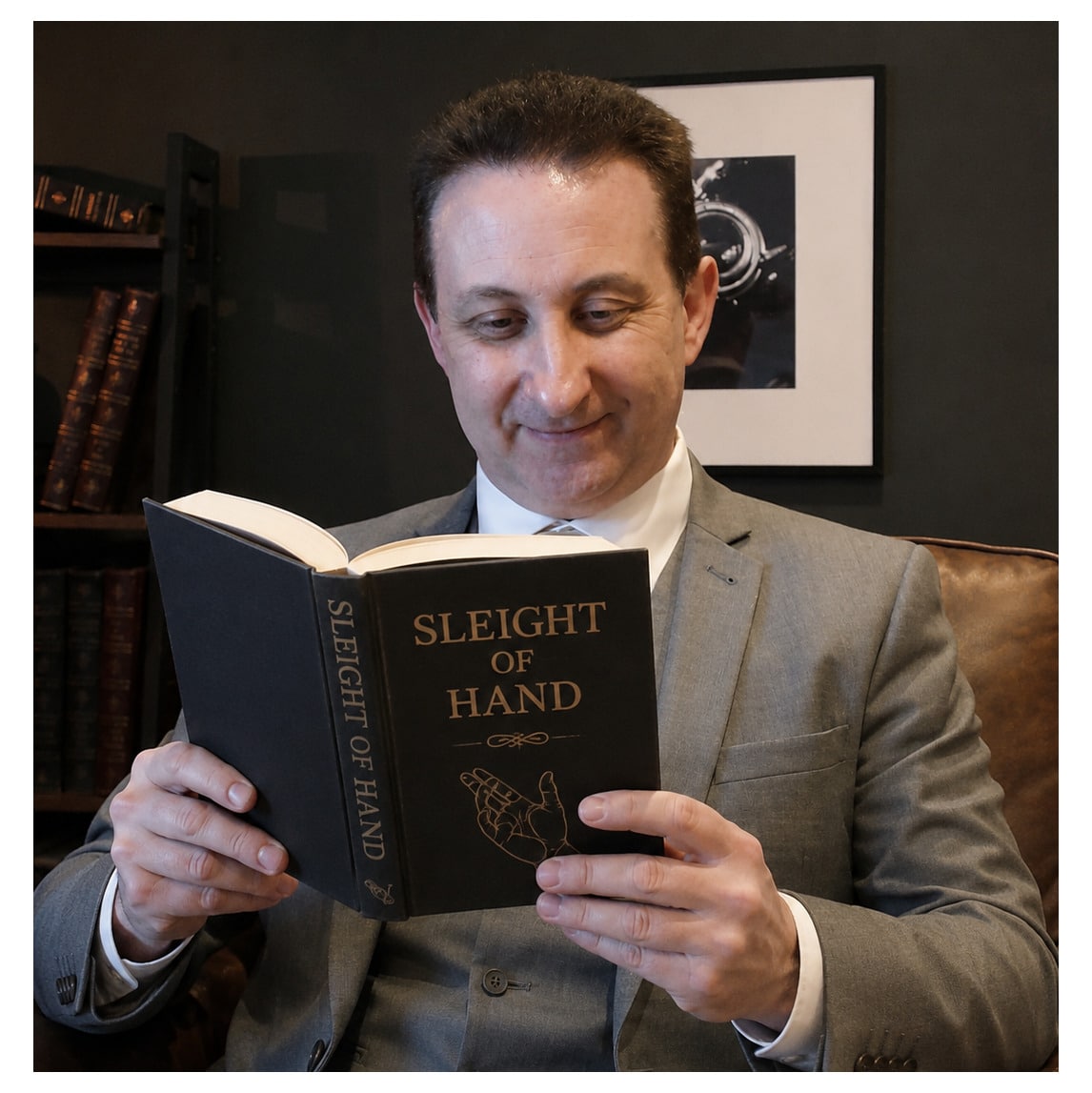 Andy Field is a professional close-up magician specialising in sleight of hand, mind reading and interactive magic for weddings, parties, corporate events and private functions.
With a quarter of a century of experience, Andy has performed for thousands of people and built an online following through magic performances that have attracted more than 20 million views.
He is a two-time S.A.M.S. Champion of Close-Up Magic and has been consulted by the BBC for the television series Hustle.
His approach combines powerful magic, strong showmanship and plenty of humour. Rather than simply performing tricks at people, Andy enjoys involving spectators and creating entertaining moments they can share.
If you're looking for a professional magician for your wedding, party or corporate event, get in touch to discuss your plans.
Andy Field Magician Service Areas
I regularly provide close up magic for weddings, parties, corporate events and special occasions across the South West and surrounding areas. You can find out more about my magic services in the following locations:
Magician Bristol Magician Gloucester Magician Cheltenham Magician Swindon Magician Somerset Magician Cotswolds
Magician Oxford Magician Bath Magician Worcester Magician Coventry Magician Leamington Spa Magician Leicester
Magician Warwickshire Magician Wiltshire
Explore More About Magic
Sleight of Hand Explained Psychology in Magic Explained Misdirection in Magic Explained Cups and Balls Close-up Magic Explained