Audience Participation in Magic Explained

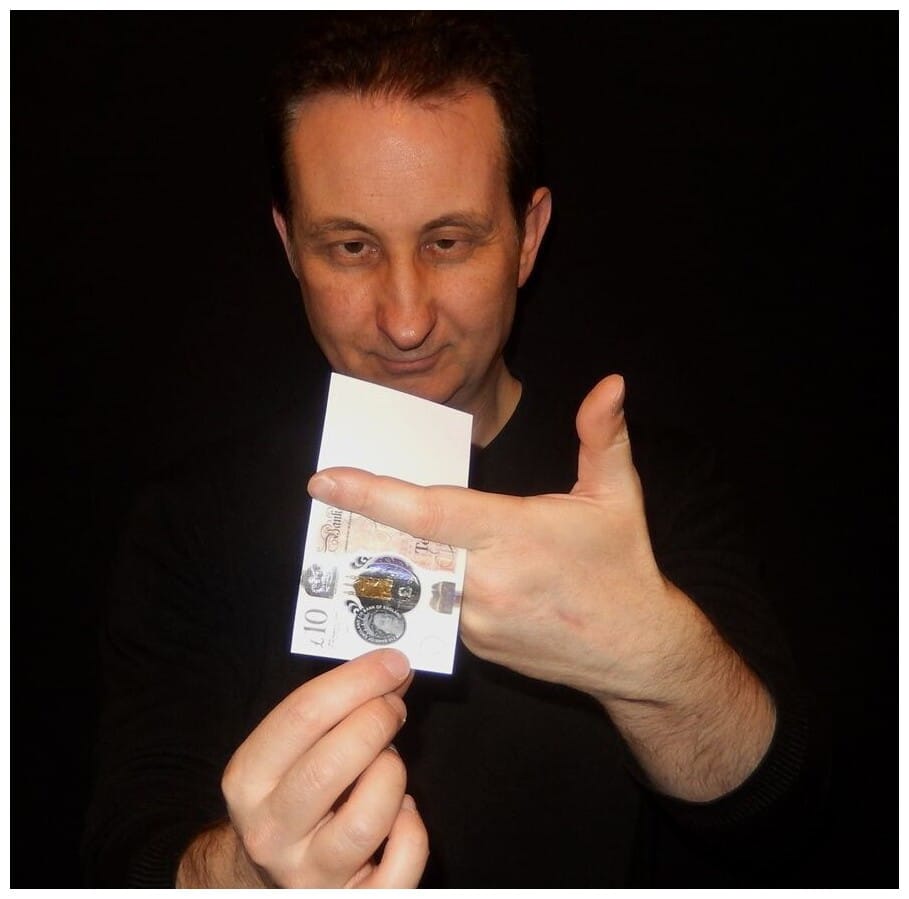
Andy Field is a professional magician with more than a quarter of a century of experience performing close up magic at weddings, parties, corporate events and private celebrations. He has performed at more than 1,000 weddings and is a two-time S.A.M.S. Champion of Close-Up Magic with more than 20,000,000 views on his YouTube and an array of Google reviews.
What Is Audience Participation in Magic?
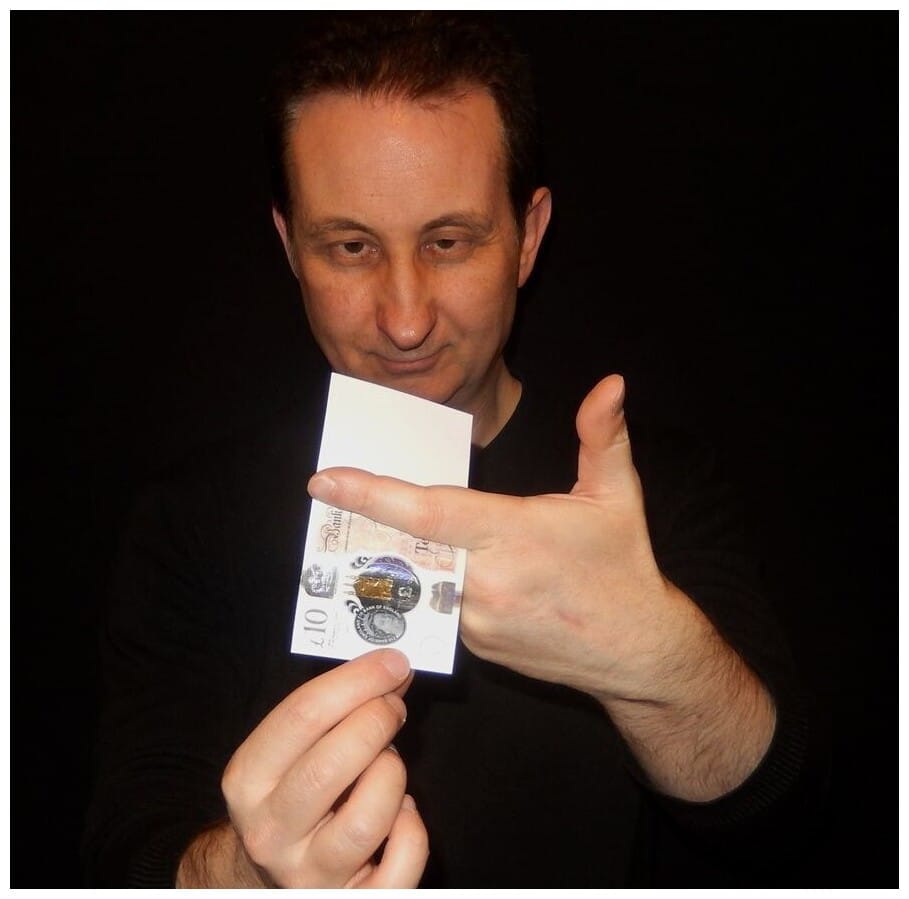
Andy Field – Professional Close-Up Magician
Audience participation in magic is when spectators become part of a performance rather than simply watching somebody demonstrate a series of tricks.
A guest might choose a playing card, hold a coin, make a decision or help with an apparently impossible experiment. Sometimes one person becomes the star of the moment. On other occasions, an entire group becomes involved in discovering what happens next.
The difference is important. Watching a magician make a card appear is entertaining. Choosing the card yourself, losing it in the deck and then discovering it somewhere completely unexpected is a rather different experience.
You have a personal stake in what happens.
I'm Andy Field, a professional close-up magician based just outside Bristol. I've performed at more than 1,000 weddings, entertained audiences at private parties and corporate events, and spent over 25 years developing my approach to magic and showmanship.
I'm also a two-time S.A.M.S. Champion of Close-Up Magic and worked as a magic consultant and hand double on the BBC television series Hustle. My YouTube videos have attracted more than 20 million views, alongside hundreds of Google reviews and over 400 Facebook recommendations.
That experience has taught me that a successful performance isn't simply about knowing how to perform a trick. It's about understanding people, involving them naturally and giving them a reason to care about the outcome.
Why Does Audience Participation Make Magic More Memorable?

When spectators take part in a magic trick, they become part of the experience rather than simply watching.
There are three main reasons why involving spectators can make a magical experience more powerful.
1. The audience has something to do
When people watch a performance passively, their attention can wander. At a wedding, they might be thinking about the food, looking for a friend or wondering when the photographer will finally let them sit down.
Give somebody a card to remember or a decision to make, and they have a reason to concentrate.
Their attention becomes connected to the outcome.
This doesn't mean that everybody needs to handle an object. People watching their friends participate can be equally fascinated. The important thing is that the interaction gives the audience something meaningful to follow.
2. The spectator becomes part of the story
Imagine that I ask you to name any card, remember it and make a decision about where it should go.
If that card subsequently appears somewhere impossible, your choice becomes part of the experience.
You didn't simply watch a magician perform a trick. You made a decision that appeared to influence what happened.
This is one reason magicians pay so much attention to the structure of an effect. The audience needs to understand what has happened before it can appreciate why the conclusion is surprising.
My article on psychology in magic explores how our expectations and interpretations influence the way we experience an illusion.
3. People have a story to tell afterwards
A good magical moment often continues long after the trick has finished.
The person who selected the card tells their friends what happened. Someone else insists they were watching the magician's hands. Another guest confidently announces that they know how it was done, despite having absolutely no evidence whatsoever.
That's part of the fun.
Interactive entertainment creates a shared experience that people can discuss, laugh about and remember together.
The Different Types of Audience Participation
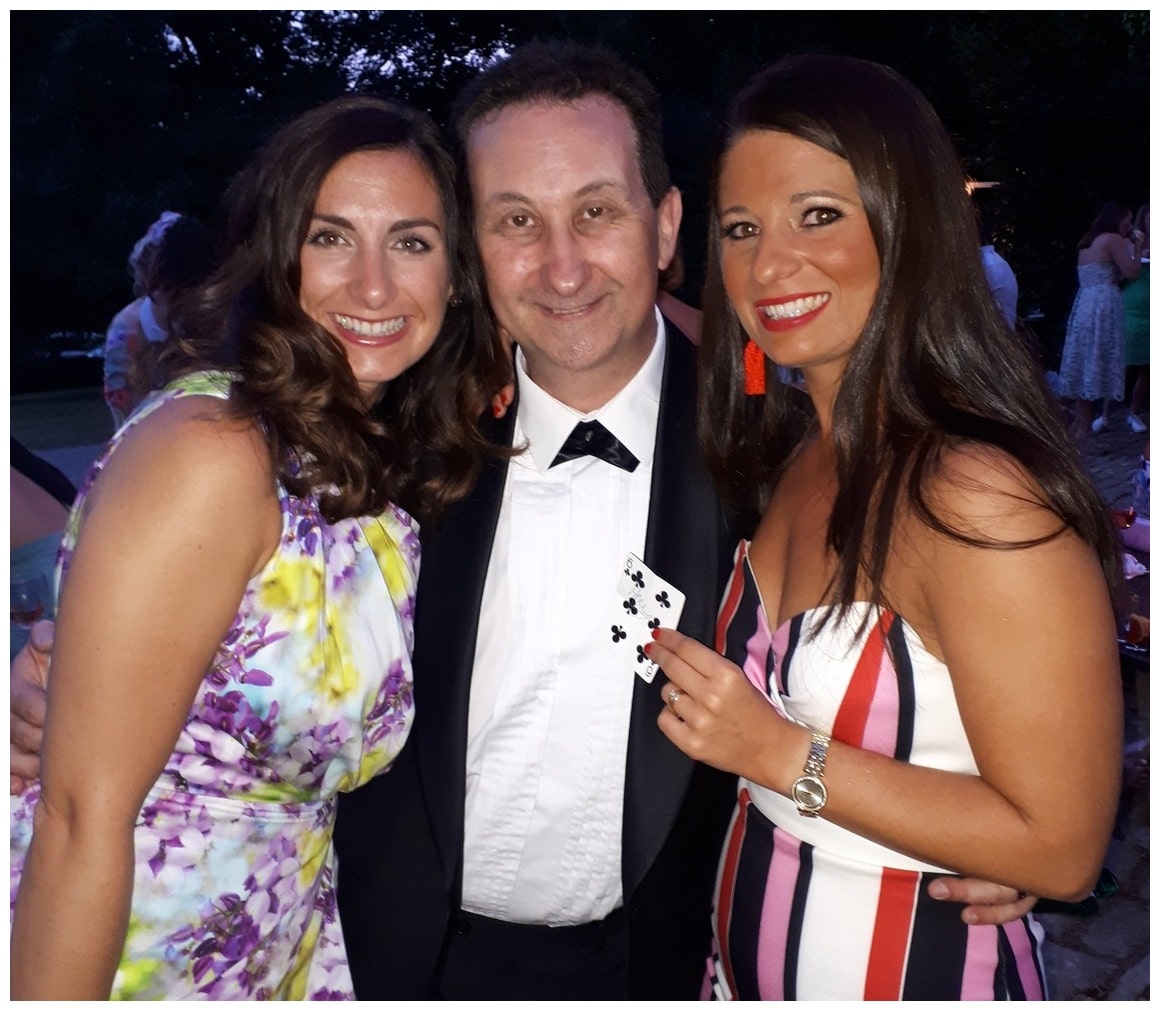
From choosing a playing card to helping with a magic trick, audience participation brings spectators into the performance.
Not all participation involves standing in front of a crowd. A skilled magician can involve spectators in several different ways, depending on the effect and the audience.
Choosing a playing card
Card selections are among the most familiar forms of participation.
A spectator chooses a card, remembers it and returns it to the deck. The magician then attempts to find it, make it appear somewhere unexpected or reveal it through an apparently impossible sequence of events.
The choice gives the spectator a personal connection to the trick.
Holding an object
A spectator might hold a coin, examine a playing card or keep an object in their hands while something impossible appears to happen.
This changes the dynamic because the audience member has direct involvement in the effect.
The magician must make the instructions clear and ensure the spectator understands their role. If people are left wondering what they are supposed to do, the mystery becomes confusion.
The aim is to create a clear experience without revealing the secret.
Helping with the Cups and Balls

Helping with the classic Cups and Balls routine gives spectators a closer look at the mystery of close-up magic.
The Cups and Balls is a classic of magic in which small objects appear to pass through solid cups, vanish and reappear in unexpected places.
It combines visual magic with timing, anticipation and opportunities for audience interaction.
Spectators follow a sequence that appears straightforward, only to discover that the magician has taken events in an entirely unexpected direction.
Taking part in a mind-reading effect
Mentalism often involves spectators thinking of a word, number, image or other piece of information.
The magician then appears to reveal the thought or predict a decision.
These effects are particularly interesting because participation can happen entirely in the spectator's mind. There is no requirement to stand up, handle an object or become the centre of attention.
The contrast between a private thought and a public revelation can make the result feel remarkably personal.
The Psychology Behind Audience Participation
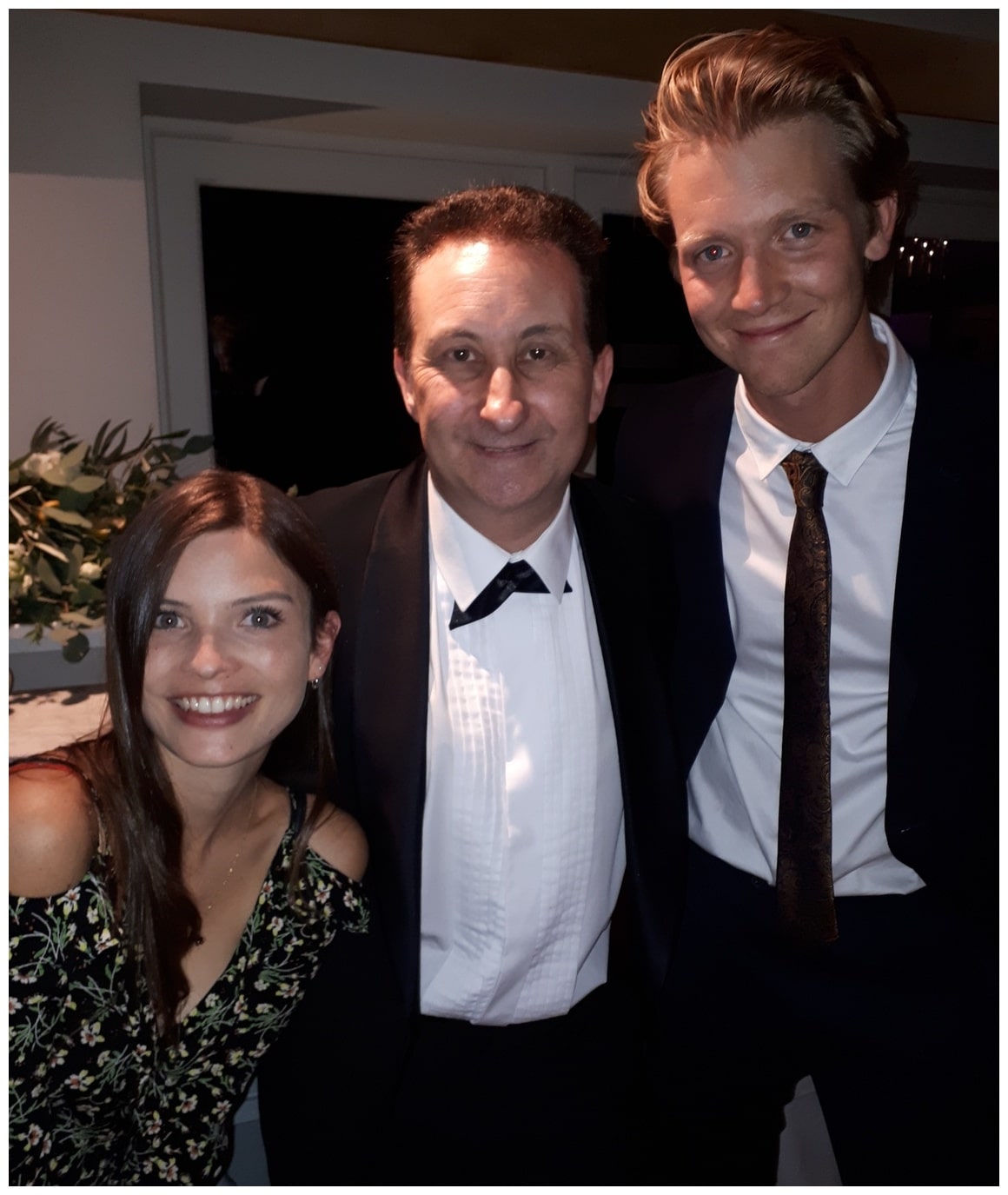
Audience attention, expectations and personal choices help make interactive magic more engaging and memorable.
Good audience participation is not simply a matter of asking somebody to pick a card. It involves understanding attention, expectations, instructions and the way people respond to uncertainty.
Misdirection and attention
When a spectator follows an instruction, their attention naturally focuses on the action they are performing.
A magician can use the audience's expectations and attention to construct an effect in which the apparent sequence of events differs from what actually happens.
This is one aspect of misdirection in magic.
Misdirection is not merely about making someone look in the wrong direction.
It also involves controlling the rhythm of a routine, establishing expectations and presenting events in a way that makes the final revelation meaningful.
Directing the Audience's Attention
Getting spectators involved is only part of the equation. A magician also needs to guide the audience's attention throughout the performance. I've explored this in my guide to how to command an audience's attention, which explains how a performer can use presence, communication and presentation to keep people engaged.
Making choices feel important
People generally enjoy having a say in what happens to them.
When a spectator chooses a card or makes a decision, they become invested in the outcome. The revelation then has a personal connection that would be missing if the magician simply announced a result.
However, the procedure must be understandable. If the audience cannot remember the choice or follow why it matters, the effect loses impact.
Timing the revelation
A magician who rushes through a trick can miss the most important moment.
After an unexpected revelation, spectators need a moment to register what they have seen. A pause, a look or a well-timed line can allow the surprise to develop naturally.
This is where technique meets performance.
My article on showmanship in magic explains why timing, presentation and audience connection matter just as much as the mechanics of an effect.
Does Everyone Have to Participate?

Absolutely not. Audience participation should be inviting, never forced.
Absolutely not.
Some people love being involved. Others prefer to stand back and enjoy watching their friends.
A professional magician should recognise the difference.
At a wedding, one guest might happily volunteer to choose a card while another would rather continue chatting with their partner. At a corporate reception, an outgoing employee may enjoy becoming involved while a quieter colleague is perfectly content to watch.
Neither response is wrong.
Participation should be an invitation, not an obligation. A magician who pressures reluctant spectators can make people uncomfortable and spoil the atmosphere.
The trick should make the participant feel good about taking part. If something unexpected happens, the humour should come from the situation rather than from embarrassing the person helping.
This is particularly important when entertaining people who have only just met.
Nobody wants to spend a drinks reception worrying that they might be called upon to perform an impromptu examination in advanced card handling.
Audience Participation at Weddings
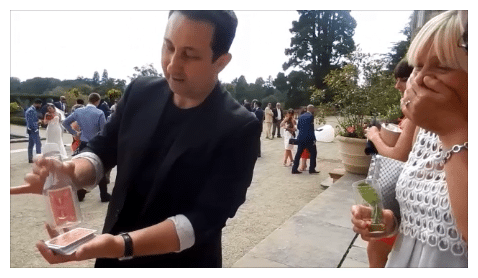
At a wedding, guests should feel comfortable joining in with the magic or simply watching and enjoying the reactions around them.
Weddings are an excellent setting for interactive close-up magic because guests naturally gather in small groups throughout the day.
During a drinks reception, a magician can entertain one group before moving on to another. Later, guests might experience more magic while chatting between courses or enjoying the evening celebrations.
There is no need for everybody to stop what they are doing and watch a formal show.
The entertainment happens among the guests, creating individual moments that can be shared with friends and family.
Participation can also help people who do not know each other find something to talk about. A surprising trick gives strangers a shared experience and an easy conversation starter.
Audience Participation at Parties and Corporate Events

At private parties and corporate events, guests can join in with the magic, make choices and become part of the entertainment.
Private parties offer different opportunities for interaction.
At a birthday celebration, a magician can entertain groups of friends who already know one another. The humour can be relaxed and familiar, while the magic gives everyone something new to experience.
Corporate events require a slightly different approach. Guests may include colleagues, clients and people meeting for the first time.
The entertainment needs to encourage interaction without becoming intrusive. A magician should understand when to approach a group, when to move on and when to leave people to their conversations.
The same principles apply to celebrations in other towns. For example, close-up magic for events in Cheltenham can be adapted to the venue, the audience and the style of the occasion.
If you are comparing different styles, what type of magician should I hire? is a useful place to start.
What Makes a Good Audience Participation Trick?
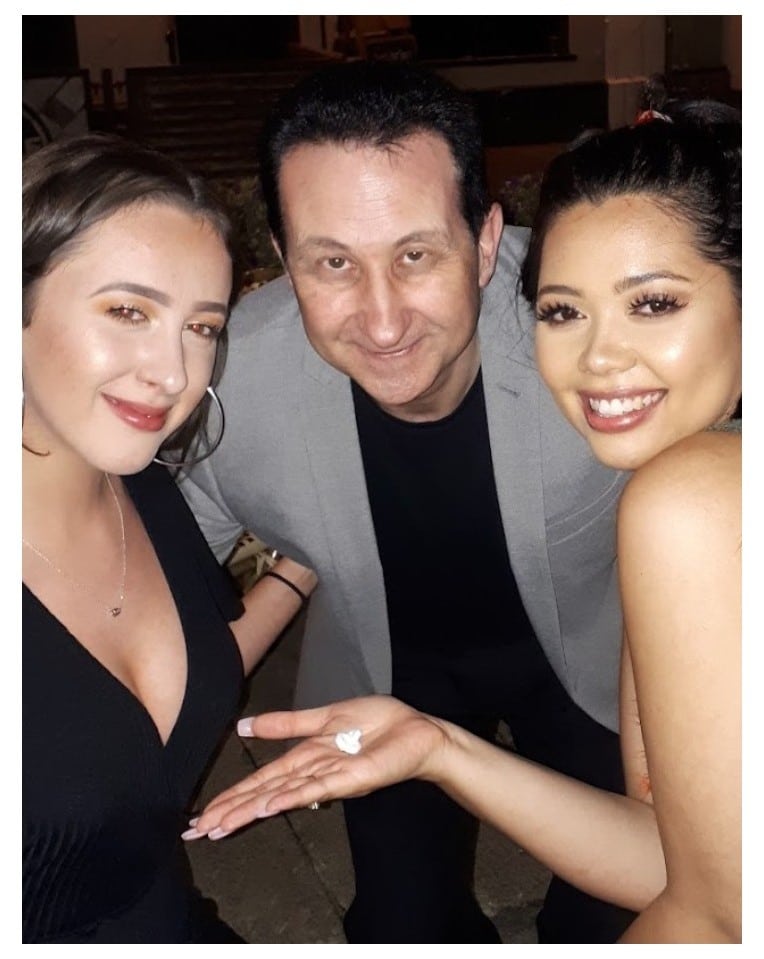
A Great Audience Participation Trick
The strongest routines usually share several characteristics.
A clear premise. Spectators should understand what is supposed to happen. Confusion is not the same as mystery.
A meaningful role. The participant should have a reason to be involved, whether they are making a choice, holding an object or helping create the conditions for the effect.
A surprising outcome. The conclusion should challenge what the audience believes has happened.
Good timing. A revelation needs enough space for people to appreciate it.
Natural presentation. The interaction should feel like an entertaining conversation rather than a list of instructions.
Respect for the spectator. Nobody should feel foolish for taking part, and nobody should be pressured into doing something they dislike.
These qualities are relevant whether the magician is performing a simple card revelation or a more elaborate routine involving several people.
They also explain why technical ability alone is not enough. A magician can possess excellent sleight of hand, but if the instructions are confusing or the presentation is dull, the audience may never appreciate the skill involved.
How My Experience Has Shaped My Approach
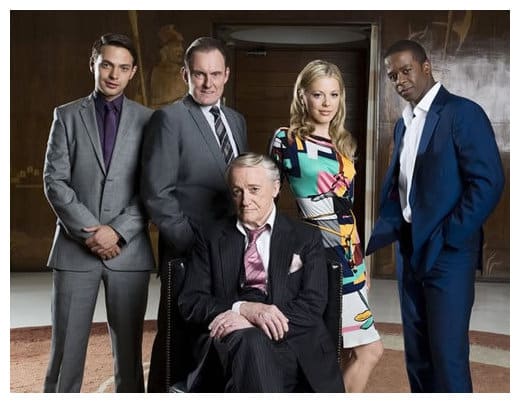 After more than 1,000 weddings and over 25 years of professional experience, I've learnt that there is no single approach to audience participation that works for everyone.
Some of the most memorable moments happen when a spectator makes a seemingly insignificant decision that later becomes central to the trick. Others come from the reaction of an entire group when something impossible happens right in front of them.
My work as a magic consultant and hand double on the BBC series Hustle gave me another perspective on presenting magic for television. Television has its own requirements, but the underlying principles of timing, clarity and convincing performance remain important.
My two S.A.M.S. Championship titles in close-up magic reflect my commitment to the craft. Meanwhile, my YouTube videos have attracted more than 20 million views, and I have received hundreds of Google reviews and over 400 Facebook recommendations.
These are different measures of experience, but they all reinforce the importance of combining technical skill with effective presentation.
You can learn more about my background on About Andy Field.
The central lesson is simple: a magician needs to understand people as well as tricks.
Finding the Right Magician for Your Event

The right magician knows how to involve guests
When choosing a magician, look beyond the list of tricks they can perform.
Consider how they communicate, how they involve spectators and whether their personality suits your guests. Experience matters because a wedding, a birthday party and a corporate reception can present very different challenges.
If your event is in Bath, you can explore Andy Field's local magic services to find out more about the entertainment available.
For a celebration in Coventry, close-up entertainment for your event offers another option for creating shared experiences among guests.
Wherever you are planning an event, look for a performer who can explain how they work, respect the audience and adapt to the occasion.
Frequently Asked Questions About Audience Participation in Magic
Do spectators have to participate in close-up magic?
No. Participation should be voluntary. A magician can involve willing spectators while entertaining others who prefer to watch.
Why do magicians ask people to choose playing cards?
A card selection gives the spectator a personal role in the trick. The eventual revelation becomes connected to a decision they made, which can make the result more surprising.
Is audience participation suitable for weddings?
Yes. Interactive close-up magic works well during drinks receptions, between courses and at other points when guests are mingling. A magician should adapt to the schedule and the audience.
Can audience participation work at corporate events?
Yes. Interactive magic can provide a shared talking point and help people relax. The style should suit the occasion and avoid interrupting important conversations.
What if someone doesn't want to take part?
A professional magician should respect their choice. They can continue entertaining the group without making the reluctant guest feel uncomfortable.
What is the difference between audience participation and showmanship?
Audience participation describes how spectators become involved in the performance. Showmanship is the broader skill of presenting magic through timing, personality, humour and audience awareness. The two work together to make the experience entertaining.
Final Thoughts: The Audience Is Part of the Magic
Audience participation is much more than asking someone to choose a card or hold a coin. At its best, it gives people a personal connection to something they cannot explain.
The spectator makes a decision, follows a sequence of events and discovers that reality seems to have ignored everything they thought they knew. Friends watch, laugh, react and try to work out what happened.
That is the real appeal of interactive close-up magic. It creates moments people experience together rather than simply watching from a distance.
The sleight of hand matters. Psychology matters. Structure and timing matter. But so does the ability to make people feel comfortable, included and entertained.
Because when the audience becomes part of the experience, the magic doesn't just happen in the magician's hands.
It happens in the minds of the people watching.
Andy Field Magician Service Areas
I regularly provide close up magic for weddings, parties, corporate events and special occasions across the South West and surrounding areas. You can find out more about my magic services in the following locations:
- Bristol Magician
- Gloucester Magician
- Cheltenham Magician
- Swindon Magician
- Somerset Magician
- Magician Oxford
- Magician Bath
- Magician Worcester
- Magician Cotswolds