How to Deal with Hecklers as a Magician: 15 Professional Strategies That Really Work

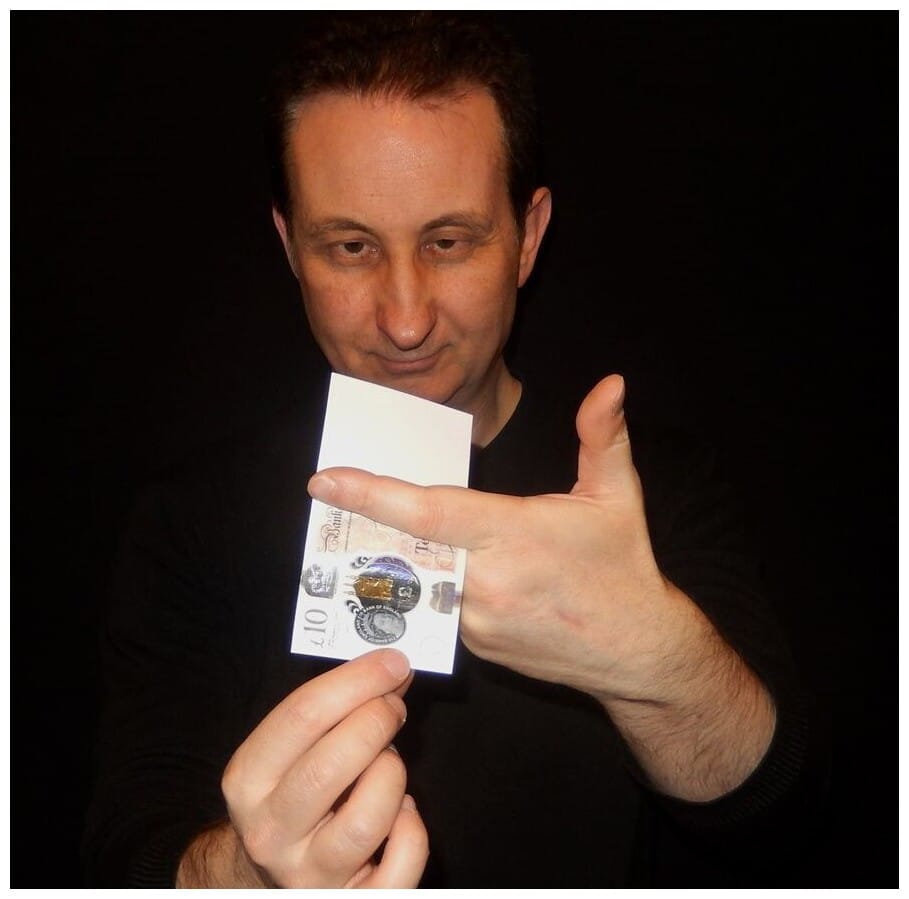
Andy Field is a professional magician, offering table top magic, sleight of hand illusions, mind reading and more, for a variety of occasions. Over the years Andy has built a strong global following, boasting over 20,000,000 views on his YouTube channel and an array of reviews across multiple platforms. Having amassed experience as a wedding magician, party magician & close up magician, Andy is seen as one of the industries most tried and tested professional magicians.
How to Deal with Hecklers as a Magician
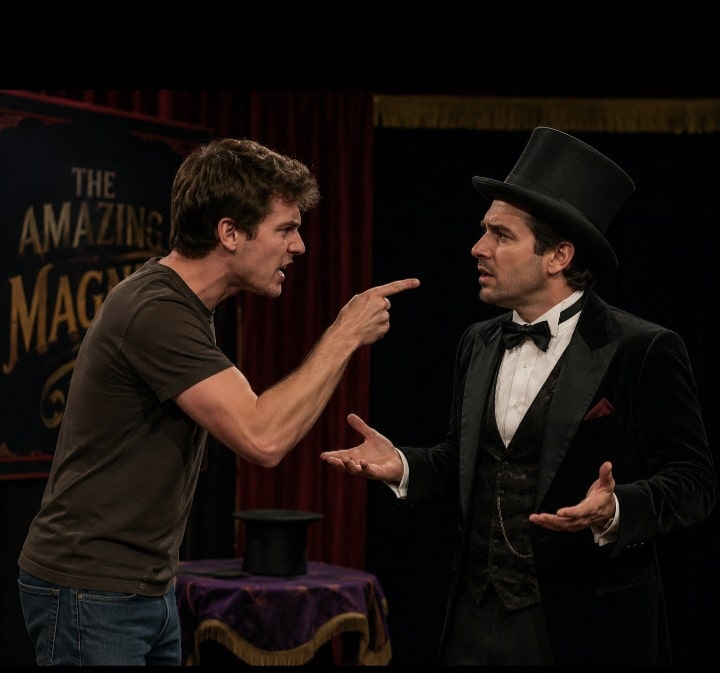
A magician remains calm and confidant with a heckler
Every magician, from beginners performing at family parties to seasoned professionals on theatre stages, will eventually encounter a heckler. It's almost inevitable.
Someone wants to be the centre of attention. Someone believes they've figured out the sleight of hand secret. Someone has had one drink too many. Or perhaps someone simply enjoys challenging performers.
The good news? Learning how to deal with hecklers as a magician is a skill, just like learning a double lift or mastering a classic force.
The more experience you gain, the easier it becomes to recognise different types of hecklers and respond with confidence. The secret isn't to "win" against the heckler. The secret is to keep the audience on your side.
Why People Heckle Magicians
 Before discussing solutions, it's worth understanding why heckling happens in the first place. Unlike musicians or comedians, magicians invite audiences to question reality. Every effect creates a challenge:
"How did they do that?" For a small percentage of people, curiosity becomes competition.
Common reasons people heckle include:
- They want attention.
- They're trying to impress friends.
- Alcohol has lowered their inhibitions.
- They believe exposing the method makes them look clever.
- They're naturally sceptical.
- They misunderstand audience participation.
Recognising that most heckling isn't personal helps you remain calm as a professional magician.
Stay Calm Above Everything Else
The audience takes emotional cues from you. If you become visibly irritated, defensive or angry, the audience starts feeling uncomfortable. Instead smile and pause. Speak slowly and maintain relaxed body language. Confidence is contagious.
Many experienced magicians have discovered that a calm smile can silence a room far more effectively than a clever comeback.
Never Turn It Into a Battle
One of the biggest mistakes inexperienced performers make is trying to defeat the heckler. That rarely ends well.
If the performance becomes magician versus heckler, everyone else stops enjoying the show. Instead, remember your real audience.
You're performing for the entire room. Not one disruptive individual. Keep your attention focused on the people who are enjoying themselves.
Often, the audience will naturally become annoyed with the heckler long before you need to intervene.
Use Humour Carefully
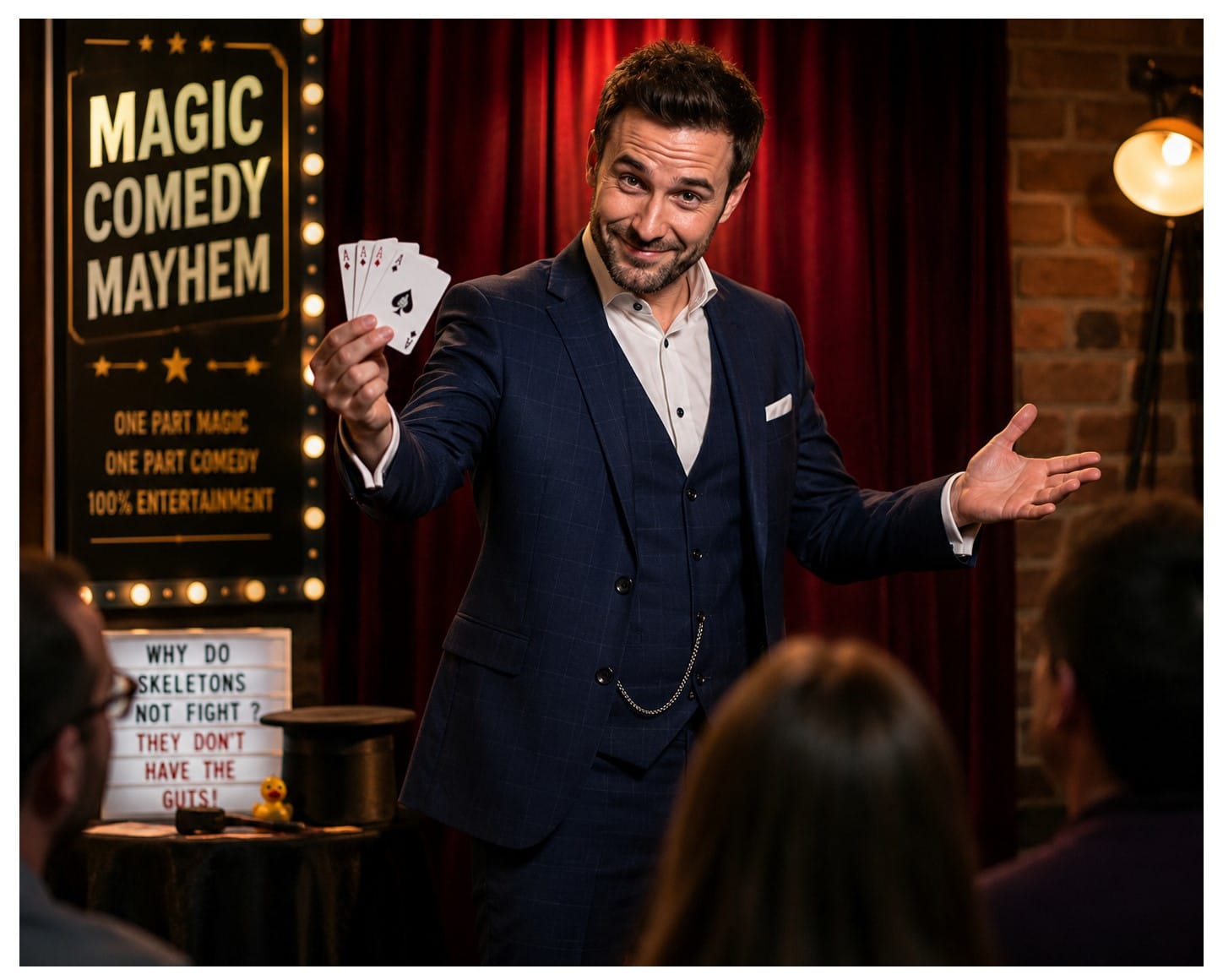 Humour can completely diffuse tension. However, there's an important difference between laughing with someone and laughing at them.
Good responses remain light-hearted. For example:
"If you know how this works, I'll let you finish the show."
Or:
"Excellent! We finally found my replacement."
The audience laughs.
The heckler feels acknowledged.
The performance continues.
Avoid cruel insults or humiliating someone publicly. Remember, today's heckler could be tomorrow's client—or the person booking your next event.
Control Your Volunteers
Many interruptions occur because the wrong volunteer is invited on stage.
Learn to recognise warning signs:
- Someone shouting before being chosen.
- Someone who appears overly intoxicated.
- People constantly trying to grab attention.
- Someone attempting to explain tricks to others.
Instead, choose volunteers who seem enthusiastic, attentive and respectful. A good volunteer makes your performance stronger. A poor volunteer creates unnecessary problems.
Set Expectations Early

Professional performers often prevent heckling before it begins. At the start of your show, establish a friendly atmosphere.
You might say something like:
"You're welcome to laugh, applaud, react as much as you like—but don't shout out the endings. Let's allow everyone to enjoy the mystery together."
Delivered with warmth, this simple introduction creates social expectations without sounding authoritarian.
Keep the Pace Moving
Dead time invites interruptions. Long pauses while searching for props, and fumbling with gimmicks, or resetting tricks provide opportunities for hecklers to speak up.
A well-rehearsed performance flows naturally. Professional magicians understand that rhythm is one of the most powerful forms of audience management.
If something unexpected happens, transition smoothly into your next effect rather than dwelling on mistakes. Momentum keeps audiences engaged.
Don't Reward Bad Behaviour
Some hecklers are seeking attention. Every time you stop the show to respond, you're giving them exactly what they wanted.
Sometimes the strongest response is no response at all. Continue performing. Keep engaging everyone else.
If the audience sees the heckler isn't affecting you, they often lose interest remarkably quickly. Silence can be surprisingly powerful.
Have Prepared Lines—But Use Them Sparingly
 Many professionals keep several gentle responses ready. Examples include:
"I'll answer questions after the show—assuming I still have a job."
"Please don't reveal the secret. I only learnt it this morning."
"That's exactly what I hoped you'd think."
The purpose isn't to embarrass the heckler.
The purpose is to maintain control while keeping the mood positive. One prepared line is usually enough. Repeating witty comebacks starts feeling rehearsed.
Read the Room
Not every interruption is hostile. Someone genuinely curious isn't necessarily heckling. Sometimes people laugh unexpectedly because they're astonished. Sometimes children become excited. Learn the difference.
A genuine question deserves kindness. An accidental interruption deserves patience. Deliberate disruption requires confident management.
Treating every interruption as an attack creates unnecessary tension.
Position Yourself Correctly
 Body language matters. Stand confidently. Avoid backing into corners.
Keep eye contact with the wider audience rather than staring exclusively at the heckler.
When performing close-up magic, maintain enough personal space to protect your props while remaining approachable. Good positioning naturally discourages interference.
Know When to Involve Event Staff
Occasionally, someone becomes genuinely disruptive. This is especially common at corporate events where alcohol is involved.
If someone repeatedly interrupts despite polite attempts to continue, it's perfectly acceptable to involve the organiser, venue staff or security. You are not expected to manage aggressive behaviour alone.
Your responsibility is to provide an enjoyable experience for everyone else. Professionalism sometimes means asking for help.
Learn From Every Performance
After each show, ask yourself:
- When did the interruption occur?
- What triggered it?
- Did my pacing contribute?
- Could I have handled it differently?
- Was my volunteer selection effective?
Every difficult audience teaches valuable lessons. The best performers improve because they analyse performances honestly rather than blaming spectators. Experience gradually builds confidence.
Close-Up Magic Requires Different Techniques
 Hecklers behave differently during close-up performances. This is because you are only inches away. Interactions become more personal.
Helpful strategies include:
- Keep props slightly out of reach.
- Give spectators something to hold so their hands remain occupied.
- Maintain friendly conversation.
- Redirect attention naturally.
- Move to another group if someone becomes persistently difficult.
Remember, in walk-around magic, you are not trapped. You can politely conclude one interaction and continue entertaining other guests.
Stage Performances Require Authority
On stage, audiences expect leadership.
Your voice, posture and confidence establish authority long before the first trick. Speak clearly. Project confidence. Move deliberately. Avoid apologising unnecessarily.
Most audiences instinctively support a performer who appears calm and in control. Authority doesn't require arrogance. It requires certainty.
The Audience Is Your Greatest Ally
One of the biggest realisations professional magicians eventually have is this: The audience wants you to succeed. They've chosen to watch magic. They want to be entertained.
When someone continually interrupts, the rest of the audience often becomes frustrated before you do. Trust them. If you remain composed, they usually become your greatest supporters.
Don't Let One Heckler Define the Show
It's easy to dwell on one difficult spectator.
But ask yourself did ninety-nine people enjoy the performance?
If the answer is yes, then the show was successful.
Every performer remembers difficult audiences far longer than appreciative ones.
Try not to let a single interruption overshadow an otherwise excellent performance.
Confidence comes from focusing on the overall experience, not isolated moments.
Final Thoughts
Knowing how to deal with hecklers as a magician isn't about having the sharpest comeback or embarrassing someone in front of their friends.
It's about protecting the experience for everyone. Stay calm. Keep the audience on your side. Maintain your pacing. Use humour with kindness. Choose volunteers wisely.
Remember that every performance, even the difficult ones, helps you become a stronger entertainer. The greatest magicians aren't the ones who never encounter hecklers. They're the ones who handle them so smoothly that the audience barely notices anything happened.
Master that skill, and you'll discover that even challenging spectators become just another part of the performance—not the end of it.